Deadly Tunnel Collapse at Congo Coltan Mine Claims Over 200 Lives
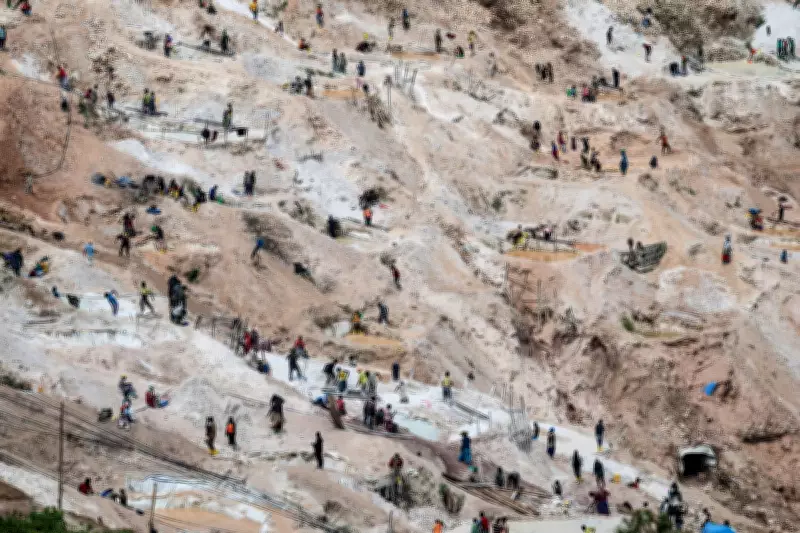
A catastrophic landslide that caused multiple tunnel collapses at a major coltan mine in eastern Congo is reported to have left at least 200 artisanal miners dead. The incident occurred at a rebel-controlled site in Rubaya, approximately 25 miles west of the regional capital Goma, according to officials from the Congolese Ministry of Mines.
Rebel Control and Disputed Narratives Surround the Tragedy
Rebel groups and government spokespeople have traded accusations of responsibility while disputing the exact death toll. Analysts note that this collapse, along with a similar event in January that also killed over 200 people, ranks among the deadliest mining disasters in recent years. The area is already grappling with a severe humanitarian crisis and ongoing conflict, exacerbating the impact of such tragedies.
Since May 2024, the Rwandan-backed M23 rebel group has controlled the town of Rubaya and its lucrative mines. This takeover has significantly altered the dynamics of mining operations and safety oversight in the region.

How the Accident Unfolded and the Challenges of Reporting
Several hand-dug tunnels collapsed on Tuesday, trapping and killing miners who operate with limited structural support and no safe evacuation routes. Details remain sparse due to the mine's remote location and pressure from rebels and mine owners to suppress information.
Ibrahim Taluseke, a miner at Rubaya, revealed to The Associated Press that mine owners have a financial incentive to obscure the true death toll, as they must pay $300 to each victim's family. "Imagine if you give a high number, these owners could even eliminate you. Because often they even hide the victims’ bodies to avoid compensation," Taluseke stated. Other miners provided varying accounts of the fatalities, further complicating accurate reporting.
Analysts Debate Causes and Predict Future Collapses
Christian-Géraud Neema, a nonresident scholar in the Carnegie Africa Program, attributed the collapse to heavy rains and urged skepticism toward official narratives. "It's normal for Kinshasa to exaggerate the numbers," he said, noting that collapses are frequent in the region. Neema warned against linking the disasters directly to rebel control and predicted, "We should not be shocked; we should expect another collapse in three weeks' time or in a month."
In contrast, Guillaume de Brier, a researcher with the International Peace Information Service, highlighted the role of M23's control. "Because of M23, there are no more civil society protections or state services," he explained. The lack of regulation during conflict has drawn more people into artisanal mining, as many have lost jobs elsewhere, increasing risks.
Coltan: A Critical Mineral for Global Technology
The mines produce coltan, an ore that yields tantalum and niobium—metals classified as critical raw materials by the United States, European Union, China, and Japan. Tantalum is essential for mobile phones, computers, automotive electronics, aircraft engines, missile components, and GPS systems. Niobium is used in pipelines, rockets, and jet engines.
A U.N. report indicates that since seizing Rubaya, M23 has imposed taxes on the monthly trade and transport of 120 metric tonnes of coltan, generating at least $800,000 monthly. The coltan is exported to Rwanda, a practice that existed even before M23's takeover, though previously conducted through Congolese intermediaries.
This tragedy underscores the deadly human cost behind the global demand for tech minerals, set against a backdrop of conflict, poor regulation, and economic desperation in eastern Congo.