
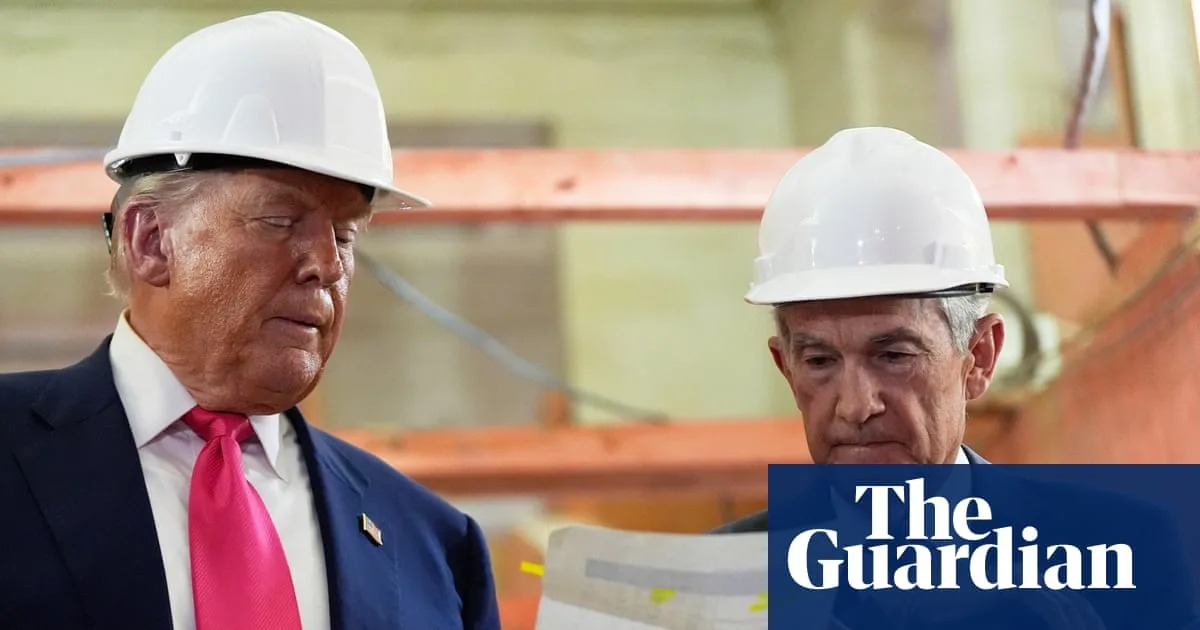
Analysts have warned that Donald Trump’s attempts to influence the US Federal Reserve could risk a return to 1970s-style inflation and trigger a global backlash in financial markets. The warning comes after the US Department of Justice launched a criminal investigation into Fed chair Jerome Powell, which investors see as an effort by the White House to pressure the central bank into cutting interest rates.
Atakan Bakiskan, US economist at Berenberg bank, said: “If the Fed pursues an ultra-accommodative monetary policy despite higher inflation, the result could resemble the 1970s in a worst-case risk scenario. Moreover, if the Fed acts on politics rather than data, foreign investors could pull back on financing the US debt and seek new safe havens.”
Powell labelled the threat of a criminal indictment as a “pretext” to pressure the central bank on interest-rate decisions. He insisted the legal threat was “not about” his testimony last summer, but about whether the Fed can continue to set rates based on evidence and economic conditions rather than political pressure or intimidation.
Trump has repeatedly attacked Powell for refusing to cut borrowing costs more aggressively, calling him a “stubborn mule” and a “numbskull”. No Fed chair has ever been fired by a president. Trump denied any involvement in the DoJ investigation, telling NBC News: “I don’t know anything about it.”
The US dollar fell on Monday, while gold prices hit a record high as investors sought safe-haven assets. Jagjit Chadha, professor of economics at Cambridge University, warned that if the US cannot control dollar inflation, it would have implications for the rest of the world, as many prices are set in dollar terms.




