
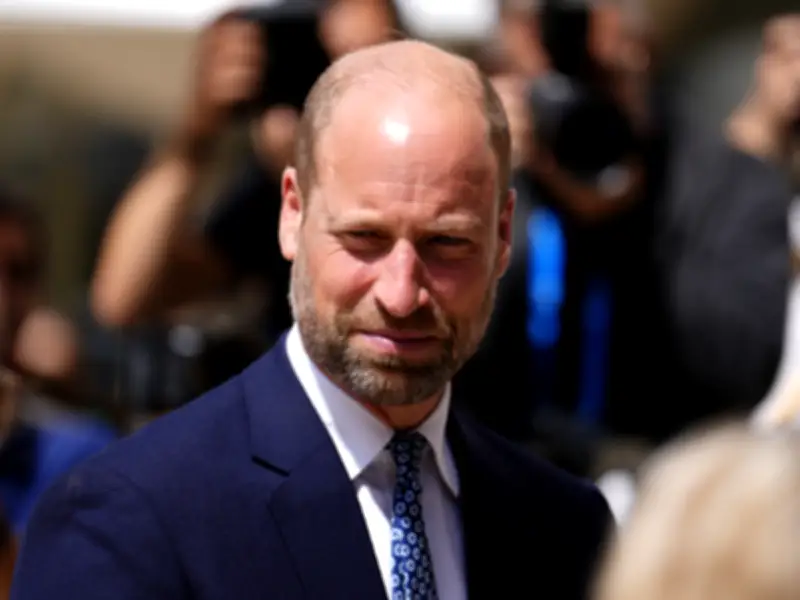
Prince William is now wealthier than his father King Charles, with newly published accounts revealing the Prince of Wales has a net worth of £1.2 billion through the Duchy of Cornwall. The future king has also contributed more than £20 million in tax since assuming the title of Prince of Wales.
Duchy of Cornwall Accounts Reveal Prince William's Wealth
The figures emerged alongside the publication of the Sovereign Grant accounts, which detail Treasury funding used by the royal household for official duties. For the first time, the accounts confirmed that William is richer than his father, with a net worth of £1.2 billion via the Duchy. The prince received a private income of £21.6 million in 2025-26, according to the latest Duchy figures.
In comparison, King Charles was listed in the Sunday Times Rich List with a personal fortune of £640 million, a rise of £30 million on the previous year.
Tax Contributions and Financial Transparency
Both the King and Prince William have disclosed their private tax contributions in a move towards greater financial transparency. William paid £7.76 million in income and capital gains tax in 2024-25, and £8.34 million in 2023-24.
It has also emerged that William has decided he will no longer personally pocket the controversial £1.5 million annual rent generated by the now-abandoned Dartmoor Prison. William has requested that the sum be removed from the multimillion-pound income he receives as heir to the throne from the Duchy of Cornwall from 2026-27 onwards, with the funds redirected towards regenerating the local community instead.
Dartmoor Prison Lease and Radon Contamination
It emerged in 2024 that the Duchy had signed a £37 million deal in 2022, prior to Charles becoming King and William the Prince of Wales, to lease Dartmoor Prison to the Ministry of Justice at £1.5 million per year over 25 years, alongside a deal with the Ministry of Defence permitting the armed forces to train on Dartmoor land. However, the category C prison in Devon has sat empty since July 2024 following the detection of dangerously high levels of radon, a naturally occurring toxic gas found in soil and rocks that can cause lung cancer, in prisoners' accommodation.
Community Regeneration Fund
A community-led regeneration fund is set to be launched next year, aimed at delivering social, economic and environmental benefits to Princetown, the remote rural village situated beside the prison. The prince's private secretary Ian Patrick said: "Prince William knows that for many people in Princetown, the prison has long been part of the fabric of the community. Its closure has created genuine uncertainty, not just about jobs and businesses, but about the future of the town itself. The duke felt strongly that, while those questions remain unanswered, the benefit of this income should remain in the community, helping local people shape that future."
William's Role as Duke of Cornwall
As next in line to the throne, William is entitled to the annual profits generated by the billion-pound Duchy landed estate, which spans 51,800 hectares across 19 counties. He became the 25th Duke of Cornwall almost four years ago.
Meanwhile, Kensington Palace revealed that the number of employees within William and wife Kate's household has increased to 74, up from 68. Diversity statistics indicate that 14.9% of staff were from an ethnic minority background, a rise from 13.2% the previous year, while 73% of Kensington Palace staff are female and 27% male.




