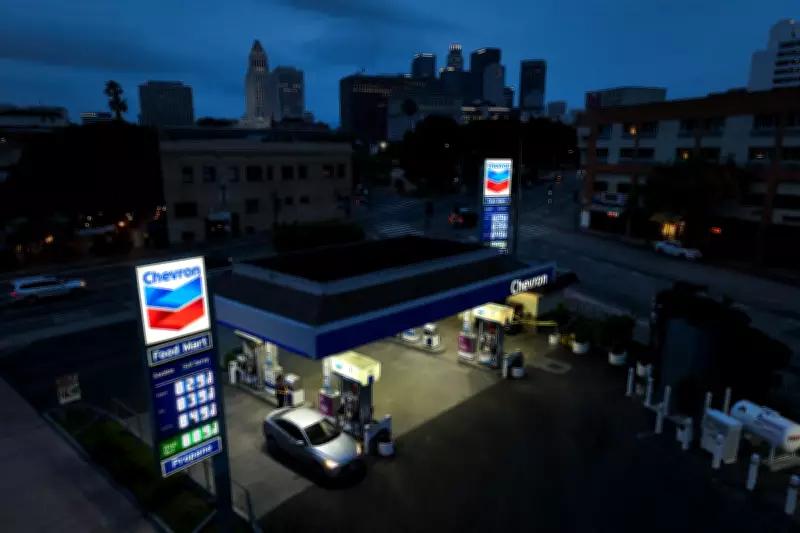
US Fuel Prices Surge to Highest Levels Since 2022 Amid Iran War Market Disruption
American drivers are facing dizzying fluctuations at the pump as US gas prices climb rapidly, reaching their highest levels since 2022. The ongoing conflict in Iran continues to shake global oil markets, pushing the national average for a gallon of gasoline above $4 this week according to AAA data.
Daily Price Volatility Leaves Drivers Frustrated and Cash-Strapped
The near-daily changes in US fuel prices are creating frustration for motorists who must constantly game out the optimal moment to fill their tanks or hunt for cheaper alternatives. Prices can vary dramatically from one day to the next and between neighboring stations, creating what experts describe as a challenging environment for both consumers and retailers.
"We price based on what we're able to buy fuel at, and how well we can operate," explained Lonnie McQuirter, director of operations at 36 Lyn Refuel Station in south Minneapolis. His station recently posted $3.399 per gallon for regular gasoline, approximately 18 cents below the metro average.

McQuirter emphasized that small operators like himself are responding more to market pressures than greed, particularly when consumers are "screaming for help" with rising living costs. "We're in our stores every day looking our customers in the eye," he said. "It really takes a toll when people are having to cut back on certain things in order to afford to live."
Complex Factors Driving Fuel Price Increases
According to industry experts, most price differences aren't determined by individual gas retailers, and stations typically aren't pocketing significant extra profits when prices rise. The uncertainty at the pump originates from a massive, volatile oil and gas market that makes it difficult for stations to maintain stable pricing.
The US Energy Information Administration reports that approximately half of the pump price pays for crude oil costs, while about 20% goes to refiners who transform crude into gasoline. These costs have increased substantially as crude oil prices jumped in response to the Iran war and shipping disruptions in the Strait of Hormuz.
Additional factors influencing final prices include:
- Taxes: Federal, state, and local taxes account for nearly 20% of the pump price
- Retailer margins: Only about 10% remains for retailers, who must still cover transportation, labor, and operational expenses
- Wholesale fluctuations: Wholesale fuel prices can shift multiple times daily, forcing retailers to adjust pump prices accordingly
Jeff Lenard, vice president at the convenience store trade group NACS, explained that retailers' markup has averaged approximately 38 cents per gallon over the past five years. After expenses, stations may retain roughly 15 cents per gallon, though "some make more, some make less" depending on their specific circumstances.
Why Prices Vary Between Stations and Regions
Despite the national average exceeding $4 per gallon, significant price variations exist between states, cities, and individual stations. Tax differences alone create substantial gaps, with California's gas taxes and fees totaling about 71 cents per gallon last year compared to roughly 9 cents in Alaska.
Other factors contributing to price disparities include:
- Distance from refineries and distribution centers
- The type of retailer and their business model
- Sales volume at specific locations
- Competitive pressures from nearby fuel options
Neal Walters, an energy-focused partner at global management consulting firm Kearney, noted that stations near competitors often price gasoline competitively on large outdoor signs to attract drivers, hoping they'll enter the store to purchase higher-margin items. "It's one of the only retail locations where you don't have to go into the store to find out what you're paying," Walters observed.

Who Actually Benefits from Rising Fuel Prices?
Contrary to popular perception, US retailers typically don't see large gains when fuel prices increase. Patrick De Haan, head of petroleum analysis at GasBuddy, explained that "the margins shrink when prices go up because it's harder for them to pass along the increases as quickly as they themselves get them."
Garrett Golding, assistant vice president for energy programs at the Federal Reserve Bank of Dallas, compared price movements to a falling feather, noting that "prices can rocket up but tend to drift down." When oil prices eventually decline, retailers may recover some losses, particularly if there's uncertainty about future supply costs.
Higher gas prices can also negatively impact convenience store sales, as financially squeezed customers spend less on other items. "So it's not always the case that higher prices mean the service station owners are actually doing better," Golding emphasized.
Most profits in the oil and gas supply chain are generated upstream by companies involved in extraction and refining. However, even these companies remain cautious about significant price spikes potentially reducing consumer demand over time. "It may be a good stretch of days or weeks for them," Golding noted, "but they're also cautious of what it could portend."
The current market volatility demonstrates how global conflicts and complex supply chains create challenging conditions for both American drivers and the retailers serving them, with few simple solutions to stabilize prices in the immediate future.