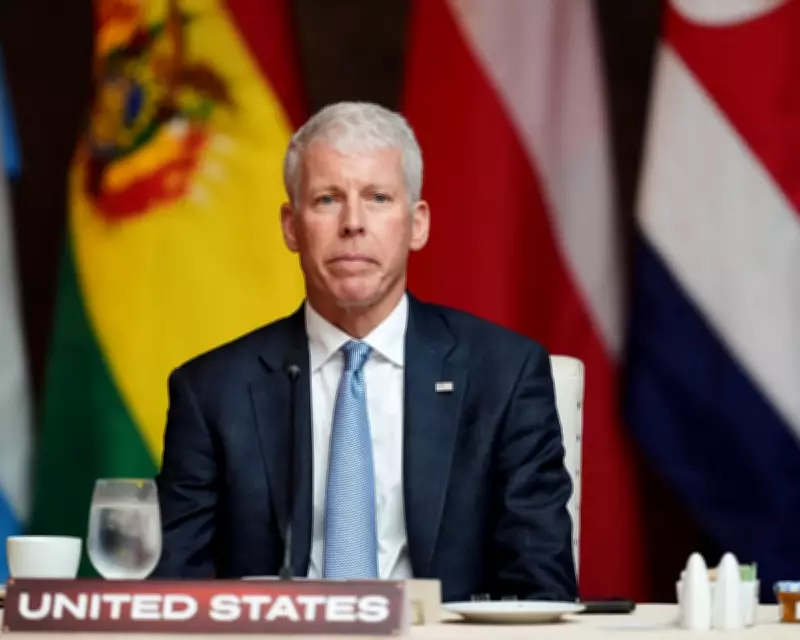
US Energy Secretary Chris Wright has provided reassurances regarding the recent surge in energy prices, stating that the spike will likely last only weeks rather than months. His comments come amid heightened tensions following military actions in the Middle East that have disrupted shipping and production.
Short-Term Price Impact Expected
During an appearance on CNN's State of the Union, Wright addressed concerns about rising energy costs directly. "In the worst case, this is a weeks, this is not a months thing," he emphasized. The secretary specifically noted that the United States has "no plans to target Iran's oil industry, their natural gas industry, or anything about their energy industry."
Market Turbulence Following Military Actions
The nine-day conflict has triggered significant market reactions, with West Texas Intermediate crude oil prices soaring by thirty-five percent in just one week. This has translated directly to consumer costs, as gasoline, diesel, and jet fuel prices have all experienced sharp increases. According to data from the AAA motor club, the average price for a gallon of regular gasoline in the United States jumped fourteen percent to $3.41 on Saturday.

Wright pointed to visible evidence of the conflict, describing "plumes of thick black smoke and oil raining down" over Tehran, which he attributed to Israeli strikes on local fuel depots. He was clear about American involvement, stating, "The US is targeting zero energy infrastructure."
Administration's Strategic Perspective
White House officials are framing the situation as a necessary trade-off. They argue that temporary energy price increases are preferable to the long-term threat posed by a nuclear-armed Iran with advanced missile capabilities. Wright elaborated on this perspective during his CNN interview, highlighting Iran's military buildup.
"Iran has continued to build up their capabilities, first a massive expansion of their missile program, so that they can shield the completion of their nuclear program," Wright explained. He added forcefully, "It is simply unacceptable for the United States, for the Middle East geography and for the world economy to have a terrorist regime with nuclear weapons and a gigantic missile arsenal."
Confidence in Price Normalization
Despite current volatility, Wright expressed confidence that prices would eventually return to more typical levels. "We want it back below $3 a gallon. And it will be again before too long," he predicted, while acknowledging the uncertainty of exact timing. "You never know exactly the time frame of this, but, in the worst case, this is a weeks, this is not a months thing."
White House Press Secretary Karoline Leavitt echoed this sentiment during an interview with Fox Business, describing the gas price increase as "a short-term disruption for a long-term gain of taking out the rogue Iranian terrorist regime and finally ending their restriction on the free-flow of energy through the straits of Hormuz."
Shipping and Security Measures
The conflict has significantly impacted shipping through the strategic Strait of Hormuz, with traffic reduced from the usual eighty to ninety tankers daily to just a fraction of that volume. Wright noted that a single tanker had passed through the strait in the previous twenty-four hours, calling it a positive sign but far from normal operations.
"We're not too long away, I think, before you will see more regular resumption of ship traffic through the strait of Hormuz," Wright suggested, while acknowledging, "We're nowhere near normal traffic right now. And that'll take some time. But, again, worst case, that's a few weeks. That's not months."
Administration Response and Regional Dynamics
Leavitt highlighted several administration actions aimed at mitigating the situation, including political risk reinsurance for vessels and US Navy escort services for tankers through the critical choke point. She also pointed to increased oil production from Venezuela as another stabilizing factor.
Regarding Iranian capabilities, Leavitt offered a dismissive assessment: "If you look at their actions they're not as strong or powerful as they were even nine days ago. Their navy is now deemed combat ineffective and their retaliatory strikes with ballistic missiles have decreased ninety percent."

Political Context and International Reactions
The sensitivity of energy prices is particularly acute with congressional elections approaching in November, as voters consistently identify cost of living as their primary concern. Despite this, former President Donald Trump has downplayed worries about price increases, telling Reuters, "I don't have any concern about it. They'll drop very rapidly when this is over, and if they rise, they rise, but this is far more important than having gasoline prices go up a little bit."
US Ambassador to the United Nations Mike Waltz provided additional context during an appearance on ABC News' This Week, stating that Iran's "military threats are now being taken down and destroyed." He emphasized the need for "an Iran that doesn't attack its neighbors and doesn't hold energy supplies hostage for its radical aims."
Waltz also observed changing regional dynamics, noting that Gulf states "who were not so united in recent months around issues like Yemen or Sudan or others, they are absolutely united now. They are incensed." He anticipated "additional diplomatic and possibly military action from them in the coming days and weeks."
The administration's unified message emphasizes temporary disruption for long-term strategic gain, with energy officials projecting confidence that market pressures will ease within a matter of weeks rather than extending into months of elevated prices.