

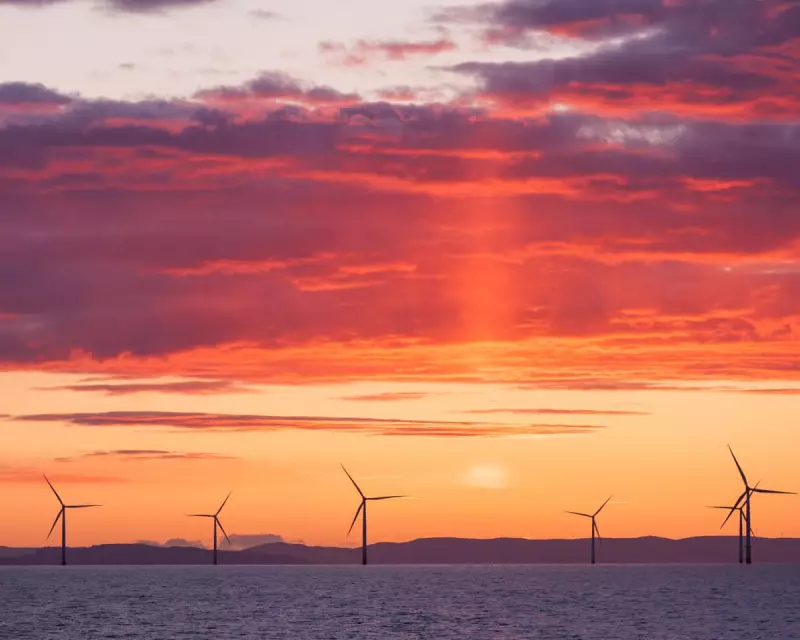
In a landmark moment for Britain's energy future, the government has announced the results of a historic offshore wind auction, securing a record-breaking amount of clean power and delivering a sharp rebuke to political opponents who claimed such ambitions were unachievable.
A Record-Breaking Result for Energy Security
Energy Secretary Ed Miliband revealed that the auction has successfully procured 8.4 gigawatts (GW) of new offshore wind capacity. This colossal figure represents the largest amount of offshore wind ever secured in a single auction in Britain, or indeed across Europe. The new capacity is enough to supply the equivalent of more than 12 million UK homes with electricity.
Miliband positioned the result as a direct refutation of what he termed a "well-funded rightwing network" that has consistently argued against Labour's goal of achieving clean power by 2030. "Today's historic offshore wind auction has proved the doubters wrong," he stated, emphasising that the move away from volatile international fossil fuel markets is the only sustainable path to lower energy bills for British households.

Cheaper than Gas and a Jobs Bonanza
A central pillar of the government's argument is cost. The auction results show that the average price secured for fixed offshore wind projects is £90.91 per megawatt-hour. This, Miliband stressed, is "significantly cheaper" than the cost of building and operating a new gas-fired power station.
The auction marks a dramatic turnaround from the failed 2023 round under the previous Conservative administration, which did not attract a single offshore wind project. The successful bids span the nation, including major projects like Dogger Bank South off Yorkshire and Norfolk Vanguard off East Anglia, which are among the world's largest planned wind farms. It also includes the Berwick Bank development in the North Sea, the first new Scottish project since 2022, and Awel Y Môr, the first Welsh project to win a contract in over a decade.
This development is not just about energy generation; it's a cornerstone of a new industrial strategy. The government estimates the auction will unlock £22 billion in private investment and support the creation of thousands of jobs in engineering, manufacturing, and technical roles. The ambition is to support 100,000 offshore wind jobs by 2030.
The New Political Dividing Line
Miliband framed the success as creating a clear political choice for the country. He accused the Conservatives and Reform UK of wanting to "wage war on clean energy," thereby keeping Britain dependent on expensive fossil fuels and jeopardising future job creation and climate action.
"Labour is brave enough to face down the naysayers because clean power is the right choice for lower bills, energy security, good jobs and the climate," he wrote. The announcement was coupled with reminders of short-term bill relief, including an average £150 reduction in annual energy costs from April and an expansion of the Warm Home Discount.
With UK electricity demand projected to more than double by 2050, Miliband argued that building new renewable infrastructure is not an ideological option but an economic and environmental necessity. "Today we've proved the doubters wrong again," he concluded, "and we will continue to do so."






