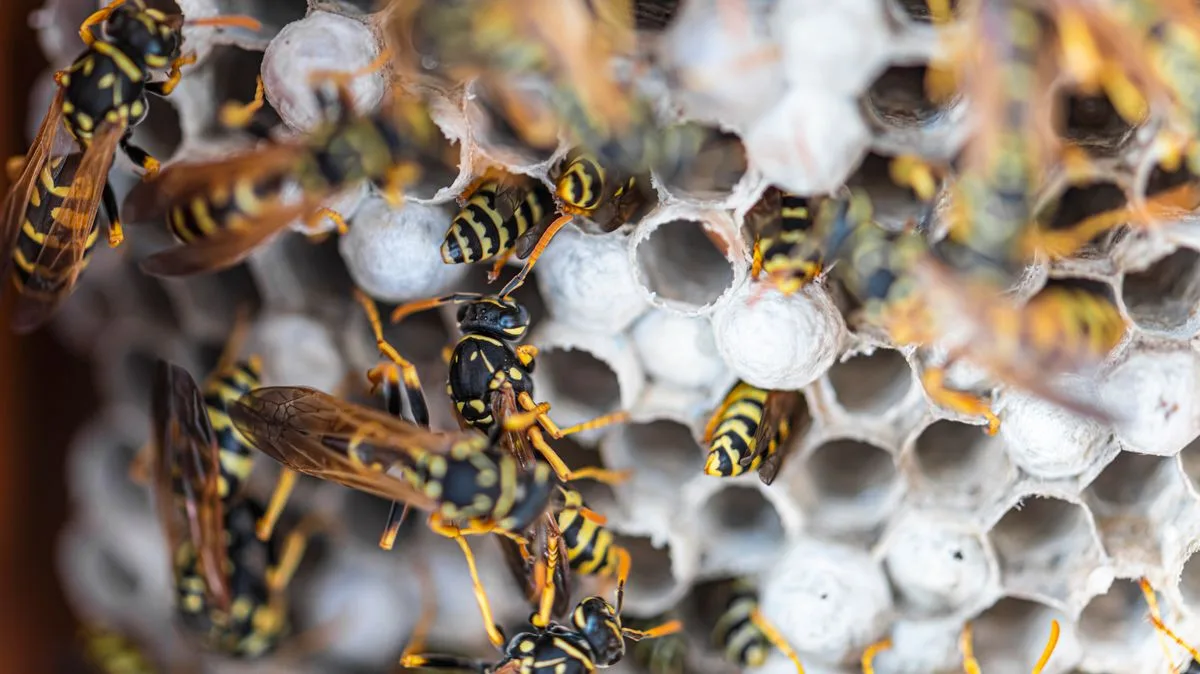
As temperatures across parts of the UK are set to reach 26°C this week, many Brits are looking forward to enjoying the sunshine. However, a new warning might make you think twice before heading out into the garden.
Rentokil Issues Urgent Warning
Rentokil Pest Control has issued an urgent warning over an influx of wasps. Wasp nest activity has spiked by 61 per cent year-on-year, signalling an active start to the season, according to the experts.
While most people think of wasp nests forming in trees, Rentokil's technicians warn that they can actually form in everything from garden furniture to boots. Grisly photos released by Rentokil even show a wasp nest inside a teddy bear.
“They’re not fussy about where they set up home, and anywhere warm, sheltered and undisturbed will do,” said Paul Blackhurst, Head of Technical Academy at Rentokil Pest Control. “Which is why people can find nests tucked into bags left in the garage, inside their wellington boots, or deep inside garden furniture.”
Residential Nest Activity Surges
According to Rentokil, residential wasp nest activity has increased by 61 per cent year-on-year from Q2 2024 to Q2 2025. “As daylight hours increase and temperatures begin to climb, queen wasps emerge from their winter hibernation in search of somewhere to build nests,” explained Mr Blackhurst.
Normally, nests start small, but they soon grow and become much more difficult to contain. “What starts as a small nest in spring can quickly develop into a large, highly active colony by the height of summer,” Mr Blackhurst said. “The earlier a nest is identified and treated, the easier and safer it is to manage.”
Warning Against DIY Hacks
If you do spot what you think is a wasp nest in your home or garden, you might be tempted to turn to social media for answers. A quick search online reveals several questionable hacks for tackling wasp nests, including burning, flooding, or even bashing. However, Mr Blackhurst warns that these dodgy hacks can actually end up doing more harm than good.
He said: “Tackling a wasp nest yourself can be extremely dangerous. Disturbing a nest may trigger aggressive behaviour and increase the risk of multiple stings.”
If you suspect a nest is present, Rentokil advises you arrange professional treatment, particularly as colonies become larger and more defensive throughout the summer months.
When Are Wasps Most Aggressive?
Wasps are usually most aggressive between August and September. At this point, the queens leave the nest to find hibernation spots, leaving the workers without a nest to serve. This causes the wasps to roam and become more desperate.
With the unusually warm weather forecast for this weekend, experts have warned that wasps may also be more likely to sting. Usually, wasps are most aggressive in the late autumn. However, this year’s hot spring has created perfect nesting conditions, and colonies have “exploded” in size far earlier than normal.
Laurence Edwards, a leading beekeeper and entomologist, called this a “perfect swarm” of environmental factors. “It’s a perfect swarm and it means that everyone should be on the lookout – both for their own safety and that of other insects, such as bees,” he explained.
The wasp’s sting is designed as a self-defence mechanism, but unlike bees, wasps can sting multiple times.
Why Do Wasps Sting and Why Do They Hurt So Much?
Wasp stings are common, especially during the warmer months when people are outside for longer periods of time. They tend to occur in the later summer months when the social structure of the colony is breaking down. At this time, the group mindset is changing from raising worker wasps to raising fertile queens, which will hibernate over the winter to start new colonies the following spring.
Once the wasp has laid eggs, she stops producing a specific hormone which keeps the colony organised. This leads to the wasps becoming confused and disorientated, and they tend to stray towards sweet-smelling human foods, such as ice cream and jam. This puts them in the firing line of scared and frenzied people who aggravate the animals with wafting hands and swatting magazines.
When the critters become angry and scared, they are prone to stinging. Wasp stings can be uncomfortable, but most people recover quickly and without complications. The sting is designed as a self-defence mechanism, but unlike bees, wasps can sting multiple times. The stingers remain intact and are often primed with venom which enters the bloodstream.
Peptides and enzymes in the venom break down cell membranes, spilling cellular contents into the bloodstream. This can happen to nerve cells, and these are connected to the central nervous system. This breach causes the injured cell to send signals back to the brain. We experience these signals in the form of pain. There are chemicals in the wasp sting which slow the flow of blood, elongating the period of pain.