UK Energy System Requires Urgent Overhaul Amid Global Crises
Chaitanya Kumar argues that the ongoing war in Iran is triggering significant global disruptions, with the UK particularly vulnerable to soaring food prices, escalating fuel costs, and rising interest rates. However, he suggests that with strategic interventions, this crisis could be transformed into an opportunity for positive change. Energy shocks, he notes, do not merely inflate household bills; they can serve as pivotal moments that reshape entire economies. In the 1970s, the UK responded to energy crises by intensifying fossil fuel extraction from the North Sea, which led to increased investment and turned the nation into a net energy exporter. When energy security is threatened, decisive action on a large scale becomes imperative for any serious country.
The Current Fossil-Fuel Shock and Its Broad Impacts
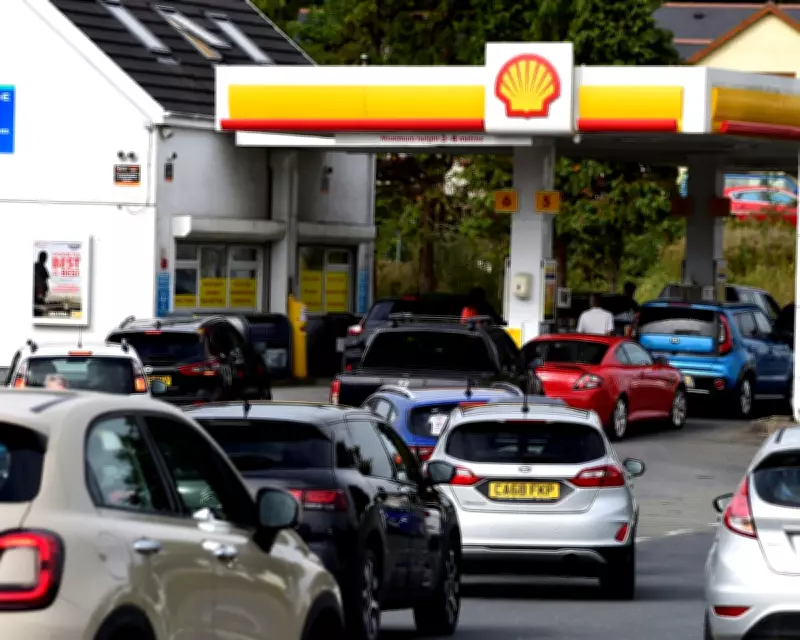
Today, as the conflict in Iran persists, relying on dwindling North Sea reserves is no longer a viable solution. The UK must adapt its energy system rapidly to build a clean, sustainable framework for future generations. A supply deficit of 10 million oil barrels per day, coupled with a reduction of one-fifth in global liquefied natural gas (LNG) trade, is already exerting profound effects worldwide. The UK's heavy dependence on international gas prices leaves it painfully exposed. Public expectations of soaring inflation, market forecasts predicting interest rate hikes over the next year, and government borrowing costs reaching levels unseen since the 2008 financial crisis illustrate the harsh reality of a fossil-fuel shock for an import-dependent nation. This impact extends beyond energy, with UK food inflation already high at 3.3% in February and likely to climb much higher within just three months.
Why Fossil-Fuel Giants Cannot Provide Salvation
One hard truth emerges: fossil-fuel giants will not rescue the UK from this predicament. Recent reports reveal that hundreds of North Sea licences issued by UK governments since 2010 have yielded only 36 days' worth of additional gas. Incumbent powers often resist transitioning away from the systems that granted them influence, as evidenced by BP's renewed focus on oil and gas to rebuild investor confidence and Shell's continued share buy-back initiatives. It is time to acknowledge that when you find yourself in a hole, you must stop drilling. Furthermore, the practice of using gas to set electricity prices for all other energy sources must cease. As the UK shifts toward more renewable energy, gas will increasingly function as a backup generator during periods of low wind and solar generation. It should be treated and compensated as a backup resource, not as the cornerstone of the national grid. Research from University College London and Common Wealth proposes a practical approach where gas plants receive fixed or regulated payments, avoiding the uncertainties of the wholesale market.

Essential Protections and Market Reforms for Households
Market reform alone is insufficient; people require protection on essential goods. This necessitates an essential energy guarantee: a basic band of energy for every household at a fixed, affordable price, with market rates applying only above that threshold. Similar measures were implemented in Austria, the Netherlands, and Poland following the 2022 energy crisis, offering a fairer and more realistic alternative to the UK's blanket bailout via the energy price guarantee after the invasion of Ukraine. Additionally, the costs associated with social and climate policies should be entirely removed from electricity bills and shifted to general taxation, which could save over £100 for an average household. These steps would not only assist those struggling to afford heating but also help curb inflation.

The UK also needs an essential food guarantee: a protected basket of basic goods sold at low, stable prices for a defined period, supported by long-term procurement and direct aid for domestic farmers and food businesses producing these essentials. France experimented with this concept in 2023. While the UK produces more than 60% of its consumed food and the government aims to bolster UK produce through public procurement, the nation remains deeply reliant on imports for key items such as fruit, vegetables, staples like rice, and farm inputs like fertiliser. A just-in-time supply chain with minimal slack further exacerbates vulnerability to shocks.
Long-Term Solutions: Embracing Renewable Energy
The long-term strategy for reducing bills and enhancing national security lies in powering lives with renewable energy. The UK's record wind output this year has already helped decrease gas-fired generation and mitigate the impact of recent gas price spikes. Simultaneously, suppliers report a surge in interest in solar panels, batteries, and heat pumps as households seek to insulate themselves from global turmoil. This trend is unsurprising, given that driving an electric car using smart tariffs can save over £1,000 annually based on current petrol prices, and rooftop solar panels can save more than £750 on electricity. In Kumar's own home, a solar panel with smart batteries resulted in an electricity bill of just £1.14 for March.
However, these savings are only accessible if people can overcome upfront cost barriers. Therefore, government-backed leasing for electric vehicles, along with zero-interest loans or subscription-style finance for solar panels, batteries, and heat pumps, is crucial. This principle applies to large-scale renewables as well. Wind and solar projects entail significant upfront construction costs, especially in an era of rising interest rates. The UK government and the Bank of England should collaborate on a dual-interest-rate policy: one rate for the broader economy and cheaper, targeted funding for clean power, grids, storage, and industrial electrification. Examples from China's central bank, which offers preferential funding for carbon-reduction lending, and the Bank of Japan, which has provided zero-interest climate-response lending for years, demonstrate that when a country deems something vital, central bankers and treasuries can work in unison.
Seizing the Opportunity for a Sustainable Future
The UK does not require another lesson on its exposure to global energy shocks, yet it is receiving one regardless. The 1970s demonstrated that energy crises can fundamentally remake a country. The pressing question today is whether the UK can treat this moment as an opportunity to safeguard living standards and construct a clean, secure energy system for the unstable decades ahead. Chaitanya Kumar is the head of economic and environmental policy at the New Economics Foundation.