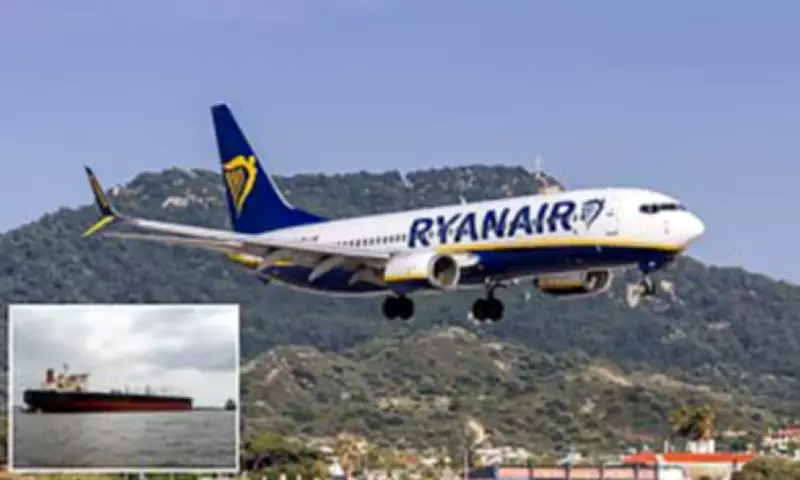
The ongoing war in the Middle East is having a profound impact on British lives, despite the geographical distance. Air travel is experiencing significant disruptions due to rising jet fuel costs and altered flight routes. Europe relies on the Strait of Hormuz for approximately 40 percent of its jet fuel, a critical passage that is now nearly completely closed.
UK Fuel Supply Under Pressure
The United Kingdom receives direct jet fuel supplies from the Middle East, with additional indirect shipments arriving via Belgium and the Netherlands. The final known shipment from the Middle East to Britain is anticipated to arrive shortly. This raises urgent questions about future supply chains and potential shortages that could affect holidaymakers.
Expert Warnings of Impending Shortages
Former airline captain Emma Henderson MBE has issued a stark warning to the Daily Mail, indicating that the situation could deteriorate to a point where there is simply "not enough" fuel available. She explains, "The bottom line is that if oil is not released from the Straits of Hormuz, there will come a point when there is not enough—and this is already happening in Europe where some airports have run out of jet fuel."

If shipments from the Gulf cease entirely, airlines and the UK government are prepared to source supplies from alternative locations. A spokesperson for the Department for Energy Security and Net Zero confirms, "Jet fuel shipments are continuing to arrive in the UK. The UK receives imports of jet fuel from India, the US, and the Netherlands as well as smaller amounts from a range of other countries. We are engaging with British carriers to support their operations against the backdrop of war in the Middle East, and to limit the impact on passengers."
Potential Impact on Flights and Fares
Despite uncertainties regarding future fuel sourcing, aviation expert Henderson advises that holidaymakers should not be overly concerned. She states, "I don't think people need to panic about their summer holidays being cancelled but I think we all need to be aware of what's going on and the impact it is potentially going to have on our lives."
Long-haul flights are predicted to be the first affected by shortages due to their higher fuel consumption and lower cost-effectiveness compared to short-haul routes. Henderson warns, "There might be an impact on some flights as airlines have to reduce capacity." Additionally, flight costs could eventually rise as a result of jet fuel shortages.
Henderson elaborates, "It will also impact the cost of flights in the long run but not necessarily yet because large airlines hedge fuel prices and will be protected on price for most of 2026 but that's only good if you can actually get the stuff into the country in the first place isn't it." She recommends planning ahead and considering alternative travel methods, such as sea or land routes, adopting an adaptable approach to potential disruptions.
Airline Executives Express Concerns
Ryanair chief executive Michael O'Leary recently cautioned that travellers face a summer of uncertainty if the Middle East conflict continues to disrupt global oil routes. Speaking to Sky News, O'Leary noted that while the budget airline is "reasonably well-hedged" on 80 percent of its jet fuel, passengers could experience disruptions from "early May."
O'Leary revealed that he is paying $150 per barrel for approximately 20 percent of his fuel, emphasizing that the more "immediate concern" is whether there will be sufficient jet fuel to keep planes operational. He warned of a "reasonable risk" that 10 to 25 percent of supplies could be endangered in May and June, potentially leading to summer travel chaos for millions.
The Ryanair boss stressed that the summer season depends on the reopening of the Strait of Hormuz for oil-carrying vessels. Recent attacks on ships by Iran have further complicated the situation. However, O'Leary remains optimistic, stating that if the Strait reopens and the war concludes by April, there would be "almost no risk to supply." He defiantly asserted that he does not expect to cancel flights, despite competitors struggling with market instability.

Global Airline Responses to Fuel Crisis
EasyJet has warned European customers to anticipate higher prices towards the end of summer as their fuel hedges expire. Other carriers, including Cathay Pacific, AirAsia, Thai Airways, and Air New Zealand, have already increased air fares. United Airlines is considering price hikes of up to 20 percent, while some firms have resorted to cancelling flights altogether.
Budget US airline JetBlue has raised checked baggage fees, citing "rising operating costs." A spokesperson explained, "As we experience rising operating costs, we regularly evaluate how to manage those costs while keeping base fares competitive and continuing to invest in the experience our customers value."
Additional airlines are implementing various measures in response to the surge in jet fuel prices:
- Aegean Airlines: Expects a "notable impact" on first-quarter results due to suspended Middle East flights and fuel price spikes.
- Air France-KLM: Plans to increase long-haul ticket prices by 50 euros per round trip.
- Air New Zealand: Has raised ticket prices and suspended its full-year earnings forecast.
- IndiGo: Introduced fuel charges on domestic and international flights, including 900 rupees for Middle East routes and 2,300 rupees for European routes.
- SAS: Cancelled 1,000 flights in April due to high oil and jet fuel prices.
- Thai Airways: Increased fares by 10-15 percent to address rising fuel costs.
- United Airlines: Cutting unprofitable flights over the next two quarters in anticipation of sustained high oil prices.
- Virgin Australia: Adjusting fares to reflect rising cost pressures exacerbated by the Middle East situation.
Overall, while the UK government and airlines are working to protect flights and fuel supply to avoid disruption, the ongoing war in the Middle East continues to pose significant challenges to the aviation industry, with potential repercussions for British travellers throughout the summer season.