Trump's Fossil Fuel Agenda Creates Global Energy Market Turmoil
President Donald Trump's aggressive energy policies and military actions against Iran have exposed what critics describe as the "dangerous volatility" of continued fossil fuel dependence, creating global economic instability and environmental damage.
Energy Costs Soar Amid Middle East Conflict
The United States and Israel's bombardment of Iran and southern Lebanon has triggered a humanitarian and environmental crisis, with escalating tensions threatening to increase casualties while adding planet-heating emissions and destroying critical drinking water infrastructure. Iran's subsequent blockade of the Strait of Hormuz, through which approximately one-fifth of global oil normally flows, has sent energy costs skyrocketing worldwide.
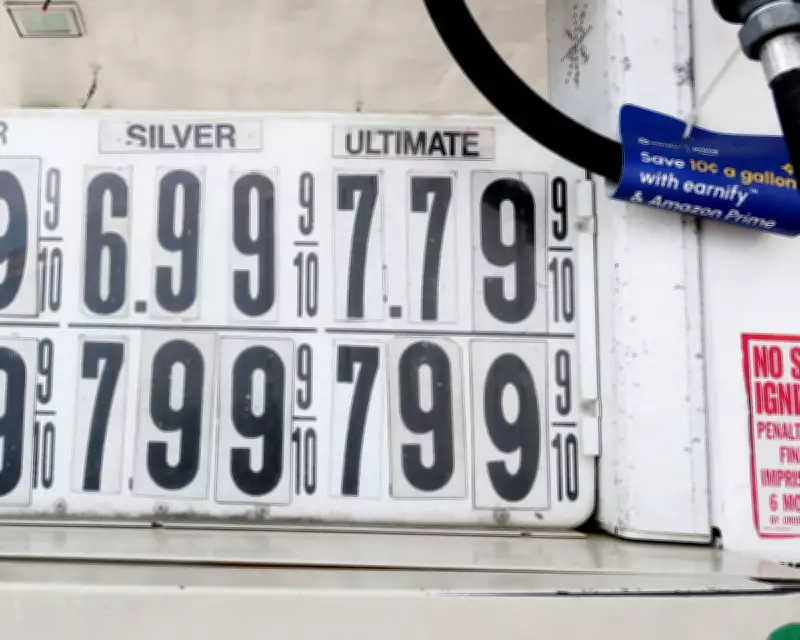
Since the conflict began last month, consumers globally have paid more than $100 billion in additional costs to fossil fuel companies. In the United States, the national average gasoline price has surged to nearly $4 per gallon, with some areas experiencing even more dramatic increases. In New York City during March 2026, prices for 87 octane gasoline exceeded $7 per gallon at certain stations.

"A Bet That Isn't Going Well"
"It's quite a bet the president has made on fossil fuels, and as of today, it isn't going so well," stated Alice Hill, an energy and environment expert at the Council on Foreign Relations. "This is a very stark reminder that the green transition will have huge benefits for the long-term security of the nation. Countries that have invested in clean energy like solar and wind will be better placed to weather this crisis. But President Trump has rejected that approach, which just makes us more vulnerable."
Trump has taken extraordinary measures to block clean energy development in the United States while simultaneously threatening to seize oil from Iran and other oil-rich nations. "To be honest with you, my favorite thing is to take the oil in Iran, but some stupid people back in the US say: 'Why are you doing that?' But they're stupid people," Trump told the Financial Times.
Environmental and Legal Concerns Mount
The fossil fuel-focused nature of the Iran conflict has been further emphasized by Trump's threat to attack Kharg Island, the strategic 5-mile-long facility where 90% of Iran's oil is processed. The president has warned that if a deal to reopen the Strait of Hormuz isn't reached, the U.S. would destroy "all of their Electric Generating Plants, Oil Wells and Kharg Island (and possibly all desalinization plants!)."
Destroying civilian infrastructure such as power and water facilities violates the Geneva Convention and would constitute a war crime. Such actions would likely further increase global energy costs, contradicting Trump's 2024 election pledge to lower expenses for Americans.
"The president is locking us into 20th-century energy systems when we have wind and solar that could loosen the chokehold on the Strait of Hormuz," Hill added. "That retrenchment is very striking when you see oil prices soaring and no clear strategy to end the war."
Domestic Environmental Damage Compounds Crisis
The multiple dangers of fossil fuel dependence have become apparent both internationally and domestically. Missile strikes on Iranian oil depots have created toxic black smoke that has shrouded communities, potentially causing environmental damage lasting decades.
In the United States, scientists recently determined that record heatwaves in western states this month were "virtually impossible" without human-caused climate change. Simultaneously, an oil spill spread across 600 kilometers (373 miles) of the Gulf of Mexico.
During a major oil and gas industry conference in Houston, U.S. Energy Secretary Chris Wright urged producers to increase drilling. While the conference proceeded, a Texas oil refinery located just an hour's drive away exploded, creating a massive plume of black smoke and forcing nearby residents to remain indoors.

Administration Targets Clean Energy and Environmental Protections
Despite these risks, the Trump administration has actively worked to undermine clean energy initiatives by banning projects from federal lands and waters while eliminating subsidies. Last week, the administration took the unprecedented step of paying French company TotalEnergies $1 billion in taxpayer funds to abandon plans for a new offshore wind farm.
The administration has also targeted endangered species protections to facilitate expanded oil and gas drilling. On Tuesday, top officials will convene a rarely used "God squad" committee under the Endangered Species Act, empowered to override protections for species facing extinction when project benefits are deemed to outweigh conservation needs.
The Department of Defense has requested an exemption on national security grounds that would remove protections for the Rice's whale, found only in the Gulf of Mexico with approximately 50 individuals remaining. Other vulnerable species, including whooping cranes and sea turtles, would also lose Endangered Species Act protections.
"This is completely illegal, and it wouldn't even release one more gallon of oil," said Kieran Suckling, executive director of the Center for Biological Diversity, which is suing the government over the "God squad" meeting. "There are these bare bones restrictions on boat speeds and whale monitoring that could be lifted, and then the Rice's whale could go extinct in five years. It will go extinct for no reason."
"We need to transition away from fossil fuels to save our planet and our democracy," Suckling continued. "We are seeing the costs of fossil fuels right now – war, the overruling of democracy, and the ignoring of laws. It's not just global warming."
Scientific Consensus Ignored
Scientists have repeatedly warned that the world must urgently transition from fossil fuels to avoid catastrophic climate consequences. While carbon emissions continue at dangerous levels, the plummeting costs of wind and solar power have prompted record global investments in renewables.
Trump has dismissed these concerns, recently labeling environmentalists as "terrorists" and previously calling climate change a "hoax" and "scam." His administration's policies represent a deliberate effort to extend the fossil fuel era despite mounting evidence of its economic, environmental, and security vulnerabilities.