President Donald Trump has asserted that the recent surge in oil prices represents a "small price to pay" for global security and peace, as his Energy Secretary acknowledged that Americans may face elevated costs at the gas pump for several weeks, though not extending into months. This statement comes in the wake of joint military strikes by the United States and Israel on Iran, which have disrupted oil production and shipping across the Middle East, triggering significant market volatility.
Oil Prices Surpass $100 Per Barrel Milestone
On Sunday, oil prices exceeded the critical threshold of $100 per barrel for the first time in over three and a half years, marking a dramatic escalation in energy costs. The increase showed no signs of slowing, with Brent crude, the global benchmark, trading at $101.19 a barrel shortly after markets reopened on the Chicago Mercantile Exchange, reflecting a 9.2 percent rise from Friday. Meanwhile, U.S.-produced West Texas Intermediate crude stood around $107.06 per barrel, climbing more than 16 percent from the previous day. This surge follows a staggering 36 percent spike in U.S. crude prices last week, the largest one-week increase since March 1983.
Trump's Stance on Energy and Security
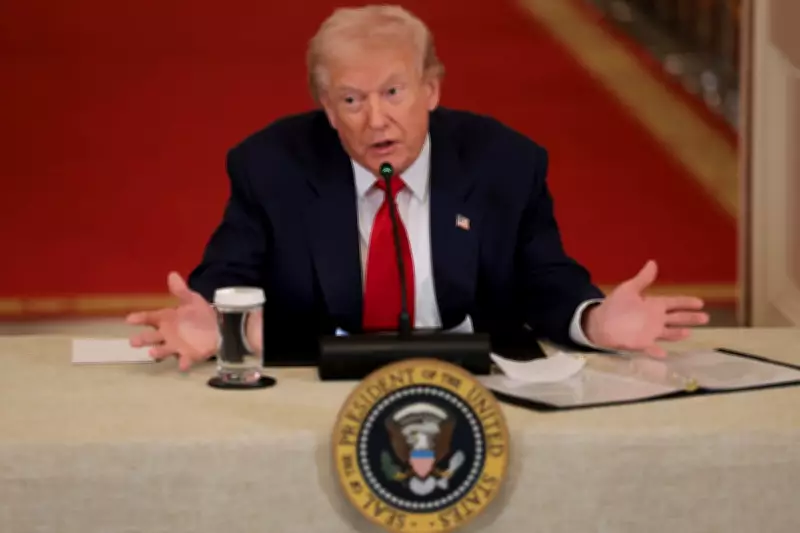
In a post on Truth Social on Sunday, President Trump downplayed the impact of rising oil prices, framing them as a temporary necessity for broader stability. "Short term oil prices, which will drop rapidly when the destruction of the Iran nuclear threat is over, is a very small price to pay for U.S.A., and World, Safety and Peace," he wrote. Trump has appeared largely unconcerned about the rise in gas prices since the conflict began, initially acknowledging on Tuesday that pump prices would be higher "for a little while" before hardening his stance by Thursday, telling Reuters, "If they rise, they rise."

Energy Secretary's Assurance on Gas Prices
U.S. Energy Secretary Chris Wright, speaking on CNN Sunday, recognized the financial strain on Americans but offered reassurance about the duration of high gas prices. "Gasoline today is still $1.50 a gallon cheaper than it was in the middle of the Biden administration," Wright noted, while acknowledging that current levels are too high for many struggling with the cost of living. He emphasized, "We want it back below $3 a gallon. And it will be again before too long." When pressed by CNN anchor Jake Tapper on the timeline, Wright clarified, "You never know exactly the time frame of this, but, in the worst case, this is a weeks, this is not a months thing."
Market Anxiety and Geopolitical Impacts
Wright, the former CEO of fracking firm Liberty Energy, suggested that the market's underlying anxiety is not fully justified, stating, "You're seeing a little bit of fear premium in the marketplace, but the world is not short of oil today or natural gas." However, the conflict in Iran has had tangible effects on oil infrastructure. Since the war began in late February, tanker traffic through the Strait of Hormuz has sharply declined. This vital waterway, located along southern Iran, is a critical chokepoint through which about 20 percent of global oil supplies travel, according to the Environmental Protection Agency. Additionally, Kuwait has slashed production at multiple oil fields after running out of storage capacity for its bottled-up crude, as reported by The Wall Street Journal.
Expert Predictions and Public Concerns
Multiple experts and foreign officials have warned that oil prices could continue to climb. Patrick De Haan, head of petroleum analysis for GasBuddy, estimated on Sunday that there's an 80 percent chance the national average price of gasoline will reach $4 in the next month, up from the current U.S. average of $3.45 according to AAA. Goldman Sachs projected that oil prices could shoot up to as high as $150 per barrel by the end of the month, while Qatar's energy minister cautioned that the Iran war could lead to a dramatic spike in oil prices and "bring down the economies of the world."

Broader Trends and Political Backdrop
Beyond the immediate conflict, broader trends are influencing domestic gas prices. AAA noted that prices tend to increase in the spring as demand rises, compounding the geopolitical pressures. Behind the scenes, the Trump administration is reportedly "looking under every rock for ideas on improving energy prices," according to an unnamed industry executive who told Politico that Wright and Interior Secretary Doug Burgum had been "screamed at" to find "good news." The White House dismissed this story as "unverified gossip."
Public sentiment reflects growing concerns, with a Marist poll conducted earlier this month finding that most Americans (56 percent) oppose U.S. military action in Iran. Simultaneously, affordability remains a major issue, as over half of voters described health care, a new car, and a weeklong vacation as unaffordable in a late February Ipsos survey. As the situation evolves, the interplay between energy markets, geopolitical strategy, and domestic economic pressures continues to shape the narrative around oil and gas prices in the United States and globally.