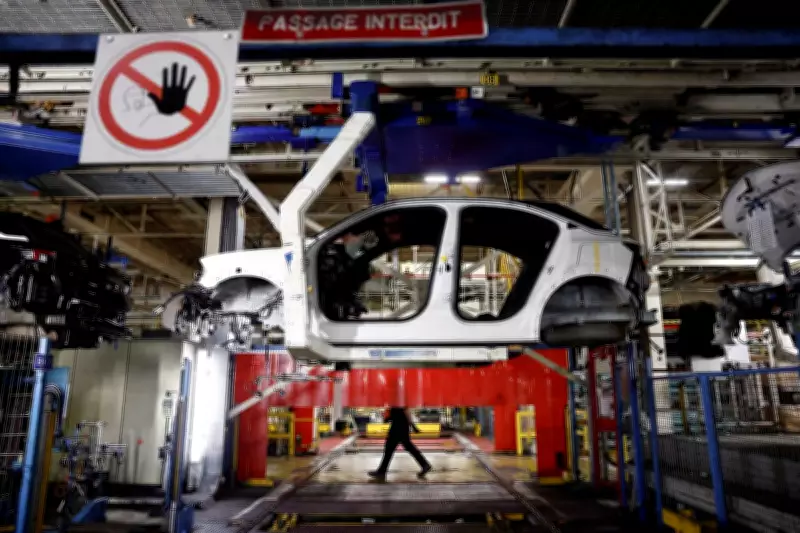
Stellantis is set to revolutionise Europe's electric vehicle market with plans for a new range of small, low-cost fully electric cars, aiming to revitalise the continent's struggling entry-level car segment and manufacturing industry.
The automotive giant, owner of brands including Fiat, Opel, and Citroen, announced that production of its affordable, compact "E-Car" will commence in 2028 at its Pomigliano d'Arco plant in Italy, with projections for substantial volumes. Sources close to the matter indicate a target price point of approximately 15,000 euros ($17,500).
Strategic Move Amid Market Neglect
This strategic move comes as many car manufacturers have increasingly overlooked the low-cost, entry-level market. Rising expenses associated with electrification and stringent safety regulations, coupled with a drive for higher profit margins, have pushed companies towards producing larger and more expensive vehicles.

Stellantis stated on Tuesday that the "E-Car" initiative will leverage strategic partnerships to minimise costs and accelerate development, simultaneously bolstering local manufacturing employment.
CEO's Vision and Business Plan
Antonio Filosa, the CEO, who is scheduled to unveil a new business plan on Thursday, expressed the company's ambition to meet the demand for "small, stylish vehicles" produced within Europe for its own market, confirming the "E-Car" would manifest as "new models for multiple brands".
Stellantis has argued that Europe, where safety and emissions rules have significantly added to the cost of new cars, needed a new generation of stripped-down, cost-efficient small vehicles, in the style of Japan's 'kei cars'. Kei cars are urban vehicles traditionally sold in Japan with size and engine restrictions, enjoying lower tax and insurance costs. They cover a significant portion of the local market.
European Commission Support
The European Commission has recognised the new E-Car segment for its potential to boost European design and manufacturing jobs and support a wider EV adoption, especially for everyday city mobility, Stellantis said on Tuesday.
Stellantis has warned that without more affordable EVs, the EU's push towards zero-emission mobility risks stalling, particularly among lower-income consumers.
Safety Regulations Impact
Safety features in the EU, such as sensors detecting whether a driver is falling asleep or an SOS button, are required on cars from the smallest ones up to larger SUVs, with a larger impact on the cost of cars used mainly for short city journeys.
With expected high volumes, the E-Car should help Stellantis improve its underused production capacity in Europe, a goal Filosa is also pursuing by expanding cooperation with Chinese partner Leapmotor. The two automakers announced earlier this month the joint production of two models in Spain, while Stellantis suggested manufacturing cooperation with Dongfeng could expand beyond China.
The Pomigliano plant manufactures models including the Fiat Panda, which is set to remain in production at least until 2030. Italian unions welcomed the announcement and said in a statement the new production should eventually allow the plant to reach full employment. They also confirmed the E-Car price.