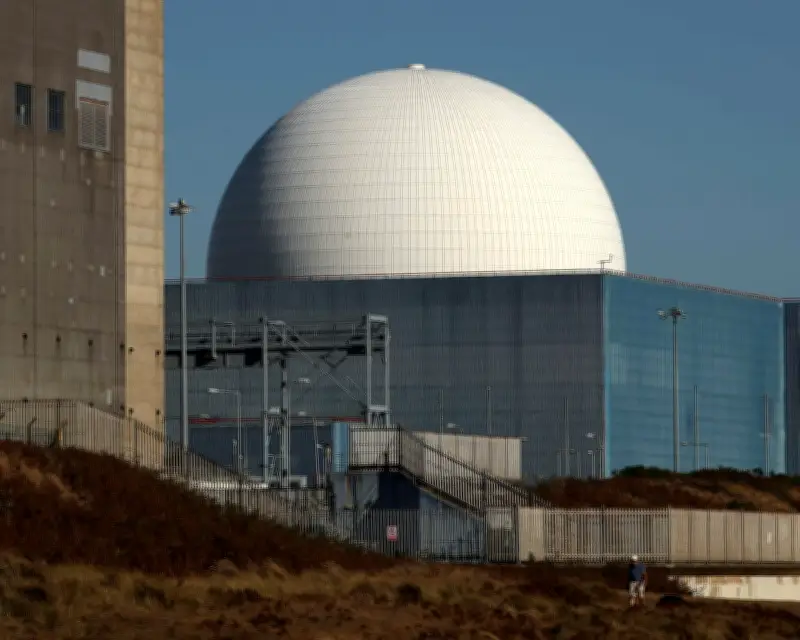
The Sizewell B nuclear power plant in Suffolk, which was due to shut down within the next decade, will continue generating electricity until 2055 after the government granted a 20-year life extension. The plant, which began operations in 1995, produces 3% of Britain's electricity, enough to power the equivalent of 2.5 million homes.
Government backs nuclear expansion
The extension was approved by the government for Sizewell's owner, French state utility EDF, alongside policies to encourage new nuclear projects. The government aims for a "golden age of nuclear" to meet rising electricity demand from electric vehicles, low-carbon heating, and AI data centres while maintaining climate commitments.
Energy Secretary Ed Miliband said: "Nuclear power is vital for our energy security, and this extension will help produce the clean power our country needs." Chancellor Rachel Reeves added: "This is a real vote of confidence in the hundreds of skilled workers in Suffolk who will power Britain's clean energy future, delivering the long-term certainty that businesses and workers need."
Financial details of the deal
Under the agreement, EDF will receive £70.50 for every megawatt-hour Sizewell B generates from 2035, when it was originally due to close. Most of the extra investment needed to maintain the plant will come from EDF, with 20% from Centrica, matching its ownership share in EDF's UK reactors.
Other nuclear extensions and new projects
Sizewell B is the latest reactor to secure an extension, following decisions to prolong operations at four 1980s-built plants. Heysham 2 in Lancashire and Torness in East Lothian, originally set to close in 2018, will now run until March 2030. Heysham 1 and Hartlepool in Teesside, initially expected to close in 2008, will operate until March 2028.
The first new nuclear plant in a generation, Hinkley Point C in Somerset, is under construction and expected to generate power in the early 2030s. Its successor, Sizewell C adjacent to Sizewell B, is scheduled to start operations before 2039. The government is also supporting small modular reactors, which promise quicker development and lower costs, with generation expected in the 2030s.
Renewable energy ambitions
The nuclear plans complement a wider renewable energy ambition: by the end of the decade, onshore wind could double, solar power triple, and offshore wind quadruple. On Wednesday, ministers approved Great Britain's second-largest solar farm, One Earth Solar Farm, on the borders of Nottinghamshire and Lincolnshire, which could power more than 200,000 homes annually, equivalent to half the homes in Lincolnshire. This marks the 30th major clean energy project approved by the Labour government since it took power two years ago.
Miliband said: "The only way to have energy security is if we take a pro-growth approach to building more clean energy in Britain. For two years that is exactly what this government has done."