

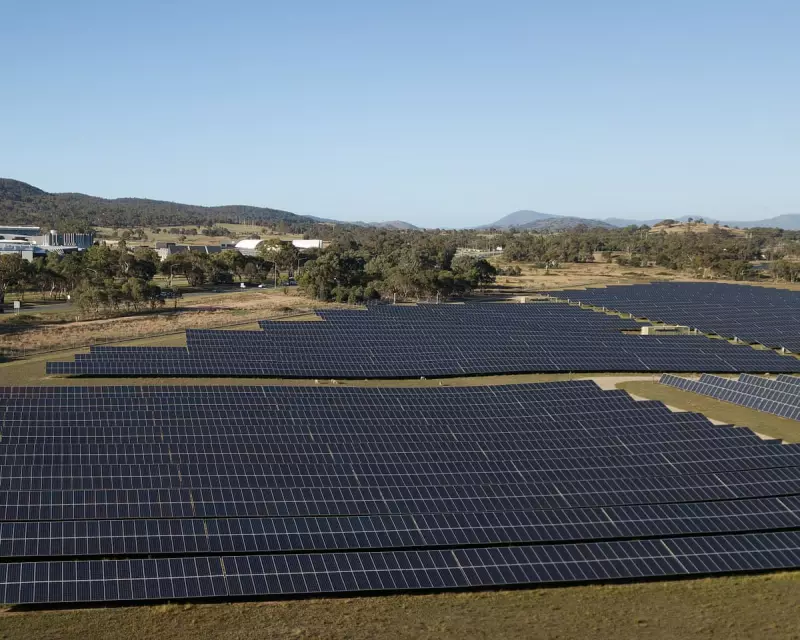
A landmark study from Australia has delivered a powerful message for the global energy transition: a grid dominated by renewable sources is not only feasible but significantly cheaper. The analysis, conducted by the country's national science agency, CSIRO, and the Australian Energy Market Operator (AEMO), found that electricity generation costs are a third lower in a system powered predominantly by wind and solar.
The Numbers Behind the Energy Revolution
The core finding of the GenCost 2024-25 report is striking. It models a future National Electricity Market (NEM) where 82% of power comes from renewable sources. In this scenario, the cost of generating electricity plummets to approximately $73 per megawatt-hour (MWh). This represents a dramatic 33% reduction compared to the costs associated with the current fossil fuel-heavy system.
Dr. Dietmar Tourbier, a key figure in the report, emphasised that the integration of large-scale renewable projects is the primary driver behind these savings. "The data is clear," the analysis states, "moving to a system rich in renewables directly translates to lower wholesale power prices for consumers."

Wind, Solar and Storage: The Winning Trio
The report highlights which technologies are leading the charge on cost-effectiveness. Onshore wind and solar photovoltaic (PV) power remain the cheapest sources of new-build electricity. Their continued cost decline is the bedrock of the economic case for transition.
However, the study also tackles a critical question: what about when the sun isn't shining and the wind isn't blowing? The answer lies in firming technologies. The analysis confirms that grid-scale batteries and pumped hydro storage are currently the most cost-effective solutions for providing reliable, dispatchable power to back up variable renewables. This combination creates a resilient and affordable system.
Offshore wind, while currently more expensive than its onshore counterpart, is identified as having substantial future potential, particularly for providing power close to major coastal demand centres.
Implications for Policy and Global Markets
The findings from Australia carry significant weight for policymakers worldwide, including in the UK, which faces similar challenges in decarbonising its grid while ensuring energy security and affordability. The report directly challenges the notion that a green grid must be a more expensive one.
By demonstrating that a high-renewables system leads to lower wholesale electricity costs, the study provides a robust economic justification for accelerating investments in wind, solar, and storage infrastructure. It shifts the debate from one about cost burden to one about long-term economic opportunity and price stability for consumers.
The GenCost report, published in December 2025, serves as a crucial evidence-based benchmark. It underscores that the transition to clean energy is no longer just an environmental imperative but an increasingly compelling financial one, with proven technologies ready to deliver cheaper, cleaner power.






