

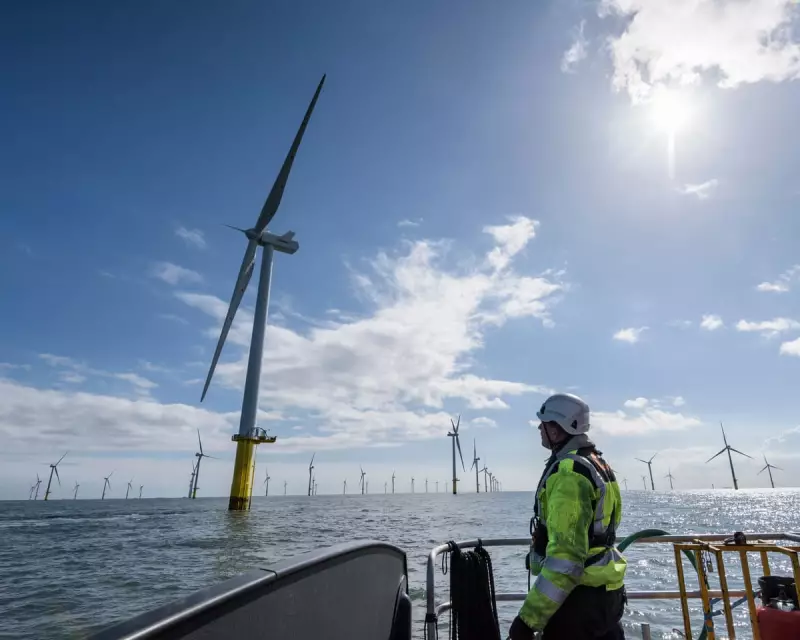
The UK government has hailed its latest offshore wind auction as a monumental success, awarding a record-breaking 8.4 gigawatts (GW) of capacity in what is Europe's largest single auction to date. The new projects are set to generate enough electricity to power approximately 12 million homes across Great Britain.
A Defiant Result Amid Price Concerns
Energy Secretary Ed Miliband declared the auction a "monumental step towards clean power by 2030," celebrating a result that defied earlier, gloomier price forecasts. There had been significant concern that consumers would be locked into paying over £100 per megawatt hour (MWh) for the electricity generated. Instead, the winning bids came in at an average of roughly £91/MWh.
Officials were quick to point to analysis from consultants Aurora and Baringa, which suggested a price of £94/MWh would have been "cost-neutral" for bill payers. Their reasoning hinges on the idea that increased wind power displaces more expensive gas generation, thereby lowering the overall wholesale price of electricity, which currently sits around £81/MWh.

The New Reality of Rising Costs and Trade-Offs
However, the auction also laid bare two hard truths for the UK's energy transition. Firstly, the era of consistently falling prices for offshore wind is over. The previous auction at the end of 2024 secured power at £82/MWh, but those were for 15-year contracts. This round used 20-year contracts, a change estimated by analysts to have reduced the headline price by about £5/MWh. A like-for-like comparison suggests this year's price is closer to £96/MWh, marking a 17% increase and underscoring the impact of higher borrowing costs and strained supply chains.
Secondly, the immediate bill savings for consumers will be modest. With the winning price only slightly below the theoretical neutral point, the downward pressure on energy costs is limited. While more renewables provide a crucial buffer against volatile gas prices, the new, inflation-linked contracts are locked in for two decades within a system already known for high electricity prices.
Beyond the 2030 Target: Pragmatism and Bigger Challenges
The auction has pushed the debate beyond the symbolic target of 95% clean power by 2030. The government now appears on track for 85-90%, leading to questions about the necessity and cost of chasing the final percentage points. Chris Stark, head of the energy department's "mission control," indicated the 2030 offshore wind goal is "on track" but "not essential," allowing future flexibility.
The focus is shifting to more pressing systemic issues. These include the £80bn cost of rewiring the national grid, ensuring new transmission lines are built before wind farms to avoid billions in constraint payments, and formulating a clear plan for the backup gas generation needed for cold, still winter days. A recent government report warned of an "emerging risk" of gas supply shortfalls by 2030 if key infrastructure fails.
This record auction proves the UK can scale up renewable capacity, but it also signals a move into a more complex phase of the energy transition, where every decision involves significant trade-offs between cost, security, and speed.






