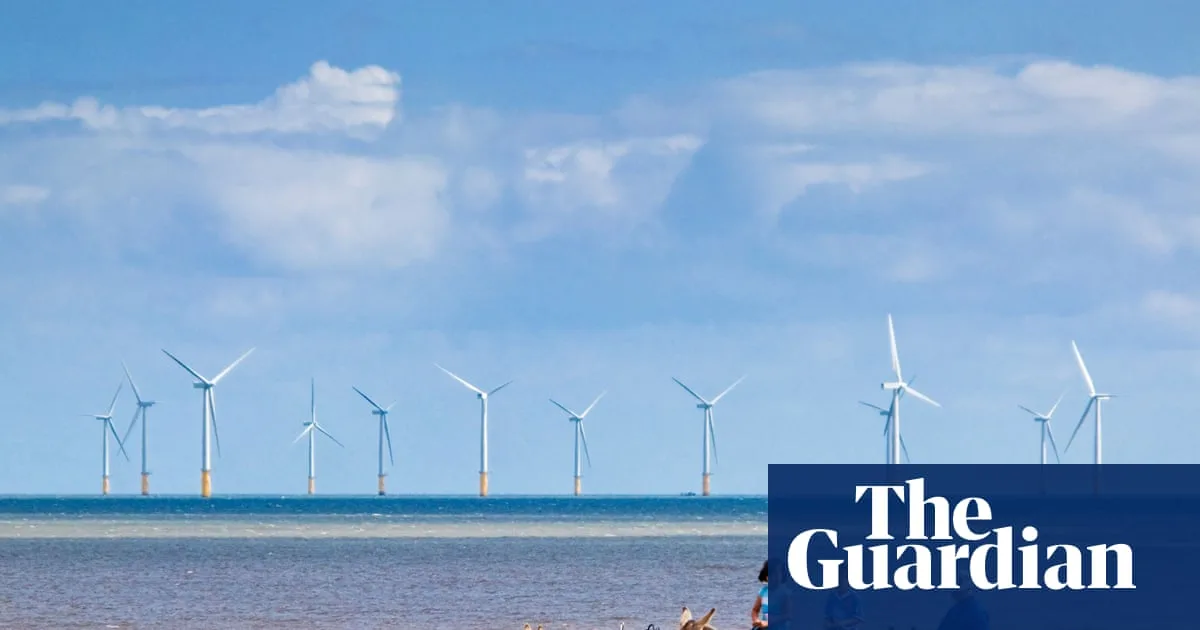
The UK Government has hailed a landmark achievement for the nation's energy future, securing a record volume of offshore wind power in its latest renewable energy auction. Officials insist the results will benefit both consumer bills and long-term investment, despite concerns from some quarters over costs and environmental impact.
Historic Deal for Clean Power
Announced on Wednesday 14 January 2026, the auction round under the flagship renewable energy scheme has contracted 8.4 gigawatts (GW) of new offshore wind capacity. Energy experts state this is precisely the amount required this year to keep the Government on course for its pledge of clean power by 2030.
The contracts comprise six major new wind farm projects across British waters. On average, the projects will receive a guaranteed price, known as a strike price, of £91 per megawatt hour (MWh) for the electricity they generate.
The portfolio includes the Berwick Bank scheme in the North Sea, marking the first new Scottish project since 2022 and poised to be the largest planned offshore wind farm globally. Two other colossal developments are at Dogger Bank South off Yorkshire and Norfolk Vanguard off the East Anglian coast. Furthermore, Awel Y Mor in the Irish Sea is the first Welsh project to win a contract in over a decade.
Economic Boost and Energy Sovereignty
The Department for Energy Security and Net Zero (DESNZ) projects the new wind farms will generate enough power for 12 million homes, attract approximately £22 billion in private investment, and support 7,000 jobs. Crucially, the agreed price for offshore wind is calculated to be 40% lower than the cost of building and operating a new gas-fired power station, according to the industry's levelised cost of energy (LCOE) metric.
Energy Secretary Ed Miliband framed the auction as a decisive move for national independence. "With these results, Britain is taking back control of our energy sovereignty," he declared. "This is a historic win for those who want Britain to stand on our own two feet, controlling our own energy rather than depending on markets controlled by petrostates and dictators." He described securing 8.4GW as a "monumental step" towards Labour's 2030 goal of eliminating fossil fuels from the UK's electricity supply.
The auction also backed two pioneering, though more expensive, projects to develop floating offshore wind technology, where turbines are mounted on floating platforms.
Balancing Costs, Bills, and Concerns
While the average strike price of £91/MWh (around £65 in 2012 prices) is significantly higher than the record low of £37.35 secured in 2022, the Government and industry leaders stress it represents a robust deal for consumers. Chris Stark, head of the Energy Department's clean power mission control, called it a "stellar result" compared to new gas. He emphasised it provides "an immense insurance" against future fossil fuel price spikes.
"Every megawatt of offshore wind that we’re bringing on is a few more metric tons of LNG that we don’t need to import," Stark stated.
Dhara Vyas, Chief Executive of Energy UK, said the results would "strengthen our energy security and deliver lower bills" while providing jobs and growth. Greenpeace UK's policy director, Douglas Parr, also described it as a "win for climate and billpayers", though he urged further government action on infrastructure and financing.
However, the auction has not been without criticism. Shadow energy secretary Claire Coutinho warned that the strike prices were the highest for offshore wind in a decade and higher than the current cost of electricity, arguing it would not reduce bills. From an environmental perspective, Anne McCall, director of RSPB Scotland, issued a stark warning, labelling the Berwick Bank project a "crushing blow for marine wildlife" and criticising the use of public money for a scheme predicted to be highly damaging to seabirds.
Meanwhile, GMB national secretary Andy Prendergast said the "real litmus test" would be whether the promised jobs and UK-based supply chains materialise.