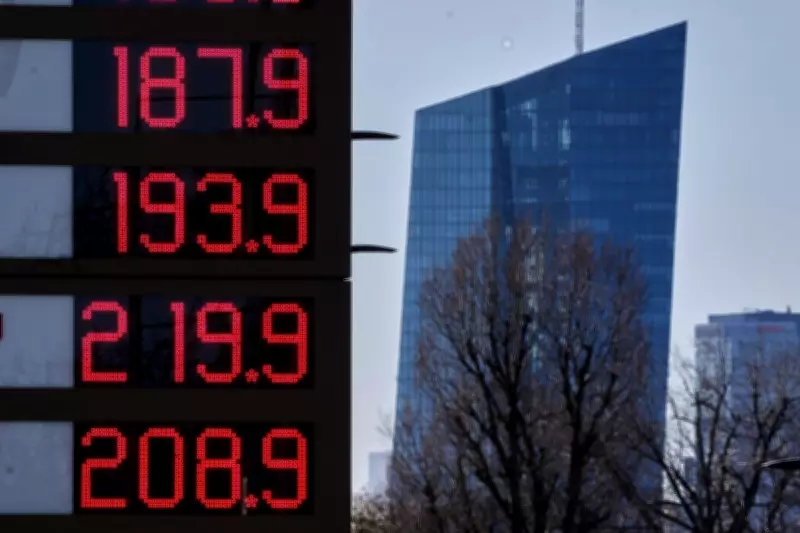
Oil Prices Skyrocket Above $115 Amid Escalating Iran Conflict
Global oil markets have been thrown into turmoil as prices surged past $115 a barrel on Monday, marking the highest levels since 2022. The dramatic increase comes as the US-Israeli war with Iran enters its second week, effectively closing the critical Strait of Hormuz to most shipping operators.
Brent crude rose to $115.31 per barrel, representing a staggering 24 percent increase from Friday's closing price. Meanwhile, West Texas Intermediate crude hit $116.33, up 28 percent. These price levels haven't been seen since Russia's invasion of Ukraine in 2022, signaling a major energy crisis in the making.
Violence Erupts at South Asian Petrol Pumps
The surge in energy prices is causing severe disruption across import-dependent South Asia, where fuel shortages have led to rationing, closures, and violent incidents at petrol stations.

In Sialkot, Pakistan, a man opened fire at a petrol station on Saturday after workers refused to fill jerry cans during panic buying. The shooting resulted in one worker killed and two others critically injured. Separately, another man was killed in Karachi during a fuel queue altercation, highlighting the desperate situation unfolding across the country.
Pakistan responded to the crisis by raising petrol prices by PKR55 per litre on Friday - the largest single increase in the country's history - bringing the price to PKR321 per litre. Officials had warned for weeks that Pakistan's exposure to Hormuz-linked supply disruptions was among the highest of any emerging market.
Bangladesh Implements Emergency Measures
Bangladesh has taken drastic steps to manage the energy crisis, including bringing forward university Eid holidays as an emergency measure to reduce electricity consumption and ease fuel pressure. This decision came after Qatar suspended LNG deliveries to the country.
Officials explained that university campuses consume substantial electricity for residential halls, classrooms, laboratories, and air conditioning systems. The early closure is expected to help alleviate pressure on the country's strained power system. Additionally, five of Bangladesh's six fertilizer factories have ceased operations due to the crisis.
The country had already imposed daily fuel limits last week, capping motorcyclists at two litres and private cars at ten litres after panic buying emptied stations nationwide. The Bangladesh Petroleum Corporation emphasized that "about 95 per cent of our fuel must be imported" and urged consumers to avoid hoarding.
Global Economic Impact and Warnings
Analysts are now warning that oil prices could potentially exceed $150 a barrel - a level that could prove catastrophic for the global economy. Muyu Xu, senior oil analyst at Kpler, told Reuters that "oil prices have now gathered all the ingredients for a perfect storm." Xu added that "if the disruption in the Strait of Hormuz persists for another one to two weeks, we could see prices move toward $130–150 a barrel."
BMI, a unit of Fitch Solutions, identified Pakistan and India as the most vulnerable major emerging markets due to their energy import dependence and high exposure to Hormuz shipping routes. The analysis also highlighted Egypt and Turkey as facing significant risk outside the Gulf region because of fragile external positions and substantial energy subsidies.
Production Cuts and Regional Warnings
The shortages have been exacerbated by production cuts from Iraq, Kuwait, and the UAE as storage tanks fill up due to reduced export capacity through the Strait of Hormuz. Iran's parliament speaker Mohammad Bagher Qalibaf warned that the war's impact on the oil industry "would spiral" following Israeli strikes on oil depots in Tehran and a petroleum transfer terminal that killed four people overnight.
According to Rystad Energy, approximately 15 million barrels of crude oil - representing about 20 percent of global supply - typically pass through the Strait of Hormuz each day. The current disruption has created a bottleneck with far-reaching consequences.

International Responses and Projections
Japan, which sources 95 percent of its crude from the Middle East with roughly 70 percent shipped through the Strait of Hormuz, instructed a national oil reserve storage site to prepare for a possible release of crude on Sunday. This marks the first such directive since 2022, despite Japan maintaining one of the world's highest emergency reserves at 254 days.
India, which imports more than 88 percent of its oil, sought to calm concerns by stating the country held "sufficient stocks" and directing all LPG refineries, both public and private, to increase production.
Qatar's energy minister Saad al-Kaabi, representing one of the world's largest LNG producers, warned that all Gulf energy producers would likely shut down exports within weeks if the Iran conflict continues. "Everybody that has not called for force majeure we expect will do so in the next few days if this continues," al-Kaabi told the Financial Times on Friday.
Meanwhile, US energy secretary Chris Wright offered a more optimistic projection, telling CNN on Sunday that gas prices would return under $3 a gallon "before too long," describing the current spike as "a weeks, not a months thing."