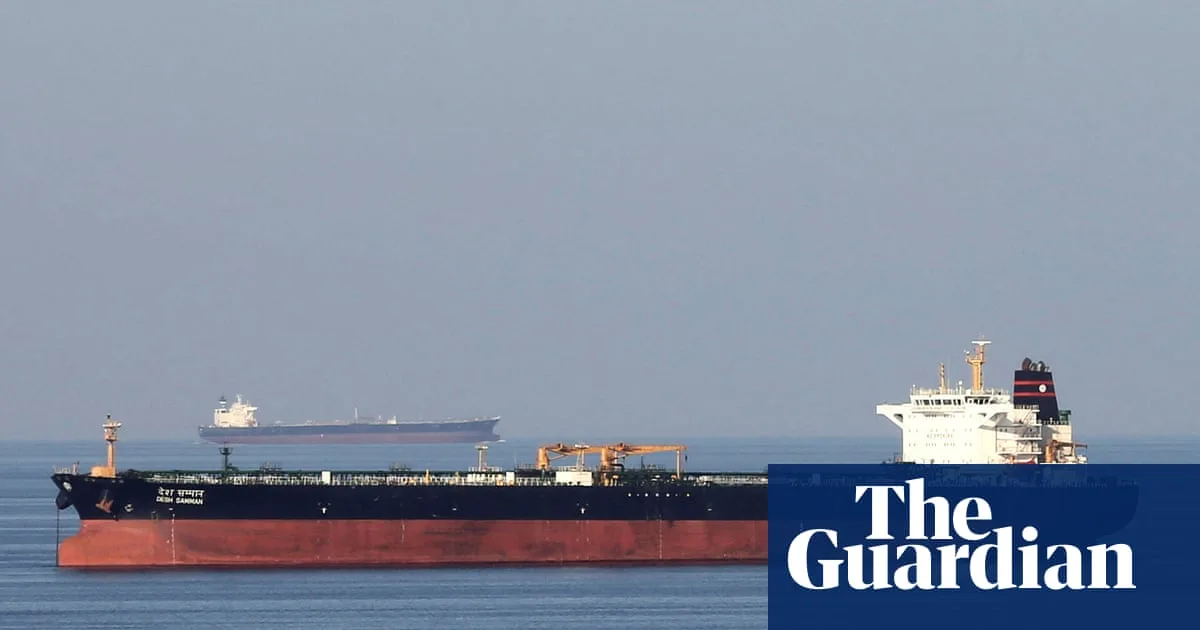
Oil Prices Surge Past $100 Per Barrel as Iran Conflict Disrupts Middle East Production
Oil Prices Surge Past $100 as Iran War Disrupts Production

Crude oil prices have surged beyond the significant threshold of $100 per barrel, marking the first time in more than three and a half years that this milestone has been reached. This dramatic increase is directly attributed to the ongoing war involving Iran, which is severely impeding oil production and shipping operations across the Middle East.

Market Reactions and Price Movements

The price for a barrel of Brent crude, which serves as the international benchmark, was recorded at $101.19 shortly after trading resumed on the Chicago Mercantile Exchange. This represents a substantial increase of 9.2% from its previous settlement price of $92.69 on Friday.

Meanwhile, West Texas Intermediate, the light, sweet crude oil produced in the United States, was selling for approximately $107.06 per barrel. This figure is 16.2% higher than its Friday settlement price of $90.90. Both Brent and West Texas Intermediate prices remain volatile and could fluctuate further as market trading continues throughout the week.

Wide Pickt banner — collaborative shopping lists app for Telegram, phone mockup with grocery list

Historical Context and Recent Trends

The last instance when U.S. crude futures traded above $100 per barrel was on June 30, 2022, when the price reached $105.76. For Brent crude, the previous occurrence was on July 29, 2022, with a price of $104 per barrel. The current surge follows a week where U.S. crude prices jumped by 36% and Brent crude prices rose by 28%, indicating a rapid escalation in market tensions.

Impact of the Iran War on Oil Supply

The conflict, now entering its second week, has entangled numerous countries and regions that are critical to the production and transportation of oil and gas from the Persian Gulf. According to data from the independent research firm Rystad Energy, approximately 15 million barrels of crude oil are typically shipped every day through the Strait of Hormuz. This volume accounts for about 20% of the world's total oil supply.

The threat of Iranian missile and drone attacks has effectively halted tanker traffic through this vital strait, which is bordered to the north by Iran. This waterway is essential for carrying oil and gas from major producers including Saudi Arabia, Kuwait, Iraq, Qatar, Bahrain, the United Arab Emirates, and Iran itself.

Production Cuts and Facility Attacks

Several nations have already reduced their oil output due to the crisis. Iraq, Kuwait, and the United Arab Emirates have cut production as storage tanks fill up, exacerbated by their reduced ability to export crude. Additionally, since the war began, Iran, Israel, and the United States have launched attacks on various oil and gas facilities, further intensifying supply concerns.

Over the weekend, Israel's military targeted oil depots in Tehran, along with four oil storage tankers and a petroleum transfer terminal. Mohammad Bagher Qalibaf, the speaker of Iran's parliament, warned that the war's impact on the oil industry could spiral, making it increasingly difficult to produce and sell oil in the near future.

Broader Economic Implications

The global surge in oil prices since Israel and the U.S. initiated attacks on Iran on March 1 has unsettled financial markets worldwide. There are growing worries that higher energy costs will fuel inflation and reduce consumer spending, particularly in the United States where consumers are a primary engine of economic growth.

In the U.S., the average price for a gallon of regular gasoline rose to $3.45 on Sunday, representing an increase of about 47 cents compared to the previous week, according to data from the AAA motor club. Diesel fuel was selling for approximately $4.60 per gallon, marking a weekly increase of around 83 cents.

Natural Gas and Analyst Concerns

The price of natural gas has also climbed, though not as dramatically as oil. It rose about 11% last week, ending Friday at $3.19 per 1,000 cubic feet. Some analysts and investors have expressed concern that if oil prices remain above $100 per barrel for an extended period, it could place excessive strain on the global economy.

Iran exports roughly 1.6 million barrels of oil daily, with the majority destined for China. If Iran's exports become significantly disrupted, China may need to seek alternative sources of supply, creating another factor that could drive energy prices even higher in the coming weeks and months.

Pickt after-article banner — collaborative shopping lists app with family illustration