The price of Brent crude oil has surged dramatically, breaking through the $100 per barrel barrier and reaching above $106 on Monday morning. This represents a staggering increase of 37 per cent in just one week, a development set to have significant repercussions for household finances across the United Kingdom.
Understanding the Brent Crude Benchmark
When we discuss oil prices, we are typically referring to the contract price of Brent crude, which serves as a global benchmark for pricing the commodity irrespective of its origin. Sourced from the North Sea, Brent crude's price fluctuates in response to overall global supply and demand for oil, not merely its own specific type.
Broader Economic Implications
Rising oil costs will inevitably drive energy bills higher, but the impact extends far beyond domestic heating. Increased fuel expenses affect manufacturing, transportation, food production, and virtually every other sector of the economy. The longer oil prices remain elevated, the more challenging it becomes for businesses to absorb these spikes, increasing the likelihood that costs will be passed on to consumers at home. Resolving the ongoing situation in the Middle East is therefore a critical factor in determining how high bills might ultimately climb.

"You never know exactly the timeframe of this, but, in the worst case, this is a weeks not a months thing," stated US Energy Secretary Chris Wright recently. However, he cautioned that prolonged instability makes it more probable that prices will remain higher even after the immediate crisis subsides.
Key Areas of Financial Impact
Petrol Prices
While Chris Wright specifically addressed petrol prices at US gas stations, the same principles apply in the UK if tensions with Iran are resolved swiftly. Nevertheless, there is a notable lag to consider. The issue is not solely about disrupted supply in the present; storage rapidly becomes a problem, prompting oil-producing nations to reduce output. Once oil flows resume, it takes time to ramp production back to normal levels, creating scarcity in the interim and sustaining higher prices even after tankers can move freely again.
Iran has drastically cut its oil output, now producing only a quarter of its pre-conflict levels. "This is roughly 3 per cent of global oil supply lost in a single event. Shockingly, this is worse than the oil supply situation after Russia attacked Ukraine," noted Kathleen Brooks, Research Director at XTB.
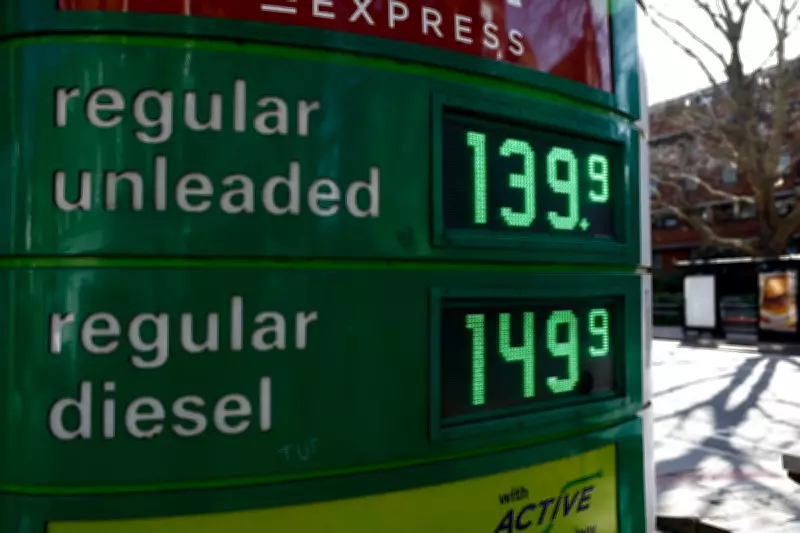
On Friday, the RAC reported that the average price of a litre of petrol at UK forecourts had risen to 137p, an increase of nearly 4p since conflict resumed in the Middle East.
Inflation and Interest Rates
Data from the Office for National Statistics (ONS) is inherently backward-looking, with a lag of approximately one month, meaning the full impact of current events will not be apparent until later. However, the general principle is clear: when costs for energy, raw materials, or labour increase, prices rise in response, which is the very definition of inflation.
The crucial question is the extent of the inflationary impact from the Middle East situation. Inflation in the UK has been on a downward trajectory over the past year, but this surge in oil prices is likely to derail the expected return to the Bank of England's 2 per cent target, which some analysts had predicted would be achieved by early Spring.
If prices begin to surge again, one of the Bank of England's primary tools to control inflation is raising interest rates. As borrowing costs increase, firms and households tend to spend and borrow less, reducing demand for certain services or products and thereby helping to curb further price rises. However, the UK's weak economy and rising unemployment complicate this approach, as higher interest rates could exacerbate these existing challenges.