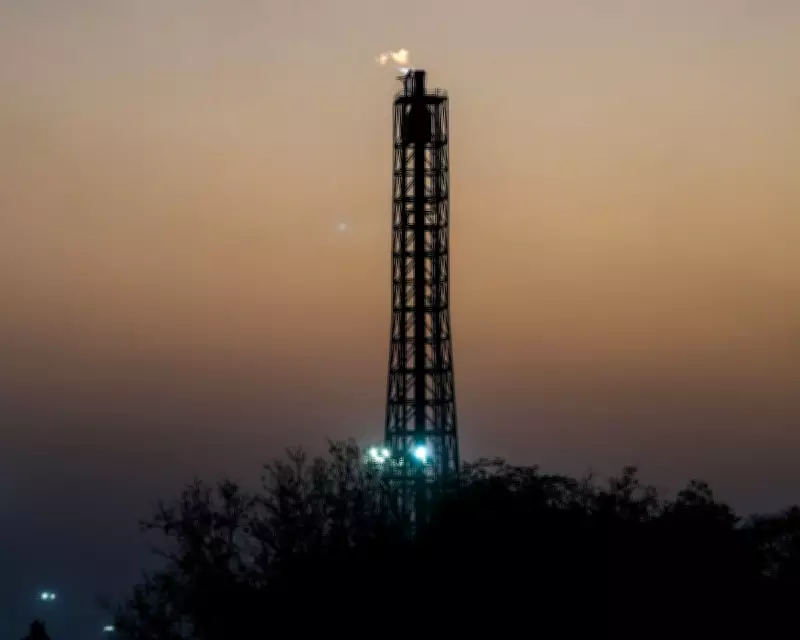
Good morning and welcome to our rolling coverage of business, financial markets, and the global economy. Hopes that the turmoil in the energy market might have eased are rapidly fading today, as Iran escalates its attacks on infrastructure and transport networks across the Gulf region.
Oil Price Surge and Market Turmoil
The oil price has jumped significantly after two tankers were set ablaze in Iraqi waters early this morning. This incident follows warnings from senior Iranian officials about a prolonged "war of attrition" that could threaten chaos in the global economy. Additionally, reports indicate that Oman's key oil export terminal has been evacuated, further exacerbating supply concerns.
These widespread Iranian attacks on Middle Eastern energy facilities drove Brent crude over the $100 a barrel mark again in early trading today, hitting a peak of $101.59 a barrel. Although it has since slipped back to $97.50 a barrel, this still represents a 6% increase for the day. The jump in oil prices is fanning fears that the global economy could be tipped into stagflation – an unpleasant combination of rising prices and stagnant growth.

Investor Concerns and Stagflation Risks
Jim Reid, a market strategist at Deutsche Bank, highlights that investors are facing the risk of a "broader stagflationary shock." He explains, "From a market perspective, the problem is that investors are increasingly pricing in a more protracted conflict that causes extensive economic damage. After all, with no concrete signs of de-escalation yet, that's keeping oil prices elevated, and raising the risk of a broader stagflationary shock."
Indeed, evidence suggests that investors are bracing for longer-term scenarios. The 6-month Brent future is also up by 3.06% this morning to $82.97 per barrel. With each passing day, it becomes harder to argue that the disruption to shipping and energy infrastructure will only prove temporary.
Geopolitical Drivers and Economic Impact
Daniel Casali, chief investment strategist at UK wealth manager Evelyn Partners, warns that geopolitics, rather than fundamentals, are increasingly driving markets. He adds, "The conflict is potentially a stagflationary shock the severity of which depends on its length and export volumes while the Strait of Hormuz remains closed. Oil inventories buy time, but as they erode, risks of higher energy prices, rising inflation, and market volatility increase."
Yesterday's announcement of the largest release of government reserves in history has not calmed fears of major supply shortages if travel through the Strait of Hormuz is not restored. This ongoing uncertainty underscores the fragile state of global energy markets.
Today's Economic Agenda
Key events to watch today include:
- 9am GMT: IEA Oil Market Report
- 9.30am BST: Governor of the Bank of England Andrew Bailey giving opening remarks at the Financial Stability Board
- 11am GMT: Turkey interest rate decision
- 12.30pm GMT: US weekly jobless claims
As the situation develops, stakeholders across the globe will be closely monitoring these indicators for signs of further economic strain or potential stabilization.