Man Heats Entire Home with 133 Lidl Doughnuts in Startling Energy Discovery
Wood-burning stoves have become increasingly popular across the United Kingdom, with an estimated two million units installed nationwide. However, one resourceful individual has explored an unconventional alternative to traditional fuel sources: doughnuts from the discount supermarket Lidl.
The Caloric Connection: From Food to Fuel
Calories serve as a fundamental measure of combustion potential. Scientifically defined, one calorie represents the amount of heat required to raise the temperature of one millilitre of water by one degree Celsius. This principle explains why doughnuts, which medical professionals frequently note are calorie-dense, can burn effectively under appropriate conditions.
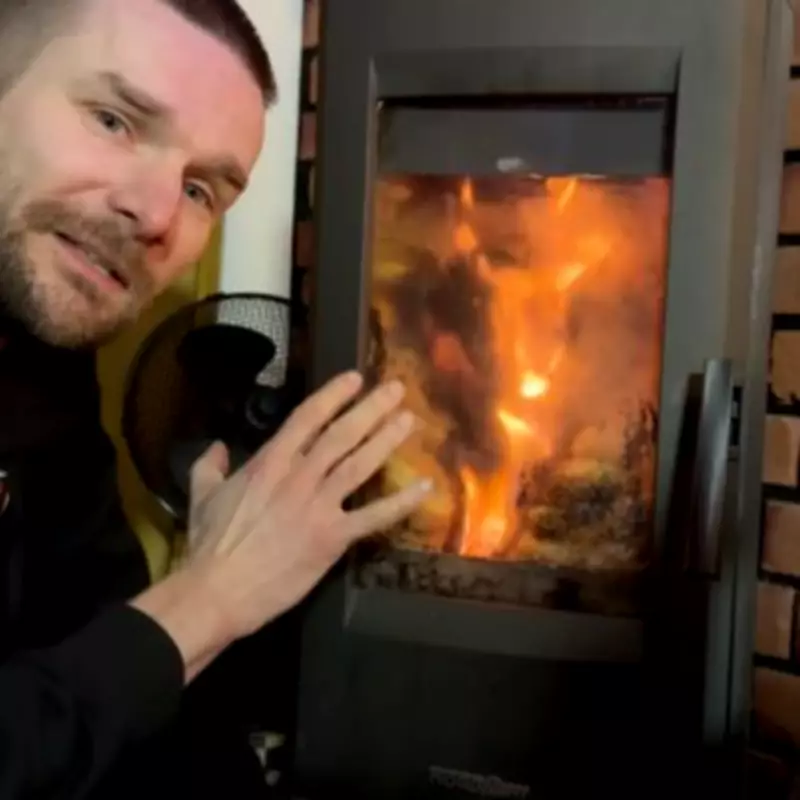
YouTuber Marek Hoffmann, originally from Poland, decided to test this theory practically. On his Adbuster video channel, he documented an experiment where he substituted standard wood briquettes with a stack of Lidl doughnuts in his wood-burning stove to determine their heating efficiency.

The Doughnut Economics: A Cost-Benefit Analysis
Marek performed a detailed calculation before commencing his experiment. Each Lidl doughnut costs approximately nine groszy (about 2p) and contains 440 kilocalories. By using 133 doughnuts, he created a 10-kilogram fuel source with a calorific value of 18.5 MJ/kg – identical to that of conventional wood briquettes.
The financial comparison proved particularly striking. The doughnuts totalled 12 Złoty (£2.49), while equivalent wood briquettes would have cost 19 Złoty (£3.94). This represents a potential saving of over 36% for the same theoretical heat output, though Marek acknowledged he would much prefer to consume the doughnuts than incinerate them.
The Experimental Process: Ignition and Combustion
Marek explained that rapeseed oil, used in frying the doughnuts, has a flashpoint around 230°C. To initiate combustion, he placed pine kindling beneath the doughnuts in his stove. An initial challenge emerged when overfilling the stove restricted airflow, but after creating adequate ventilation, the fire ignited successfully.
"When the oil in the doughnuts gets hot enough," Marek observed, "it will exceed its flash point... at which point it will start burning on its own." The doughnuts proved remarkably flammable, with the stove walls exceeding 300°C during the experiment.
Impressive Results: Five Hours of Sustained Heat
The doughnut fire burned vigorously for over five hours, maintaining consistent combustion throughout. Marek noted with amazement: "I don't know what's going on, this oil is constantly bubbling, and believe me – it's hot!"
Temperature measurements demonstrated the experiment's effectiveness. When Marek ignited the fire, the ambient temperature in his cabin stood at approximately 14°C. After five hours of doughnut combustion, the entire space had warmed to a comfortable 22°C.
Important Safety Considerations and Regional Differences
Readers should note significant safety considerations before attempting similar experiments. Marek's setup in Poland likely features a traditional brick chimney with greater void space than the metal-lined flues common in UK wood-burning stoves. Igniting rapeseed oil, even within a cast-iron woodburner, could potentially lead to hazardous situations.
Additionally, regional variations in materials matter. The spruce kindling frequently used in Eastern European countries possesses different combustion properties compared to native British pine, which can leave flammable residues inside chimneys. Manufacturers and installers should always be consulted before using unconventional fuels in wood-burning appliances.
Marek humorously reflected on his unusual scientific sacrifice: "I'd much rather eat the massive box of doughnuts than burn them, but then how would I know if doughnuts can be burned in an oven? Science requires sacrifice!" His experiment certainly provided illuminating, if unconventional, insights into alternative heating possibilities.