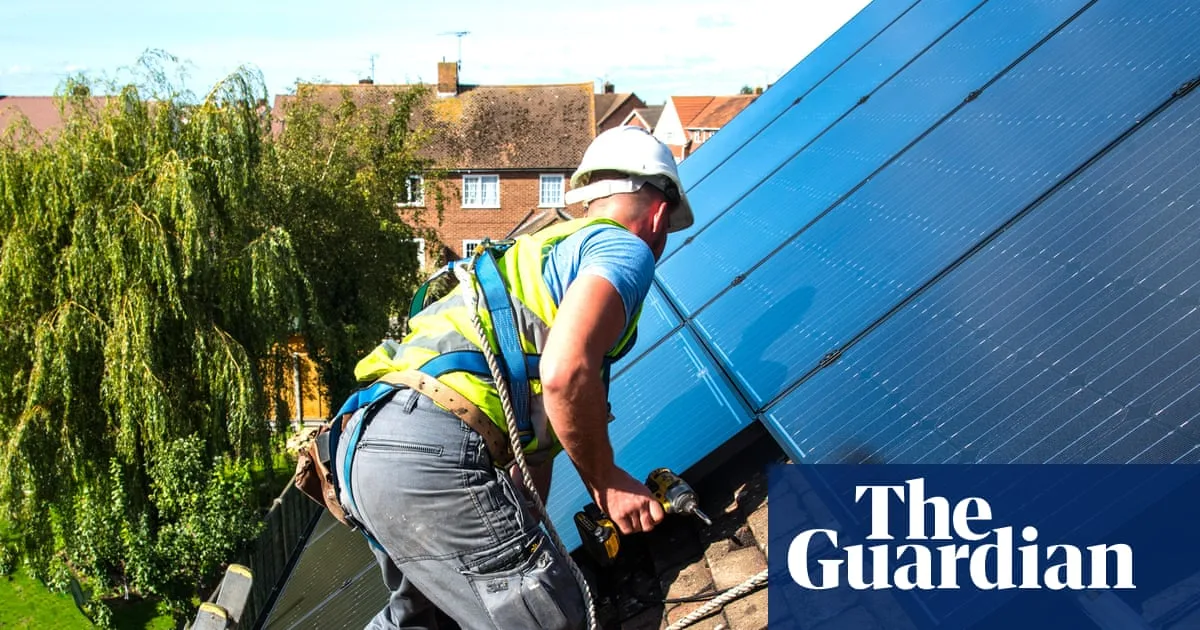
Labour’s long-awaited warm homes plan, which prioritises green technology over insulation, has sparked fears about the security of Chinese solar panels. The plan, which includes £5bn in grants for solar panels and batteries, is expected to rely heavily on imports from China, where the majority of solar panels are manufactured.
Critics argue that dependence on Chinese solar panels could pose a national security risk, as seen in other sectors. The government has not yet specified how it will ensure the security of the supply chain, but officials have indicated that they are exploring options to diversify sources.
The plan also includes £2.7bn in “innovative finance” and £2bn in consumer loans for heat pumps and other green technology. While insulation is still part of the strategy, it is no longer the main objective, a shift from previous failed schemes.
Labour has dropped the proposed ban on gas boilers beyond 2035, a move that has been criticised by environmental groups. Jess Ralston of the Energy and Climate Intelligence Unit said that while the government prefers carrots now, a stick may be needed to reduce reliance on foreign gas.
Garry Felgate of the MCS Foundation called for reinstating the 2035 phaseout date for fossil fuel boilers, arguing it would provide certainty and help meet climate targets. The warm homes plan is funded by £15bn in public money and £2.5bn from the energy company obligation scheme.