

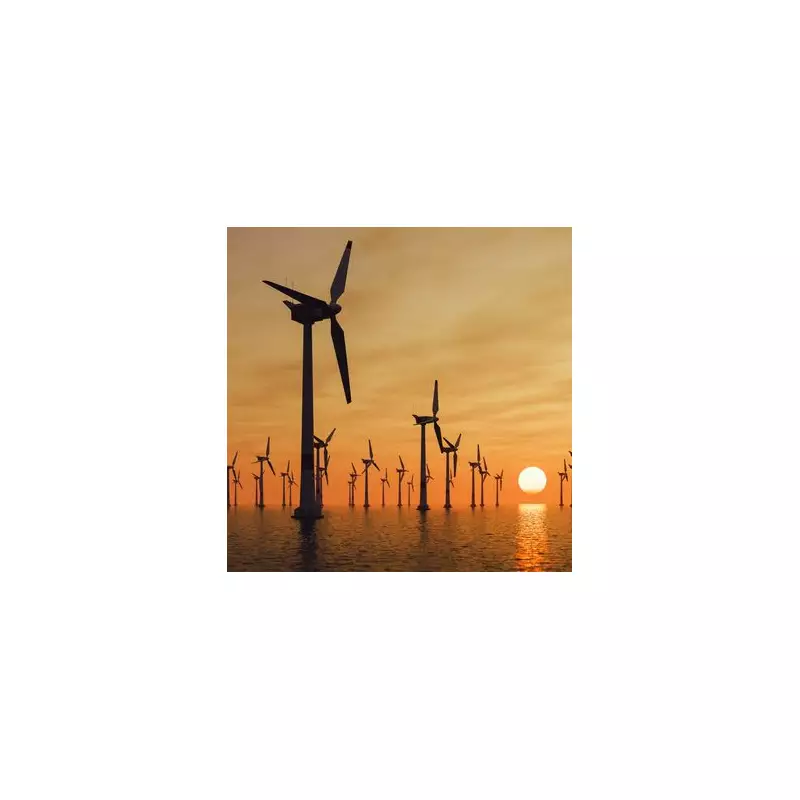
The UK government has unveiled plans for the nation's most significant expansion of offshore wind power, a move it claims will permanently reduce household energy bills. The latest auction round has secured commitments for 8.4 gigawatts of new capacity, enough to power the equivalent of 12 million homes.
A Monumental Step for Energy Sovereignty
Energy Secretary Ed Miliband hailed the auction results as a "monumental step" towards the UK's clean energy goals. He argued that this shift to domestic, renewable power is essential for long-term bill reduction and energy independence.
"With these results, Britain is taking back control of our energy sovereignty," Mr Miliband stated. "This is a historic win for those who want Britain to stand on our own two feet, controlling our own energy rather than depending on markets controlled by petrostates and dictators."

The government estimates the auction will unlock around £22 billion in private investment and support approximately 7,000 jobs. The average price secured for offshore wind was £90.91 per megawatt hour, which ministers say is 40% cheaper than the cost of building and operating new gas-fired power stations.
Critics Warn of Billpayer Burdens and Grid Concerns
Despite the government's optimism, the announcement has faced criticism. The process involves Contracts for Difference (CfDs), which provide wind farm operators with taxpayer-backed price guarantees. Critics warn this could lock billpayers into subsidising the industry for decades.
Estimates suggest levies on energy bills could reach almost £1.8 billion a year by 2030, when the new wind farms are expected to begin generating. While the government argues lower wholesale prices will offset this, sceptics remain.
Sam Richards, chief executive of the pro-growth campaign group Britain Remade, expressed disappointment. "Not only are these prices high, they are now locked in for 20-years under new contracts with generators," he said.
Further concerns centre on the National Grid's ability to handle the influx of new renewable power, potentially leading to situations where operators are paid to switch off turbines to avoid overload.
Major Projects and the Push for Transparency
The winning projects from the auction include some of the world's largest planned offshore wind farms. Key developments are:
- Dogger Bank South off the coasts of Yorkshire and Norfolk.
- Norfolk Vanguard off East Anglia.
- Berwick Bank in the North Sea, noted as the largest planned offshore wind project globally and the first new Scottish project since 2022.
Environmental groups welcomed the drive for clean energy. Dr Douglas Parr, policy director for Greenpeace UK, said, "The North Sea may be running out of gas, but it won’t be running out of wind any time soon."
However, consumer advocates stressed that savings must be passed on. Simon Francis, coordinator of the End Fuel Poverty Coalition, called for "full transparency on how these contracts will affect prices" and reform to ensure savings from cheaper renewable power benefit households directly.
The government's strategy positions offshore wind as a dual solution: reducing reliance on volatile international fossil fuel markets and advancing decarbonisation targets. The success of this ambitious plan in delivering lower bills, however, remains a point of intense debate.






