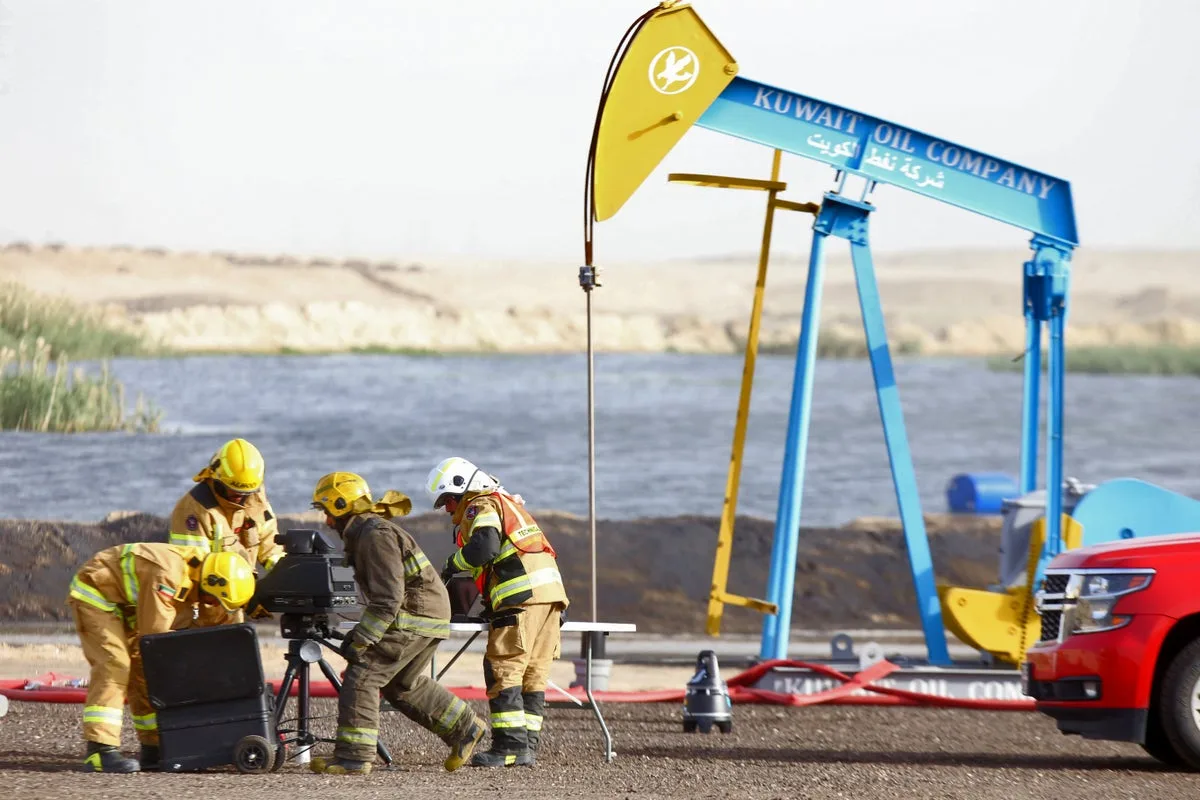
Kuwait has begun limiting oil production after running out of storage space for crude, as the war in Iran creates a bottleneck in the Strait of Hormuz, according to sources familiar with the matter. The waterway, through which a fifth of the world's oil supply passes, is under what Iran's Islamic Revolutionary Guard Corps claims is its 'complete control.'
U.S. and Israeli strikes in Iran have pushed Brent crude oil prices to $90 a barrel, a level that could rise further as Kuwait curbs output and neighbouring countries consider similar measures. 'Storage is limited in the Middle East, and the only fix to avoid tanks running over is to curb production,' said Giovanni Staunovo, a commodity strategist at UBS.
The backlog has filled storage facilities in Kuwait, Saudi Arabia, and the United Arab Emirates. Pausing and restarting oil production is time-intensive and expensive, as halting equipment can reduce pressure in oil fields. Kuwait, a founding member of OPEC, is reportedly considering cutting production to cover only domestic consumption amid regional constraints.
The Trump administration has said 'everything is being considered' to enable oil flow from the Middle East. Interior Secretary Doug Burgum told Bloomberg this includes ideas such as having the U.S. Navy escort oil tankers through the Strait and offering insurance at 'a very reasonable price' through the U.S. International Development Finance Corporation. President Trump has stated he will not back down unless Iran agrees to an 'unconditional surrender,' though specific objectives for Operation 'Epic Fury' remain unclear.
Markets were spooked on Friday when Qatar's Energy Minister Saad al-Kaabi warned that global economies could be brought down if oil prices rise to $150 a barrel. The last major surge saw oil at $116 a barrel after Russia's invasion of Ukraine, and further rises could reignite mass inflation, a key issue in Trump's 2024 campaign.