Global Jet Fuel Crisis Looms as Strait of Hormuz Closure Threatens Air Travel
A looming jet fuel shortage across Europe and Asia, sparked by the ongoing Iran war and the effective closure of the Strait of Hormuz, could severely disrupt global travel within weeks unless oil flows resume promptly. This escalating crisis threatens to drive airfares higher and trigger widespread flight cancellations just as the crucial summer travel season approaches.
Critical Supply Shortages Imminent
In an exclusive interview with the Associated Press on Thursday, International Energy Agency Director Fatih Birol issued a stark warning, stating Europe has "maybe six weeks" of remaining jet fuel supplies. Birol described the situation as the global economy facing its "largest energy crisis." Typically, European nations maintain several months' worth of jet fuel inventory, but current reserves are dwindling rapidly according to a recent IEA report.
Jet fuel, a refined kerosene-based oil product, represents airlines' single largest expense, accounting for approximately 30% of overall operational costs according to the International Air Transport Association. Since the conflict began, jet fuel prices have roughly doubled, compounding the supply challenges.

"Every passing day that the Strait of Hormuz remains shut, Europe is edging closer to supply shortages," emphasized Amaar Khan, head of European jet fuel pricing at Argus Media. "The strait accounts for around 40% of Europe's jet fuel imports, but no jet fuel has passed through since the war broke out."
Airlines Respond with Caution and Cost Increases
Airline executives have reacted cautiously to the developing crisis, acknowledging potential fuel issues while attempting to reassure passengers. Nevertheless, several carriers have already begun passing increased costs to consumers through higher baggage fees, embedded ticket price adjustments, and elevated fuel surcharges. A growing number of airlines are implementing flight reductions in response to the challenging environment.
Experts warn that additional aspects of air travel, including scheduling flexibility and route networks, will likely face significant impacts as the crisis deepens. Here is a comprehensive examination of how jet fuel supplies function and how travelers might experience the effects.
How Jet Fuel Reaches Aircraft
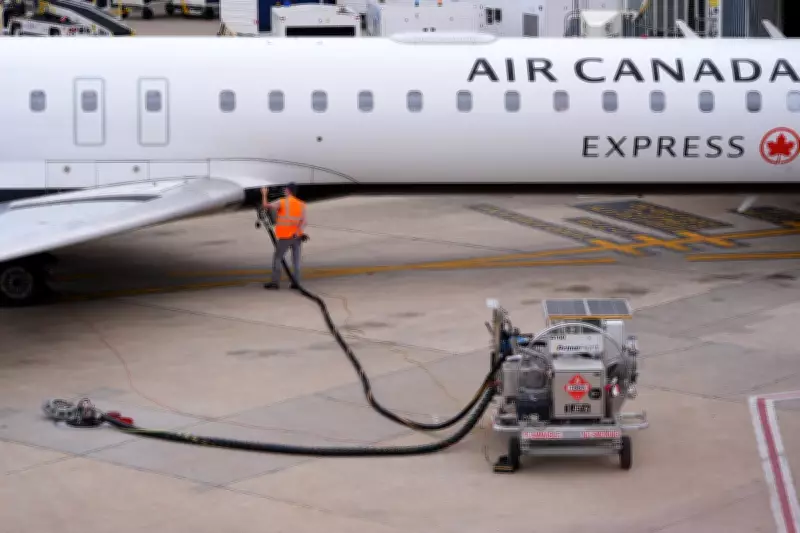
Jet fuel originates from crude oil processed at refineries that simultaneously produce gasoline and diesel. Airlines typically purchase jet fuel directly from refineries or specialized fuel companies, operating on a vastly larger scale than individual consumers buying gasoline. The fuel travels via ships and pipelines before being stored by airlines at airport facilities.
Airlines manage their own fuel purchasing strategies. When regional supplies diminish, flights may not cease entirely, as some carriers maintain larger reserves than others. However, remaining flights will likely carry substantially higher prices reflecting the escalated fuel costs.
Larger airlines possess distinct advantages in shortage-affected regions. "They have the financial means to deal with high prices," noted Jacques Rousseau, managing director at financial firm Clearview Energy Partners.
Regional Vulnerability and Global Impacts
According to the latest IEA report, numerous European countries now rely on less than 20 days of coverage in their fuel supplies, marking the lowest level since 2020 when supplies never dropped below 29 days. The report warns that if coverage falls under 23 days, physical shortages could emerge at certain airports, resulting in flight cancellations and reduced demand.
Asia-Pacific nations demonstrate the greatest reliance on Middle Eastern oil and jet fuel, followed closely by Europe, Rousseau explained. While most European jet fuel originates from regional refiners, approximately 20-25% of normal supply has disappeared due to the conflict.
The United States has significantly increased jet fuel exports to Europe to partially fill supply gaps, sending about 150,000 barrels daily in April—roughly six times normal levels. Jet fuel availability remains less problematic in the U.S., a major oil producer.

"I tell my kids ... we're not so much going to run out of supply," Rousseau commented. "It's just going to cost more here, whereas in different parts of the world you could actually reach a point where there's just no fuel available."
Global Supply Disruption Magnitude
The world is losing 10 million to 15 million barrels of oil daily due to the Strait of Hormuz closure, according to Pavel Molchanov, senior investment strategist at Raymond James & Associates.
"There are exactly the same refineries in exactly the same places in Asia and Europe, but if there is insufficient oil for those refineries to operate, it will lead to physical supply disruption," Molchanov emphasized.
Despite the IEA releasing 400 million barrels from members' emergency reserves, this intervention won't alleviate short-term shortages. "It could take until year's end to get all those barrels onto the market," Molchanov added.
Traveler Impacts Beyond Higher Fares
Christopher Anderson, professor of operations, technology and information management at Cornell University, advised travelers to prepare for broader disruptions than merely increased airfares.
"This is no longer just a fuel-price story. For airlines, it has become a network-planning story," Anderson explained. "Higher fuel costs matter significantly, but so do extended routings, reduced scheduling flexibility, and greater uncertainty about demand projections even weeks in advance."
Travelers might encounter "a market with later booking patterns, more schedule volatility, and fewer low-fare options if this disruption persists into the core summer season," Anderson predicted.
Airlines Implementing Strategic Adjustments
Dutch carrier KLM and UK budget airline easyJet informed AP they aren't currently experiencing fuel shortages, though neither commented directly on the IEA's warnings. Both airlines, however, face escalating costs affecting their financial planning.
On Thursday, KLM announced it will cut 160 flights next month—approximately 1% of its European routes—citing "rising kerosene costs" and noting that limited flights have become "no longer financially viable to operate."
EasyJet's Thursday update projected a pretax loss of £540-560 million (approximately $731-758 million) for the first half of fiscal 2026. Despite this, CEO Kenton Jarvis noted sustained strong demand, highlighting that Easter travel represented easyJet's busiest ever holiday period.
Lufthansa disclosed Thursday that labor disputes and high fuel prices are forcing immediate shutdown of feeder airline CityLine, accelerating a planned closure by one year. The German carrier will also retire 27 older, less fuel-efficient aircraft earlier than scheduled.
U.S. carrier Delta Air Lines, which operates extensive European routes, stated Thursday it was "aware of the potential jet fuel supply issue" on the continent and monitoring developments. Delta, which purchased a Philadelphia refinery in 2012 to manage its largest expense, doesn't anticipate "near-term impact to our operations."
Price Escalation Across the Industry
Numerous airlines have raised alarms about climbing fuel prices, with many already transferring new costs to travelers through embedded ticket prices and additional fees.
Major U.S. carriers including Delta, United, American Airlines, Southwest, and JetBlue have all increased checked baggage fees in recent weeks. United CEO Scott Kirby warned staff in a recent memo that sustained elevated fuel prices could add $11 billion in annual costs, noting that "in United's best year ever, we earned less than $5 billion."
Internationally, Hong Kong's Cathay Pacific recently raised fuel surcharges by approximately 34% across all routes, while Air India added up to $280 in fees to select flights earlier this month. Emirates, Lufthansa, and KLM have similarly adjusted fees or fares to address price volatility.