

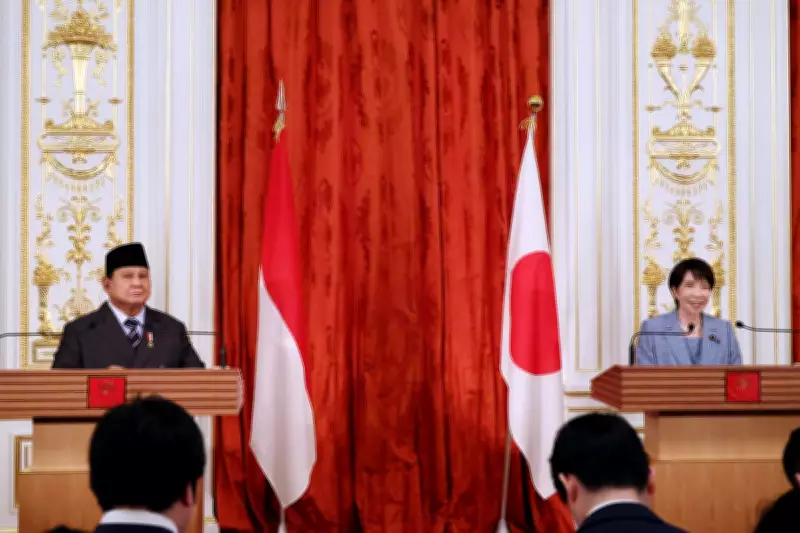
Japan and Indonesia Strengthen Energy Security Alliance Amid Middle East Turmoil
Japan and Indonesia have agreed to significantly enhance their economic partnership and collaborate closely on energy security initiatives. This strategic move comes as both Asian nations confront escalating uncertainties regarding oil and gas supplies, exacerbated by the ongoing conflict in the Middle East.
High-Level Talks in Tokyo Yield New Agreements
Japanese Prime Minister Sanae Takaichi and Indonesian President Prabowo Subianto held crucial discussions in Tokyo, culminating in a joint commitment to bolster resources and energy security. "In the wake of the Iran situation, the importance of resources and energy security is being recognized globally," stated Prime Minister Takaichi during a press conference following the talks. The specific terms of this agreement remain confidential, pending an official public release.
Nuclear Energy and Critical Minerals at the Forefront
Earlier this month, the two countries formalized a memorandum to advance economic cooperation in critical minerals and nuclear energy. Signed on March 15, this document outlines plans for collaborative efforts in constructing a new nuclear power plant, potentially located in Indonesia's West Kalimantan region. The project will leverage Japanese technological expertise and may receive financial backing from development banks, as confirmed by Japan's Ministry of Economy, Trade and Industry.

President Prabowo emphasized Indonesia's invitation for Japanese involvement in processing essential minerals, including rare earth elements, alongside partnerships in renewable energy and nuclear power sectors. Despite the historical challenges posed by the 2011 Fukushima nuclear disaster, Japan is actively promoting nuclear energy as a cornerstone of its zero-carbon emissions strategy. Concurrently, Indonesia views nuclear power as a vital solution to meet its rapidly growing energy demands.
Indonesia's Nuclear Ambitions and Global Partnerships
Indonesia has previously announced ambitious plans to develop two small modular reactors on a southern island by 2034. Officials have noted that Canada and Russia have already submitted formal cooperation proposals for these initiatives, highlighting the global interest in Indonesia's energy expansion.
Stabilizing Supply Chains and Diversifying Resources
In addition to nuclear cooperation, Takaichi and Prabowo have agreed to intensify efforts to stabilize supply chains, particularly for liquefied natural gas (LNG). Japan's Foreign Ministry released a statement underscoring this commitment. As one of the world's leading LNG importers, Japan relies on Indonesia for approximately 5% of its supply. With over 90% of Japan's oil imports sourced from the Middle East, the nation is actively seeking to diversify its energy suppliers to mitigate risks associated with regional conflicts.
To address immediate market volatility, Japan has initiated the release of state and commercial oil reserves this month, aiming to stabilize domestic energy markets amidst global disruptions.






