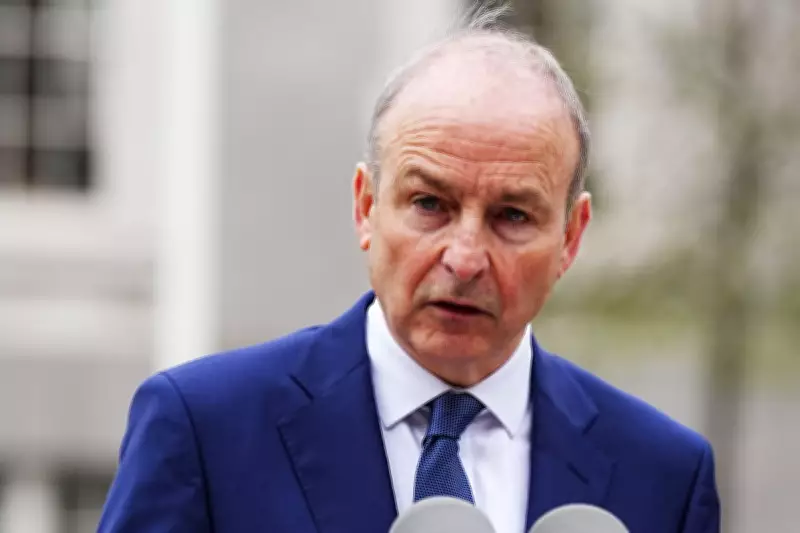
Irish Premier Condemns Fuel Protests as 'Act of National Sabotage'
Taoiseach Micheal Martin has issued a scathing condemnation of coordinated fuel protests across Ireland, describing the blockade of a key oil refinery as "an act of national sabotage." The remarks come as hauliers and agricultural contractors staged slow-moving convoys on motorways and blockaded fuel depots and major routes on Tuesday and Wednesday, causing significant travel disruption.
Government Outrage Over Refinery Blockade
In a strongly worded statement, Martin specifically targeted protesters who blocked access to the Whitegate oil refinery in County Cork, calling their actions "outrageous" and "beyond belief." He emphasized that the ongoing fuel crisis makes such blockades particularly damaging, stating: "It makes absolutely no sense in the fuel crisis we are currently facing. Businesses and people's livelihoods depend on this fuel."
The Taoiseach made these comments during a meeting at Government Buildings on Wednesday morning with Finance Minister Simon Harris and Transport Minister Sean Canney to discuss the escalating situation. Martin criticized protesters for turning Dublin's main thoroughfare into what he called a "car park," disrupting medical appointments, livelihoods, and daily activities across the capital.

Senior Ministers Issue Stern Warnings
Deputy premier and Finance Minister Simon Harris echoed Martin's condemnation, describing the blockade of fuel distribution as a "despicable attack on our economy and our society." He warned that "the laws of the land must and will be applied without fear" against those violating regulations.
Both politicians emphasized that while they respect the right to protest, blocking essential infrastructure crosses a dangerous line. Martin stated unequivocally: "There should be penalties and there will be penalties for anyone who violates the law." He also expressed concern about reports that protesters attempted to stop animal feed from leaving ports, warning this "will become an animal welfare issue very shortly."
Government Rejects Direct Negotiations With Protest Groups
When asked if the government would meet directly with the various protest groups, Martin firmly rejected the idea, citing the fragmented nature of the movement. He explained: "There are many, many different groups and many different voices involved. The only feasible way to engage is with the national representative bodies of the different sectors, and that's what we're going to do."
Harris attempted to reassure the public about fuel supplies despite the disruptions, stating: "There may be a small number of particular challenges this morning, but I want to reassure motorists and reassure people in our country that there is adequate fuel supply in Ireland."
Economic Measures and Supply Assurance
The government pointed to its recently announced energy support package as evidence of its commitment to addressing fuel price concerns. Martin highlighted that the €250 million package represents "the most generous in Europe" with nearly €4 million spent daily on alleviation measures.
Regarding potential price reductions, Harris noted that if crude oil costs continue to decline, "there shouldn't be much of a lag if the cost starts to fall" at the pump, though he acknowledged there is typically "some bit of a lag" in such adjustments.
Public Expenditure Minister Jack Chambers provided additional reassurance about national fuel reserves, revealing that the National Oil Reserves Agency maintains substantial supplies: 85 days of diesel or gasoline, 99 days of petrol, and 70 days of kerosene.
Emergency Services Appeal for Clear Routes
As the protests entered their second day, emergency services issued urgent appeals to protesters. An Garda Siochana and Dublin Fire Brigade requested that routes be kept clear for emergency vehicles, reporting instances where "emergency workers were delayed or not able to travel to their work" and "people were not able to attend hospital appointments or visit loved ones who are ill."

The coordinated protests have created one of the most significant challenges for the Irish government in recent months, testing both emergency response capabilities and political resolve during an ongoing energy crisis that shows no immediate signs of abating.