Irish Leaders Condemn Fuel Protests as Wrong and ‘Not in the National Interest’
Demonstrations over the soaring cost of fuel have erupted at multiple locations across Ireland, leading to significant traffic and travel disruptions. The protests, which involve convoys of tractors and trucks blocking key areas like O’Connell Street in Dublin and various fuel depots, entered their second day, prompting a strong response from the Irish government.
Government’s Firm Stance on Protests
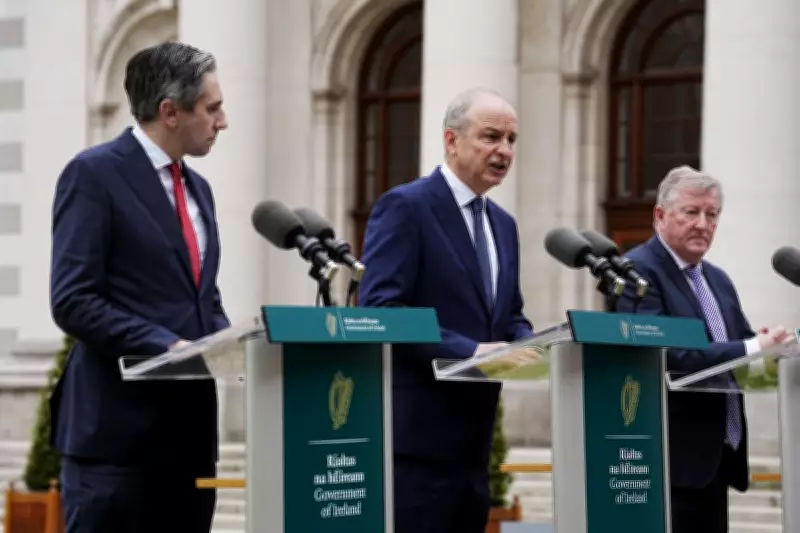
Taoiseach Micheal Martin, speaking alongside Tanaiste and Finance Minister Simon Harris and Minister of State Sean Canney at Government Buildings on Wednesday morning, unequivocally condemned the actions. “The protests at the moment are wrong,” Mr Martin stated, emphasising that blocking mobility and access to livelihoods, medical appointments, and daily activities is an unacceptable form of protest.
He criticised the transformation of Dublin’s main thoroughfare into a “car park” and warned that those violating the law would face penalties. “There should be penalties and there will be penalties,” he asserted, while acknowledging the right to protest but stressing it must be done lawfully.

Impact on National and Economic Interests
Tanaiste Simon Harris highlighted the broader consequences, stating that the disruption is “not in our national interest, it’s not in our economic interest, it’s not in the interest of social cohesion.” He reassured the public that fuel supplies remain adequate despite the blockades, though he acknowledged “a small number of particular challenges this morning.”
Minister Canney echoed these sentiments, describing the blockade of fuel depots as “a ransom” and urging protesters to reflect on the harm caused. “What’s happening here is not in the national interest, it’s not in the people’s interest,” he said.
Government Engagement and Support Measures
When asked about meeting with protest groups, Mr Martin emphasised engagement through national representative bodies rather than direct talks with fragmented factions. “We live in a parliamentary democracy,” he noted, adding that the government works with elected representatives and national organisations.
The leaders also pointed to recent government measures to address energy costs, including a €250 support package described by Mr Martin as “the most generous in Europe.” He revealed that nearly four million euros is being spent daily on alleviation efforts.
Supply Security and Future Outlook
Public Expenditure Minister Jack Chambers, speaking earlier on Wednesday, labelled the protests “completely unacceptable and irresponsible,” warning they undermine businesses nationwide. He cited a briefing from the National Oil Reserves Agency (Nora), which confirmed substantial reserves:
- 85-day supply of diesel or gasoline
- 99-day supply of petrol
- 70-day supply of kerosene
This, he said, ensures the country can manage supply gaps for a considerable duration.
Market Dynamics and Industry Engagement
On the potential for price reductions, Mr Harris noted that a sustained drop in crude oil costs “would have a positive impact in terms of being passed on at the pump.” He acknowledged a typical lag in price adjustments but committed to constructive engagement with industry stakeholders to monitor and address the situation promptly.
The protests, driven by rising fuel prices linked to the war in Iran, have sparked a national debate on balancing protest rights with public order. As the government urges protesters to channel their concerns through formal channels, the focus remains on restoring normalcy and safeguarding Ireland’s economic and social stability.