

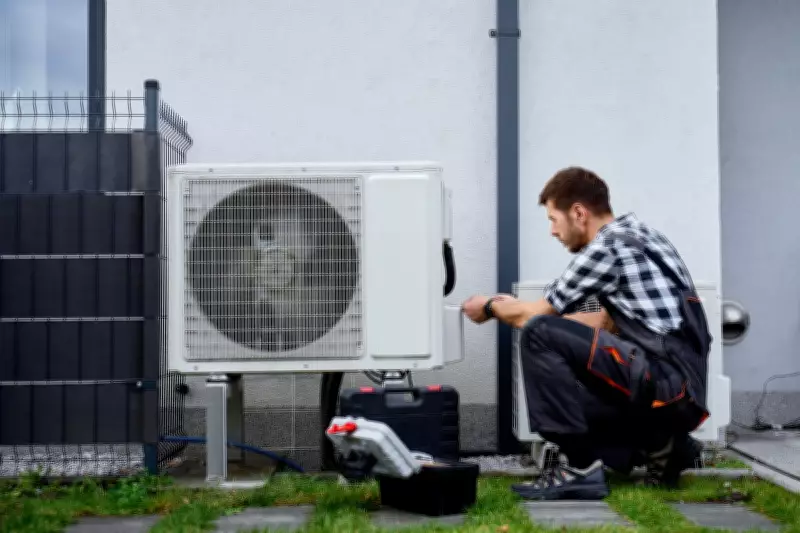
Heat Pumps in Older Homes: Homeowners Share Their Real-World Experiences
Heat pumps are widely promoted as a cleaner alternative to traditional gas boilers, yet significant doubts persist about their suitability for Britain's older, larger residences. These electrically powered systems extract warmth from the air or ground, offering potential reductions in household carbon emissions. However, the substantial upfront cost—even with a £7,500 government grant—leaves many owners of period or expansive properties hesitant to make the switch.
Positive Results in Period Properties
Despite industry experts acknowledging these concerns as valid, homeowners who have adopted the technology report encouraging outcomes, even in homes where conventional boilers previously struggled. Retired GP Richard Smithson and his wife, residing in a six-bedroom Edwardian semi-detached villa in North Tyneside, replaced their gas boiler over two years ago. Motivated by a desire to cut emissions and demonstrate heat pump viability in less-than-ideal settings, they invested in underfloor insulation, new radiators, and a zoned heating system, costing £11,000 after a then-£5,000 grant.
Mr Smithson expressed being "pleasantly surprised" by the straightforward two-week installation. He noted, "This house was never that warm with the gas boiler. I’d say it’s warmer now with the heat pump." Like many heat-pump households, the Smithsons maintain a steady temperature rather than switching heating on and off, allowing the building's fabric to retain heat and enhancing system efficiency—often operating overnight with cheaper electricity tariffs.

Overcoming Initial Doubts
Nick Barr, renovating a detached five-bedroom Edwardian house in south London, initially doubted a heat pump could work in such a large, old property. However, working with an installer who calculated heating requirements and designed the system with correctly-sized radiators and pipework proved successful. He described the heat pump as efficient, "elegant," and extremely quiet, adding, "It’s not cheap, but if you’re putting something in new or if you’ve got to replace a system, it does make sense."
Andy Balaam, a software engineer, chose a heat pump for his family's detached, four-bedroom Victorian home in Surrey in 2021 to limit climate impact. While the installation required adjustments in the first weeks, he confirmed, "It absolutely warms our house effectively, it’s much nicer than it was before," despite concerns about cost and reliability.
Expert Insights and Industry Backing
Leah Robson, managing director of installers Your Energy Your Way, which specialises in hard-to-heat properties, emphasises that comfort levels often exceed expectations. "People are genuinely concerned, often they’re struggling to heat their home as it is," she said. Her firm conducts heat loss assessments and addresses draughts, noting that even solid wall houses with double glazing and reasonable loft insulation can typically accommodate heat pumps, though projects are not cheap.
This is supported by a demonstration project led by the Energy Systems Catapult (ESC), which found heat pumps could be successfully installed in all home types, including pre-1919 properties. Daniel Logue from ESC stated monitoring showed house age and type did not impact heat pump efficiency: "If a trained installer says that your house could have a heat pump, and installs it correctly, it should perform well regardless of the type or age."
Addressing Misinformation
David Cowdrey, acting chief executive at The MCS Foundation, highlighted a lack of public information leading to myths about heat pump functionality. He urged the Government to launch a public information campaign to counter misinformation and encourage uptake in all property types. As homeowners like Mr Smithson reflect on the investment—comparing it to alternatives like a round-the-world cruise—the verdict leans toward embracing heat pumps for their environmental and heating benefits, even in challenging older homes.






