

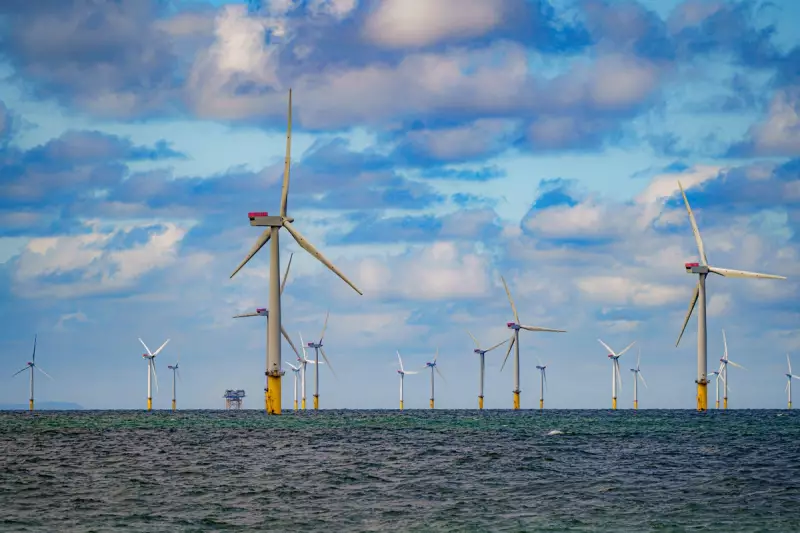
The UK Government has announced that its latest renewable energy auction will trigger a massive wave of private capital, unlocking £3.4 billion of investment into domestic manufacturing, ports, and supply chains. Officials confirmed the news on Thursday, 15 January 2026, stating the funding will be pivotal for building new factories and upgrading coastal infrastructure nationwide.
Record Capacity and Strategic Investment
Wednesday's contract awards secured a record 8.4GW of new offshore wind power, a volume experts deem essential for the Government to stay on course for its pledge of clean power by 2030. The projects are set to generate enough electricity for approximately 12 million homes.
Public money will be deployed through a new clean industry bonus, designed to reward developers who invest in specific areas. These include former oil and gas communities, ex-industrial heartlands, and ports. For every £1 of public funding, the Government states it will leverage an impressive £17 from private industry.

This multiplier effect means the £204 million committed by ministers is expected to attract the full £3.4 billion in private finance. A significant portion, up to £1.1 billion, is earmarked for Scotland, supporting ports like Nigg and Aberdeen, bolstering Scottish factories, and creating up to 2,400 clean energy jobs.
Leadership and Long-Term Vision
Prime Minister Sir Keir Starmer hailed the auction as a fulfilment of the promise to take control of the nation's energy future. "We promised to take back control of our energy with clean, homegrown power – and today we’re delivering," he said. "Billions in investment will flow into hard-working industrial communities to build clean energy supply chains in Britain."
Energy Secretary Ed Miliband emphasised the transformative potential for job creation and industrial revival. "Our clean energy mission is creating thousands of good jobs for working people in their home town," he stated, adding that the investment would power Scotland's future and back the country's industrial base.
The Department for Energy Security and Net Zero (DESNZ) outlined the broader impact: the new wind farms will support around 7,000 jobs and contribute to the wider goal of 400,000 clean energy jobs by 2030.
Strike Prices and Political Debate
The auction operates by developers bidding for a guaranteed strike price per megawatt hour (MWh) of power generated. After years of falling costs, the price of offshore wind has risen recently. This latest round secured an average strike price of £91 per MWh, or just over £65 in 2012 prices.
This is notably higher than the record low of £37.35 (in 2012 prices) achieved in 2022. The Government defended the price, pointing to its analysis showing the cost of building and operating a new gas-fired power station at £147 per MWh. It also cited research suggesting the 43GW offshore wind target can be met at no extra cost to billpayers at a strike price up to £94.
However, the auction faced criticism from Shadow Energy Secretary Claire Coutinho, who labelled it "botched." She argued it delivered the highest prices for offshore wind in a decade and accused the Government of underplaying the true cost impact on household bills.
The six major projects awarded contracts include Berwick Bank in the North Sea, set to be the world's largest offshore wind farm, alongside developments at Dogger Bank South off Yorkshire and Awel Y Mor in the Irish Sea.






