Geelong Refinery Fire Investigation Commences Amid Cleanup Operations
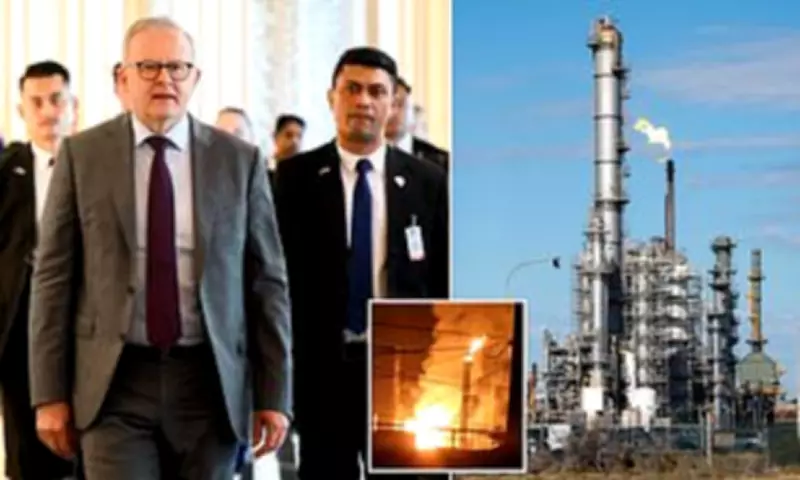
After a significant fire erupted at the Viva Energy Geelong refinery late on Wednesday, initial concerns regarding potential fuel shortages have been downplayed by both the company and government energy ministers. The focus has now firmly shifted towards extensive cleanup efforts and a thorough investigation into the causes of this unusual incident.
Prime Minister's Response and Site Visit
Prime Minister Anthony Albanese cut short a trade mission to Malaysia to return to Australia and is scheduled to tour the affected site. He described the scenes of the blaze as 'very distressing'. The refinery, located southwest of Melbourne, is a critical piece of national infrastructure, supplying more than half of Victoria's fuel and approximately ten percent of the nation's total requirements.
Expert Analysis on Refinery Safety
University of Melbourne chemicals expert, Professor Ian Rae, emphasized that such accidents at Australian refineries are extremely rare due to the stringent safety protocols in place for handling delicate and dangerous chemicals. 'Those places, they're extremely dangerous and they're extremely well run,' Professor Rae stated. 'Fires like that are very unusual because they know how dangerous it is.'

He explained that regular inspections cover every component to ensure operational integrity, suggesting that this time, something was missed. 'It's hard to know what happened, but it might have been something simple, like a pipe rupture or a valve that was leaking and nobody noticed for a little while.'
Environmental Concerns and Hazards
Professor Rae highlighted one of the primary hazards following such a large-scale fire: the management of contaminated water used in firefighting efforts. 'When there are fires of any sort, particularly where things like petroleum or chemicals are involved, there's a lot of water washed into the environment,' he noted. 'The first thing they want to do is start putting out the fire, and then they start putting in barriers to stop the fire water getting into the environment.'
With smoke from the blaze detectable for many kilometres, significant concerns were raised regarding air quality and the potential for chemical run-off into the nearby Corio Bay. Professor Oliver Jones, a chemistry expert at RMIT University, told AAP, 'When you have a big refinery like that, there's a number of things that are potentially a problem. You've got a load of hydrocarbons, you've got benzene, you've got very small particulate matter that might get off site.'
Official Assessments and Ongoing Monitoring
Environmental Protection Authority (EPA) monitoring has indicated that the impact on local air and water quality has been minimal thus far. However, precautionary warnings have been issued for nearby waterways, and comprehensive testing continues to ensure public safety.
Energy Minister Chris Bowen acknowledged that the disaster was 'not good for the atmosphere and the environment', but he confirmed that emergency authorities have not raised any specific health and safety concerns at this stage. The refinery is one of only two remaining in Australia, underscoring the national significance of both the incident and the subsequent recovery operations.