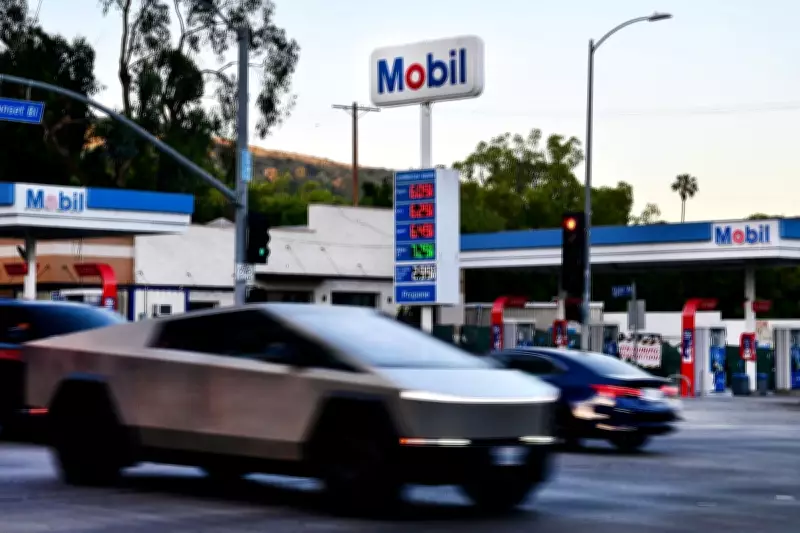
Gas Prices Expected to Decline Rapidly Following Iran Ceasefire Agreement
Following the announcement of a two-week ceasefire deal between the United States and Iran, petroleum analysts are forecasting significant reductions in gas prices across America. The conflict with Iran had driven fuel costs to unprecedented levels globally, resulting in American consumers facing steep increases at the pump.
Immediate Impact on Fuel Costs
The national average gas price recently surpassed $4 per gallon for the first time since 2022, reaching $4.16 on Wednesday according to American Automobile Association data. However, industry experts now predict this trend could reverse dramatically within days of the ceasefire implementation.
Patrick De Haan, a prominent petroleum analyst at GasBuddy, stated on social media platform X that "gas prices could start reversing nationally in 48 hours or so - by a few cents every day." He further elaborated that diesel prices might experience a slight delay in their decline but are no longer likely to reach record highs.

Detailed Timeline for Price Reductions
De Haan provided specific projections for the coming weeks, noting that "national average gasoline could fall below $4 in approximately one to two weeks, while diesel prices could drop below $5 within six to eight weeks." He emphasized these estimates remain tentative and subject to change as market conditions evolve.
Supporting this analysis, Pavel Molchanov, an analyst at financial services firm Raymond James, told Axios that decreasing oil prices "should single-handedly shave off $0.45 per gallon, implying the national average pulling back to around $3.70." Molchanov cautioned that this adjustment would require at least two weeks to materialize fully.
Understanding Retail Price Dynamics
De Haan addressed a common consumer question about why gas prices rise quickly during crises but decline slowly afterward. He explained that "wholesale prices are volatile, but retail prices are averaged" across the supply chain.
"Gas stations raise prices quickly when costs jump to avoid losses," De Haan wrote. "When costs fall, they lower prices gradually as they sell through higher-priced inventory. This creates a slower descent that drivers observe at the pump."
Inventory and Economic Factors
The speed of price reductions depends significantly on how quickly gas station owners can cycle through their existing fuel supplies. Wayne Winegarden, an economist at the Pacific Research Institute, explained to The New York Times that station operators "paid much more for that gas" and are currently attempting to recover those elevated costs.
"Your margin costs have gone down and that will be reflected in pricing," Winegarden noted, "but first you've got to get through your high-cost inventory." This inventory management process contributes to the gradual nature of retail price decreases.
Political Context of the Ceasefire
The ceasefire agreement emerged from diplomatic negotiations between the U.S. and Iran, with President Donald Trump announcing the deal via Truth Social. He described receiving "a 10 point proposal from Iran" that provides "a workable basis on which to negotiate."
During a Wednesday morning press conference, Defense Secretary Pete Hegseth claimed Iran "begged" for the ceasefire arrangement. This development occurred just hours after Trump threatened severe consequences if an agreement wasn't reached, stating he would destroy "the whole civilization" without a resolution.
The fragile ceasefire now offers hope for American consumers who have endured months of escalating fuel costs, with petroleum analysts cautiously optimistic about substantial price relief in the immediate future.