US Gas Prices Experience Sharpest Single-Day Rise Since 2022 After Iran Military Action
The national average price for gasoline in the United States experienced a dramatic surge of 12 cents per gallon on Monday, marking the most significant single-day increase since March 2022. This sudden price hike follows President Donald Trump's authorization of airstrikes against Iran over the weekend, creating immediate turbulence in global oil markets and raising concerns about sustained inflationary pressure on American consumers.
Expert Analysis Predicts Widespread Impact and Further Escalation
Patrick de Haan, head of petroleum analysis at GasBuddy, confirmed that this represents the largest one-day jump in gas prices in nearly four years. He further warned that the situation is likely to deteriorate, with diesel fuel particularly vulnerable. "For diesel consumers – especially commercial truckers – you're going to see a more pronounced impact," de Haan stated. "We anticipate the price of diesel may rise anywhere from 25 to 50 cents over the coming week or two. This will impose a substantial additional cost on the broader US economy."
As of Tuesday morning, de Haan projected that the average gasoline price could soon climb to between $3.30 and $3.35 per gallon, while diesel might reach a staggering $4.25 to $4.45 per gallon. "These estimates are based on current market conditions," he clarified. "Any further geopolitical developments will naturally alter this trajectory, but if everything remained static, this is where we would likely be heading."

Strategic Chokepoint Disruption Drives Market Volatility
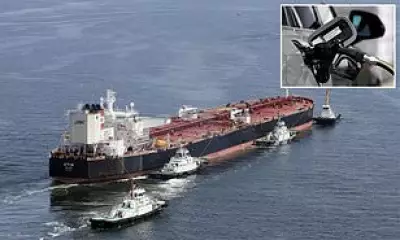
The core of the price surge stems from the critical Strait of Hormuz, a narrow passageway in the Persian Gulf through which over twenty percent of the world's crude oil flows. Iran is a major oil producer, and the recent conflict has effectively halted tanker traffic through this vital corridor. "Even without confirmed large-scale physical disruption to infrastructure, the Strait is acting as a severe choke point," de Haan explained. "When geopolitical risk escalates around that corridor, financial markets immediately price in the possibility of constrained oil flows. Risk alone can function like an actual supply restriction, which is precisely why we're witnessing such a sharp jump in oil prices."
Industry observers are now anxiously awaiting responses from major oil producers and the Trump administration. "There is growing pressure to formulate and execute an urgent plan to secure the Strait of Hormuz," de Haan noted in a social media post. The price of oil has already surged to above $80 per barrel, up from approximately $70 just last week, a shift that could have downstream effects on inflation and interest rate policies.
National Averages Break Symbolic Barrier Amid Widespread Increases
According to data from GasBuddy, the national average price for gasoline has now risen above $3 per gallon for the first time in 2026. Notably, every state except Hawaii is reporting higher prices at the pump compared to the same period last month. This sharp reversal comes just weeks after President Trump publicly celebrated low energy prices as a hallmark of his administration's policies. At a White House event last month, Trump highlighted gasoline prices as low as $1.85 per gallon in Iowa, contrasting them with prices around $3.50 a gallon from a year and a half prior.
The current crisis underscores the fragile nature of global energy markets and their direct, rapid impact on American household budgets. With the situation in the Persian Gulf remaining volatile, analysts warn that consumers should prepare for continued instability and potentially higher costs at the fuel pump in the immediate future.