

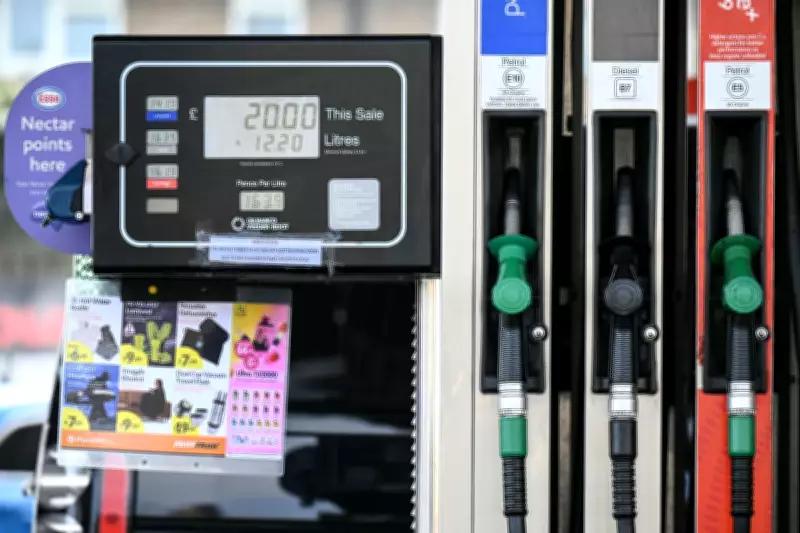
Motorists across the United Kingdom are facing renewed financial pressure as petrol and diesel prices have surged once again, according to the latest official data. The Department for Energy Security and Net Zero has released figures showing a sharp weekly increase in fuel costs at the pumps.
Significant Weekly Price Hikes
On 16 March 2026, the average price for unleaded petrol in the UK stood at 140.28 pence per litre, while diesel averaged 158.78 pence per litre. By 23 March, these figures had risen to 144.16 pence for unleaded and 166.88 pence for diesel. This represents a weekly increase of 3.9 pence for unleaded petrol and a substantial 8.1 pence for diesel.
Geopolitical Tensions Driving Increases
The rise in fuel prices comes against the backdrop of an ongoing energy crisis, intensified by the military conflict involving the United States, Israel, and Iran. Tehran's blockade of the Strait of Hormuz has severely disrupted the flow of oil through this critical Middle Eastern shipping route, which typically handles a significant portion of global oil exports.

This strategic chokepoint's closure has created supply chain uncertainties that are directly impacting global oil markets and, consequently, fuel prices at British forecourts.
Government Rejects Conservation Advice
Despite the International Energy Agency's recommendations for motorists worldwide to adopt fuel-saving measures—including reducing highway speeds, carpooling, and working from home where possible—a British energy minister has explicitly advised against such behavioral changes.
Michael Shanks, speaking to Times Radio, emphasized that British drivers should maintain their normal routines. "They should do everything as absolutely normal because there is no shortage of fuel anywhere in the country at the moment," he stated.
The minister added that he personally monitors fuel supply data daily and confirmed there are no current shortages. "People should go about their business as normal. That's what the RAC and the AA have said. It's really important people do that. There's no shortage of fuel and everything is working as normal."
Contrasting International Guidance
The International Energy Agency's conservation suggestions represent a proactive approach to managing potential fuel scarcity during geopolitical instability. Their recommendations include:
- Reducing highway driving speeds to improve fuel efficiency
- Sharing rides through carpooling arrangements
- Utilizing remote work options when feasible to decrease commuting
- Planning combined trips to minimize unnecessary journeys
However, the UK government's position maintains that such measures are unnecessary given current domestic fuel availability, creating a notable divergence from international energy conservation guidance during this period of market volatility.






