Fuel Prices Unexpectedly Decline After Geelong Refinery Blaze
Prime Minister Anthony Albanese has announced that petrol production at the Viva Energy refinery in Geelong has fallen by 40% following a significant fire, yet fuel prices have surprisingly dropped in most Australian cities. The blaze, which burned for 13 hours until Thursday noon, has not led to the anticipated price spikes, with unleaded petrol now below $2.10 per litre and diesel under $3 per litre in many urban areas.
Production Cuts and Market Response
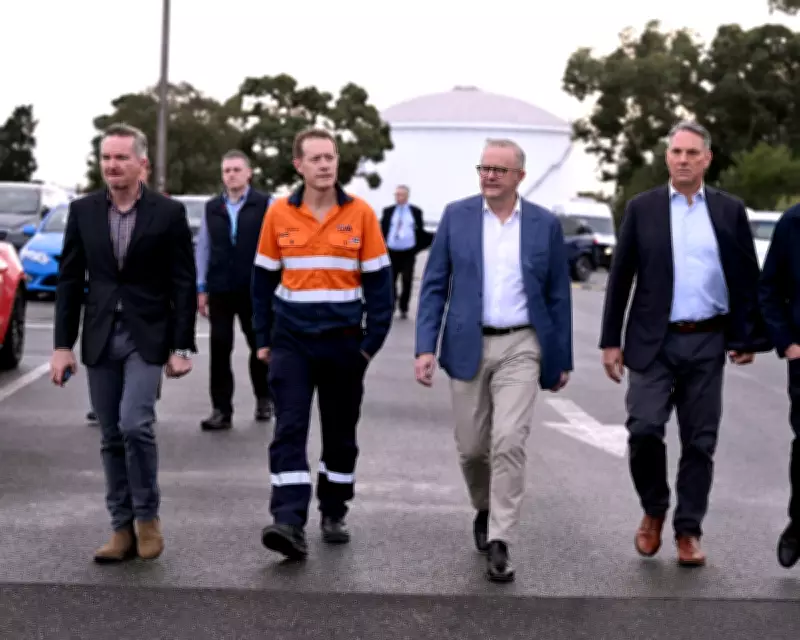
Speaking outside the refinery on Friday morning, Albanese detailed that the facility is currently operating at reduced capacity, with 60% of petrol production, 80% of diesel production, and 80% of aviation fuel production continuing. He emphasised that the government does not expect to escalate to stage 3 of the national fuel security plan, despite the temporary slowdown. "We hope that production ramps up over the coming period," Albanese stated, though he did not provide a specific timeline for a full recovery.
Contrary to predictions of supply shortages and soaring costs, wholesale fuel prices have decreased. According to the Australian Institute of Petroleum, unleaded petrol wholesale prices are below 191 cents per litre in Melbourne, Sydney, Brisbane, Adelaide, and Perth, while diesel wholesale prices have fallen nearly 10 cents nationally, reaching their lowest point in a month. Pump prices have followed this trend, with unleaded averaging less than 210 cents per litre in most capitals and diesel under 300 cents per litre in many areas, including Geelong itself.

Government and Industry Assurance
The fire at the Corio-based refinery, which processes approximately 120,000 barrels of oil daily, prompted Albanese to cut short a diplomatic mission in Southeast Asia. However, both the government and Viva Energy have assured the public that there is no immediate impact on fuel supply. Bill Patterson, Viva Energy's executive general manager of energy and infrastructure, noted that the company plans to replace any lost production through its fuel import program and confirmed that the fire's cause is under investigation, with no indication of maintenance issues or increased production as factors.
Albanese highlighted the resilience of Australia's fuel infrastructure, stating, "The event here will not lead to any change – we will give an update tomorrow about fuel supplies that are on hand." He added that the ongoing production levels are positive given the severity of the fire, which was reported by multiple emergency calls detailing explosions and flames.
National Fuel Security Plan Context
Australia remains at level 2 of the four-stage national fuel security plan, which encourages motorists to "only buy the fuel you need" to mitigate localised disruptions and higher prices. Levels 3 and 4 involve stricter measures to prioritise fuel for critical industries and regions, but Albanese confirmed these are not necessary at this time. "The government's put in place the four stages in order to plan, and in order to prepare for circumstances which are predominantly impacted by global events, not by events here," he explained.
Energy experts had previously warned that the fire might necessitate further restrictions, but the current data shows a stable market. The government continues to monitor the situation closely, with updates expected on fuel supply levels in the coming days.