

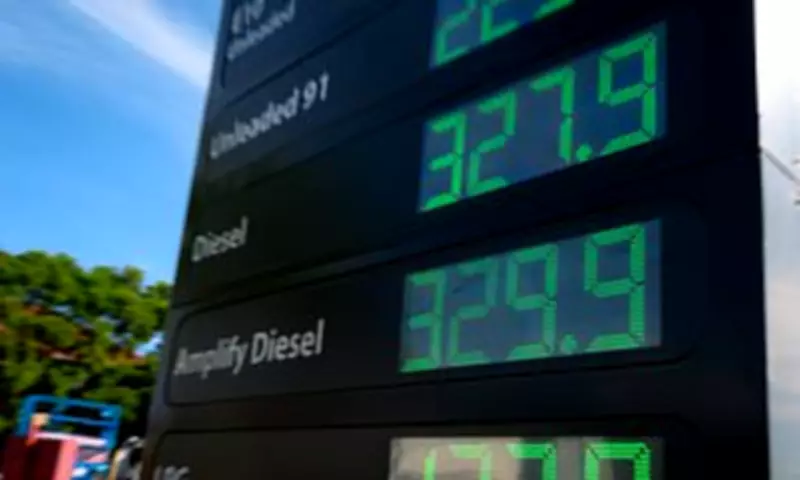
Motorists across Australia may need to endure elevated fuel prices for several months, despite a significant diplomatic breakthrough between the United States and Iran that includes reopening the critical Strait of Hormuz. In exchange for a two-week pause in American military actions, Iran has consented to allow oil tankers to resume transit through this vital maritime chokepoint, which historically carried approximately one-fifth of the world's oil supply before the conflict.
Immediate Price Impact Unlikely
While the American oil benchmark, Brent Crude, experienced a sharp 13 per cent decline to around $US95 per barrel following the announcement, industry experts and insiders have cautioned that Australian petrol and diesel prices are not expected to respond immediately. Malcolm Roberts, the Chief Executive of the Australian Institute of Petroleum, which represents major fuel companies including Ampol, BP, Mobil, and Viva Energy, welcomed the ceasefire but emphasised the delayed effects.
'We would caution people from expecting this will have immediate effects on supply or prices in our region,' Mr Roberts stated. 'It's going to take quite some time for global supply chains to reconnect.'

Political Reactions and Cautious Optimism
US President Donald Trump proclaimed a 'total and complete victory' and hailed it as a 'big day' for global peace. However, Australian Energy Minister Chris Bowen adopted a more measured stance regarding the reopening of the Strait of Hormuz, indicating that the situation remained uncertain.
'We welcome progress, but I don't think we can say that the Strait of Hormuz are now open,' Minister Bowen told reporters in Sydney on Wednesday. 'There's more work to be done.'
Gradual Price Decline Expected
David Leaney, a supply chain lecturer at the Australian National University, explained that if the ceasefire holds, petrol and diesel prices would likely begin to decrease over the coming months. This gradual reduction would occur as fuel companies sell off their existing, more expensive inventory.
'While that expensive oil is making its way around the world and being refined into fuel with a higher cost, that cost stays high for a couple of months,' Mr Leaney noted.
Calls for Transparency and Relief
Peter Khoury, a spokesman for the NRMA, emphasised the need for falling wholesale prices to be fully passed on to consumers. 'Australians have been paying the highest price on record for more than a month. We need to get relief back into family budgets,' he declared on Wednesday.
In parallel political developments, Prime Minister Anthony Albanese discussed the importance of maintaining open global energy supply chains during a phone call with His Majesty the Sultan of Brunei on Wednesday. As Mr Albanese prepares to travel to Singapore for talks aimed at bolstering Australia's fuel supplies, the opposition has intensified its calls for greater transparency.
Opposition Proposes Fuel Reserve Dashboard
Opposition Leader Angus Taylor is urging the government to implement a publicly accessible dashboard. This proposed system would provide real-time information on several critical metrics:
- Service stations experiencing fuel shortages
- The number of days of remaining fuel stock nationally
- Available storage capacity across the country
This initiative aims to enhance public awareness and ensure accountability in fuel supply management during this period of geopolitical uncertainty and economic pressure on household budgets.






