

Finland's Groundbreaking Nuclear Waste Repository Nears Operational Status
After decades of meticulous construction, Finland is on the verge of launching the world's first permanent disposal facility for spent nuclear fuel, a project that carries significant risks and uncertainties for future generations. The Onkalo repository, located on the secluded island of Olkiluoto, represents a monumental step in nuclear waste management, yet experts warn of potential long-term hazards.
Descending into the Depths of Onkalo
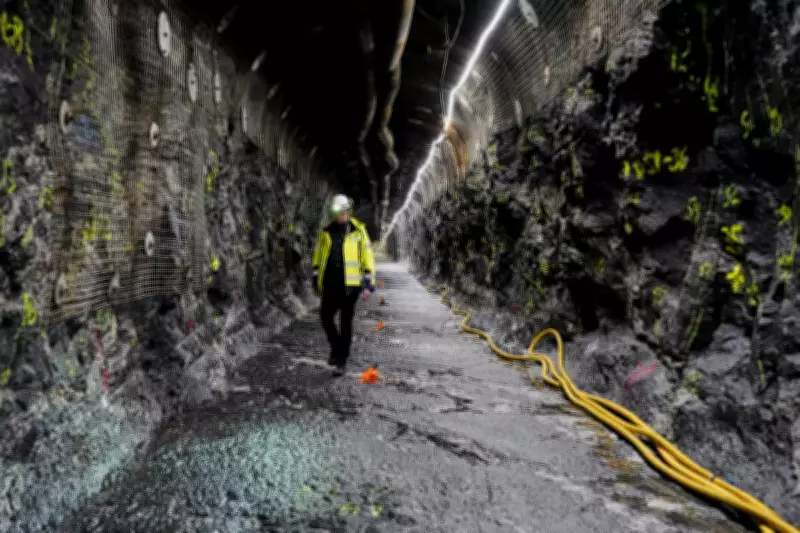
With the push of a button, an elevator plunges hundreds of meters into the dark, ancient bedrock of Onkalo, which translates to "cave" in Finnish. Geologist Tuomas Pere navigates a labyrinth of man-made tunnels, stating, "We are now at about minus 430 meters (1,411 feet), driving through 1.9-billion-year-old bedrock." This isolated site, chosen for its stable migmatite-gneiss bedrock and low earthquake risk, is set to become the final resting place for tons of radioactive waste, isolated from civilization to enhance safety compared to surface storage.
Engineering a Permanent Solution
The 1 billion euro ($1.2 billion) project, funded by Finnish nuclear power companies through decades of savings, involves sealing radioactive rods in copper canisters at a nearby encapsulation plant. These canisters will be buried over 400 meters underground, surrounded by buffer layers of water-absorbing bentonite clay. Posiva, the company managing Finland's spent nuclear fuel, claims Onkalo can store 6,500 tons of waste, designed to remain sealed until radioactivity decreases to harmless levels, a process estimated to take hundreds of thousands of years.

Pasi Tuohimaa, Posiva's communications manager, emphasized, "The solution that we have, it's the missing point for sustainable use of nuclear energy." However, this contrasts with global challenges, as the International Atomic Energy Agency reports nearly 400,000 tons of spent fuel produced since the 1950s, with no permanent underground disposal facilities currently operational worldwide. Sweden and France are developing similar projects, but face delays and opposition.
Uncertainties and Risks for Future Generations
Edwin Lyman, director of nuclear power safety at the Union of Concerned Scientists, highlighted the inherent uncertainties in geologic disposal. "There's no good option, but geologic disposal is the least bad among a range of bad options," he said. Lyman pointed out that copper canisters will eventually corrode, with scientific debates on the rate, and warned that while underground storage reduces sabotage risks, it leaves future generations vulnerable. He noted that over time, plutonium decay could make material more accessible for misuse, such as in nuclear weapons, if reprocessing capabilities exist.
To address these long-term risks, the field of nuclear semiotics has emerged, focusing on creating warning signs understandable for tens of thousands of years. Austrian artist Martin Kunze has developed "nuclear message" ceramic plates, designed to be buried in large numbers around repositories to inform distant futures. This effort underscores the ethical dilemma, as human history spans only around 300,000 years, far shorter than the waste's hazardous lifespan.
Finland's Commitment and International Implications
Finnish officials, including Environment Minister Sari Multala, attribute Onkalo to the country's steadfast nuclear energy policy, mandated by a 1994 act requiring domestic handling of radioactive waste. Multala stated, "We wanted to take care of it ourselves," and did not rule out limited international waste acceptance, pending regulatory approval. The facility is expected to operate until the 2120s before permanent sealing, marking a critical milestone in nuclear waste management that will shape discussions on safety, sustainability, and intergenerational responsibility for years to come.






