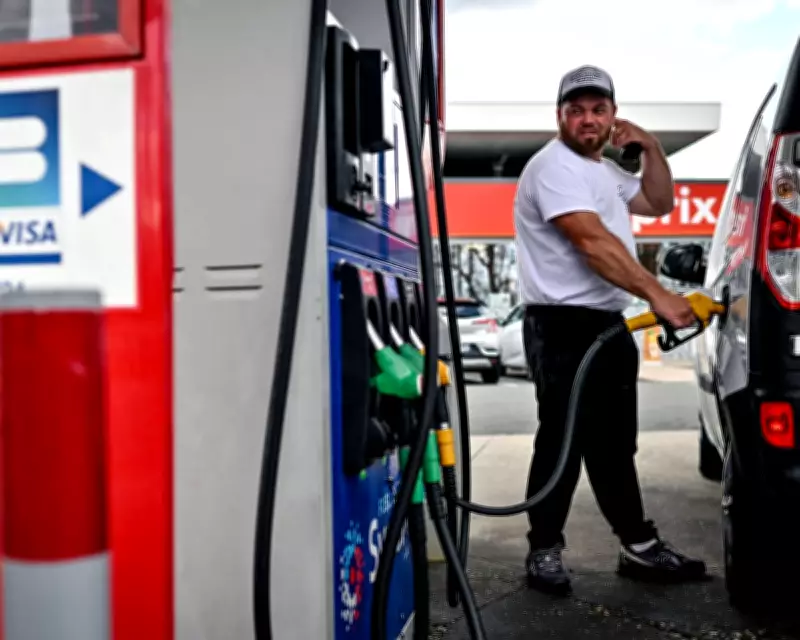
European Motorists Confront €220 Annual Fuel Increase from Iran War Oil Spike
European drivers are bracing for a significant rise in fuel expenses, with experts projecting an additional €220 (£190) per year at the pumps due to escalating oil prices triggered by the conflict in Iran. In the United Kingdom, separate estimates indicate a cost increase of £140 for British motorists. This financial burden stems from a sustained oil price of $100 per barrel, a level observed recently, which researchers at the Transport & Environment (T&E) thinktank calculate would result in EU drivers collectively paying €55 billion more annually.
This translates to an average of €220 for each driver, with those covering higher mileage facing even steeper hikes. The assessment draws comparisons between data from 2022, when Russia's invasion of Ukraine pushed oil to the $100 mark, and figures from 2017-2019. In the UK, analysts at the Energy and Climate Intelligence Unit (ECIU) estimate that $100 per barrel oil means drivers traveling 8,000 miles yearly could see annual fuel costs jump by £140, based on comparisons with early March prices prior to US and Israeli attacks on Iran.
Electric Vehicles Offer Growing Savings Amid Oil Price Volatility
Electric vehicles (EVs) already provide substantial fuel cost advantages over petrol or diesel counterparts, and the current oil price surge is widening this gap further. In the UK, annual savings for EV owners were already £870 but would exceed £1,000 with oil at $100 per barrel, according to the ECIU. Across the EU, the 7.7 million electric cars on roads are reducing oil consumption, with T&E noting that European EV drivers could save approximately €40 million daily under a $100 oil price scenario.

Brent crude stood at $91 on Wednesday morning, with future prices hinging on the duration of supply disruptions. Antony Froggatt at T&E remarked, "Europe's oil dependency creates a geopolitical premium whenever there is global volatility. This will continue to put pressure on households and cripple Europe's economy, unless we structurally end our reliance on imported fossil fuels." He emphasized that while figures like Donald Trump and allies in Russia and Saudi Arabia wield significant influence, they cannot control renewable resources like wind and sun, urging Europe to prioritize EVs, heat pumps, and renewable energy.
Oil Price Shocks Enrich Companies and Highlight Policy Gaps
Oil price shocks prove highly profitable for major corporations and petrostates. In 2022, with oil at $100 per barrel, the five largest shareholder-owned companies—BP, Shell, TotalEnergies, Chevron, and ExxonMobil—generated nearly $200 billion in profits. The oil and gas industry as a whole has averaged about $1 trillion in pure profit annually over the past half-century, with even higher earnings during periods of elevated prices.
EU energy windfall profits regulations reclaimed some profits in 2022 and 2023 but have since lapsed. T&E advocates for rapid reintroduction in the event of prolonged high energy prices. In the UK, a windfall tax remains active, with experts cautioning Chancellor Rachel Reeves that easing it in response to industry demands would not alleviate pressure on consumers. T&E also noted that the €55 billion extra paid by EU motorists in 2022 would have been higher without €30 billion in fuel duty cuts, a fossil fuel subsidy effectively funded by taxpayers.
Climate Policies and Energy Security Under Scrutiny
Recent years have seen numerous green policies weakened across Europe, with right-wing politicians arguing cost savings. However, the Transition Security Project estimates the 2022 energy shock cost the EU and UK $1.8 trillion between 2022 and 2025. The UK government's official climate advisers stated that achieving the UK's net zero target by 2050 would cost less than a single oil shock, such as from the Ukraine war, and protect against future price spikes.

Colin Walker at the ECIU commented, "It's all too reminiscent of the oil price surge after Russia's invasion of Ukraine and a stark reminder that the UK has no real control over the price of oil. There's been a lot of talk of energy security and North Sea drilling, but the clear lived reality is that won't make these regular price shocks any more affordable for British drivers." Froggatt added that rolling back climate policies, like the 2035 fossil fuel car phaseout or delaying EU carbon pricing, would only diminish security.