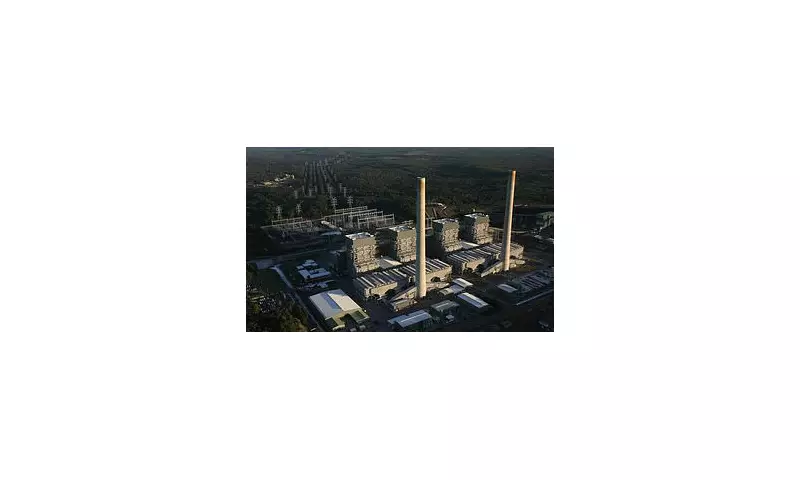
In a move that has ignited fierce debate over Australia's energy future, the nation's largest coal-fired power station will remain operational for an additional two years. Origin Energy confirmed on Tuesday that the Eraring plant in New South Wales will now run until at least 2029, a decision driven by concerns over grid reliability and the slow rollout of renewable replacements.
A Decision Driven by Grid Security Concerns
Origin Energy's chief executive, Frank Calabria, stated the extension was necessary to mitigate risks to system security, a point underscored by a recent report from the Australian Energy Market Operator. He argued the move buys critical time for new renewable energy, storage, and transmission projects to come online. The decision also reflects broader uncertainties surrounding the reliability of Australia's ageing fleet of coal and gas generators.
The 2880-megawatt facility, located between Sydney and Newcastle, was originally scheduled to close in mid-2025. Its lifespan was previously extended to August 2027 under a $450 million risk-sharing deal struck by the NSW Labor government. Under that agreement, the state would cover up to $225 million in annual losses if Origin provided advance notice. The company has until March to activate the second year of this deal for the 2026/27 period.

Political Backlash and Environmental Alarm
The announcement has drawn sharp criticism from across the political spectrum. In a rare moment of agreement, the state coalition and the Greens both attacked the decision as evidence of a faltering transition to clean energy, laying blame at the feet of the Labor government.
Coalition environment spokesman James Griffin accused the government of delaying vital projects and ignoring regional communities. Greens MP Abigail Boyd was more scathing, labelling the extension "a cost-of-living and human health disaster" with devastating climate impacts. She criticised Labor for lacking ambition and urgency, suggesting its focus had shifted to power-hungry data centres.
The figures highlight the challenge for NSW. In 2025, fossil fuels still accounted for 57 per cent of the state's power consumption. This is lower than Queensland (70%) and Victoria (60%) but remains far above renewable leaders like South Australia and Tasmania, where fossil fuel use sits below 25%.
Government Defends Pragmatic Approach
NSW Energy Minister Penny Sharpe defended the government's position, stating its key focus was keeping the lights on and applying downward pressure on power prices. She pointed to progress, noting that since the election, the amount of renewable energy capacity in operation had increased by almost 70%, a figure equivalent to Eraring's own output.
Sharpe was clear that the existing risk-sharing deal will not be extended beyond 2027. The government views the latest extension as a necessary bridge. Meanwhile, Origin is proceeding with plans to convert part of the site, which it purchased for $75 million in 2013, to host a 700MW battery storage facility by mid-2027, expected to provide an average of 4.5 hours of storage.
Origin, which serves over 4.2 million customers, insists the decision is not expected to impact its 2030 emissions reduction targets. The Eraring plant, opened in 1984, will now continue to play a contentious but central role in Australia's energy landscape for several more years, symbolising the complex and often painful journey from fossil fuels to renewables.