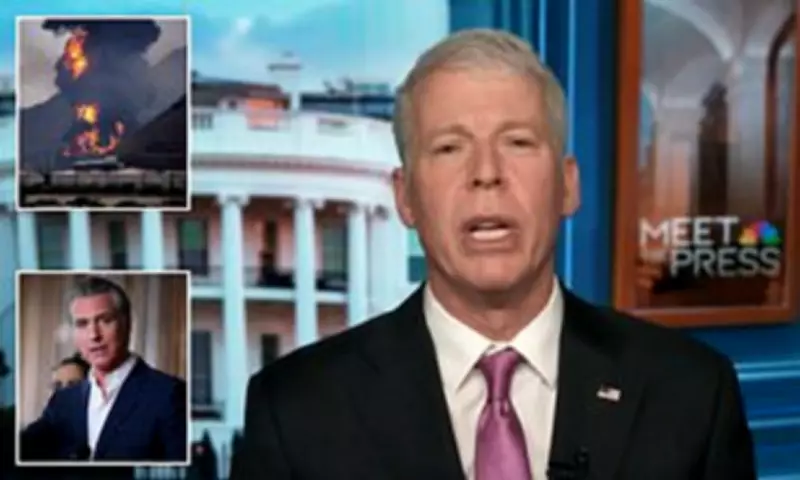
US Energy Secretary Chris Wright has made a bold prediction that gasoline prices will become more affordable for American consumers once the ongoing war in Iran concludes, which he anticipates happening within a matter of weeks. During an appearance on NBC's Meet the Press on Sunday, Wright assured host Kristen Welker that the current conflict represents only a short-term disruption to global energy supplies.
Timeline for Price Relief
Secretary Wright stated, 'I think [a few more weeks is] the likely timeframe. After the conflict is over, you'll start to see prices come back down.' He acknowledged that Americans will continue to feel the pinch at the pump for a brief period, but emphasised that removing the Iranian threat would eliminate a major risk to energy stability worldwide.
According to data from GasBuddy, the national average gas price stood at $2.94 per gallon on March 1, just before the outbreak of hostilities. By Saturday, that figure had surged dramatically to $3.70, reflecting the immediate impact of the conflict on oil markets.
Administration's Price Target
Despite the current volatility, Wright expressed optimism about a significant price correction. 'There's a very good chance gas prices could drop below $3 per gallon before summer,' he told Welker, though he cautiously added that 'there's no guarantees in war' regarding the exact timing.
Geopolitical Factors Driving Prices
The energy chief's comments come as Iranian leaders continue to strike oil facilities and maintain their blockade of the strategically vital Strait of Hormuz. This critical maritime chokepoint normally facilitates the passage of oil tankers, and its closure has severely constrained global oil shipments, contributing directly to the price spike.
Wright conceded that 'some elevated pricing' would persist until the war concludes, but outlined several administration initiatives designed to mitigate the economic impact on consumers.
Clash Over California Oil Production
In a pointed criticism of Democratic leadership, Wright took aim at California officials for obstructing new domestic oil production. 'We just announced yesterday bringing on a meaningful amount of oil production in the State of California from off-shore that California has fought foolishly to prevent new American oil to go into their own state,' he declared.
The Energy Secretary was referring to Friday's federal order directing Houston-based Sable Offshore to restart operations at the Santa Ynez Unit, located in federal waters off the California coast. The Department of Energy estimates this facility could produce 50,000 barrels of oil daily, representing a substantial 15 percent increase to California's in-state production. This output could replace approximately 1.5 million barrels of imported foreign crude each month.
California's Legal Pushback
California Governor Gavin Newsom has vehemently opposed the federal directive, issuing a statement condemning the move. 'This is an attempt to illegally restart a pipeline whose operators are facing criminal charges and prohibited by multiple court orders from restarting,' Newsom asserted.
The Governor further warned, 'California will not stand by while the Trump administration attempts to sacrifice our coastal communities, our environment, and our $51 billion coastal economy. The Trump administration and Sable are defying multiple court orders, and we will see them back in court.'
This federal-state confrontation has been brewing since January, when California filed a lawsuit challenging the administration's approval to restart pipelines along its coast. Democratic State Attorney General Rob Bonta has argued that jurisdiction over pipelines in Santa Barbara and Kern counties rightfully belongs to the state, not the federal government.
As gas prices in California have reportedly exceeded $7 per gallon at some stations, the political battle over energy policy and environmental protection continues to intensify, with consumers caught in the middle awaiting the promised price relief.