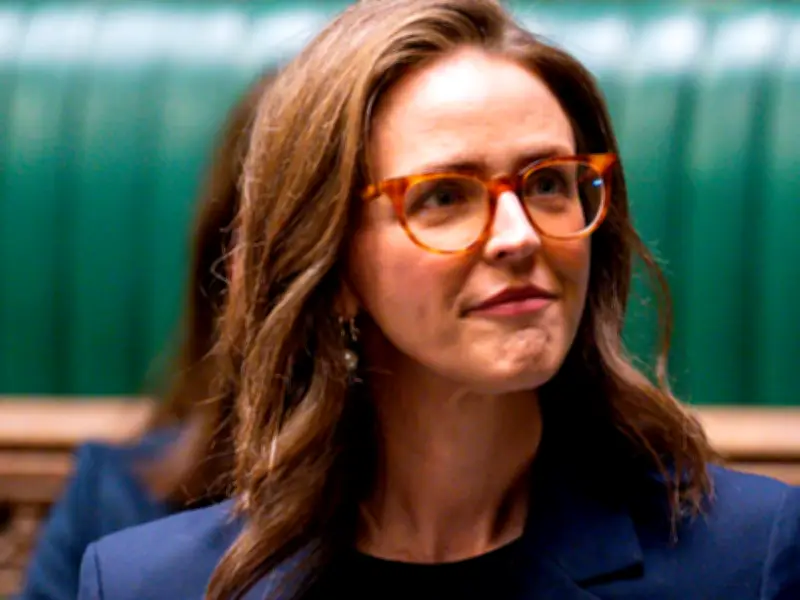
The MP bringing back the assisted dying bill says the Prime Minister cannot block the proposed historic law change, and that calls for better palliative care were "extremely welcome", but she urges him to do it alongside the proposed bill.
PM's stance and Edwards' response
Prime Minister Andy Burnham has said the assisted dying debate needed to wait until palliative care and social care were fixed. But his Labour MP Lauren Edwards said she was going ahead with the second reading of the bill.
“We all want to see better social, palliative and hospice care in every part of the country,” she said. “The government has already made better palliative care provision a priority and it is very welcome that the new Prime Minister wants to take that even further.”
Asked about campaigners' fears he has killed the bill, she said: “He can’t block it in any formal sense – consideration of Private Members Bills is entirely separate from the Prime Minister. It is for Parliament, and I will proceed to second reading on September 11 as planned.”
In 2015, the PM abstained from a vote on another bill because of concerns over safeguards. But Ms Edwards pointed out that when the issue came up again in 2024, he said his view had changed after his father Roy was in a care home with dementia. He said then: “I think we do allow people to suffer and families to suffer too much.”
Implementation timeline and palliative care
Ms Edwards added: “Alongside a lot of other MPs, I will be making the case that we can tackle all the changes that are needed - especially as the Bill has a four-year period before being implemented. The evidence from around the world is that this can happen alongside providing the choice of an assisted death to that small minority for whom even the very best palliative care cannot relieve their suffering.”
“The bill that has been before parliament, and thoroughly debated since October 2024, provides for a four-year implementation period. That means if my current bill becomes law next year, we would have until 2031 to fix the status quo that Andy Burnham rightly says is broken and has let people down for too long. As he said today, the risks of failing to act are too great.”
She agreed palliative care needed to be looked at, but added: “I’ve spoken to people whose family members have been on ketamine drips, huge amounts, a cocktail of drugs designed to manage their pain, they still die in agony even with the palliative care that we can offer.”
“I am a huge advocate for palliative care. My big argument is that it is not one or the other, we can and should do both and they should be properly resourced.”
House of Lords and potential repercussions
It is not the only battle the MP faces, as she gets prepared to take on the Lords, which talked out the bill earlier this year. She told the Mirror there would be “huge repercussions” if they tried to block the historic law again. But she also stressed she was keen to work with them, and urged them to ‘finish the job’.
The Labour MP said she didn’t want to use the Parliament Act to force it through the Lords, but admitted the rare move was an “insurance policy”. “I want to give it back to the House of Lords and say ‘finish the job’ and refine and improve this law and we will work together on it,” she said. "This issue will keep coming back. The Parliament Act is not something I want to use at all but it is a back stop and an insurance policy.
“It’s incredibly overdue and people are suffering. There will be huge repercussions I think for people’s faith in politics and view of the House of Lords if they were to talk it out again.”
“Potentially it could heighten arguments around more dramatic House of Lords reform. I want to work with the Lords but they have let everybody down. They have let the families down and they have let the political system down.”
Details of the bill and personal stories
The Labour MP for Rochester and Strood is sponsoring the Terminally Ill Adults (End of Life) Bill after coming second in a ballot of backbench MPs. The bill would give people in England and Wales who were over 18, terminally ill, and in the final six months of their life the ability to request assistance from a doctor to die. It has now been published and will be debated by MPs on September 11.
Ms Edwards had "early conversations" with new Prime Minister Andy Burnham’s team over the bill and was hoping to meet them soon. She had been hoping the new Prime Minister would help speed it up and ‘accelerate’ it back to the Lords. “I know he is a very compassionate person and would like to give people the choice to die with dignity.”
Ms Edwards, 42, who has dual British and Australian citizenship, had hoped an acceleration motion could be used but it needs to be put forward by a Government minister.
“It is important it goes through the Commons unamended as only then is the Parliament Act in play and give us that insurance policy to stop them talking it out again.”
The MP, born in Australia where assisted dying is legal, said a friend had recently returned from Australia for his mother’s voluntary assisted death. His mum was suffering from advanced bowel cancer. “It wasn’t an easy thing for him to go through … but he was able to go and be with his mum and family, play music and it was a very peaceful death where she felt she was in control.”
“Some of the families I have spoken to over here have had the most horrific experiences. We do have people taking their own lives, we do have assisted deaths but without the safeguards around it.”
“I spoke to a man whose father had a terminal cancer and had tried to die by suicide multiple times, but had got the dosage wrong and had to be found by his son. When he did get the dosage right, all the things that son had to go through. He had his phone confiscated and could not notify people his father had died, he had to go through intrusive interviews with the police to see if he had been involved.”
“Grown adults are still having nightmares with huge amounts of guilt and repressed trauma that comes out when they sleep because they could not be with their mother when she died. They had to say goodbye to her as she got in a taxi and then went on her own to a foreign country to die because she didn’t want to put her family in the position of legal sanctions when they came back.”
“All we are trying to do is put proper safeguards around this so people can die in a peaceful way instead of these horrible examples we are seeing in this country.”