As the clocks change and afternoons grow darker, many homeowners question whether solar panels are worth having during winter. Shorter days and overcast skies can make it seem as if photovoltaic (PV) panels barely function or even 'switch off' until spring. However, solar panels continue to generate electricity in cold weather, and because solar cells prefer cooler conditions, they can sometimes convert light slightly more effectively than during a summer heatwave. The main issue is that winter brings fewer daylight hours and lower light levels, so overall generation drops.
How much electricity you see on your meter depends on your location, weekly weather, and system setup. The key point is that solar panels rely on daylight, not warmth. Even in the UK, there is enough light during winter months for a properly installed system to contribute to household energy use, albeit at a lower level than in summer. Solar panels convert sunlight into electricity using PV cells, which respond to light rather than temperature. Cold conditions can actually improve panel efficiency. The challenge is reduced daylight time; a typical December day in the UK has around eight hours of daylight, far less than the 16 hours seen in midsummer, so overall production drops.
Production can fall to around 15–30 per cent of summer output, depending on location and roof specifics. National Grid and Energy Saving Trust data consistently show January as one of the lowest-generation months. While generation is lower, it remains significant enough to reduce grid reliance, especially for households with efficient appliances or those home during daylight hours.
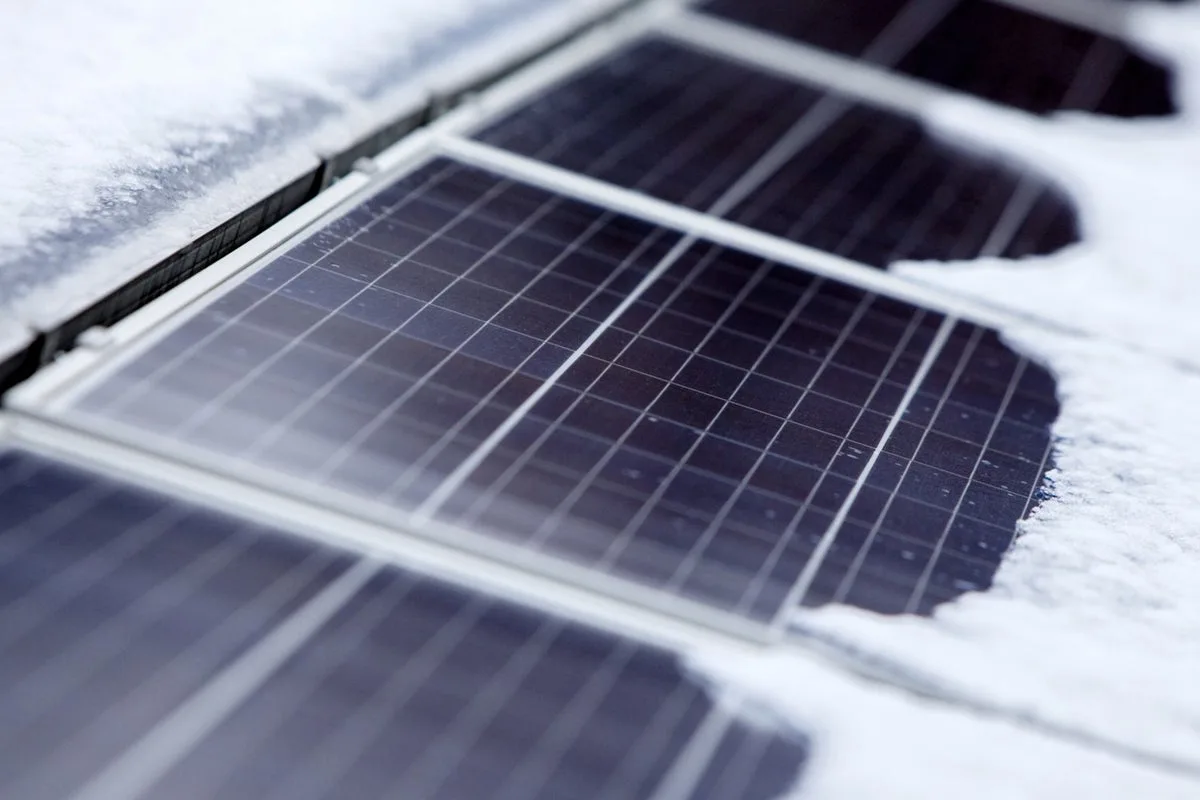
Solar panels can still generate electricity in winter, but if the surface is fully covered in snow, output drops sharply because little light reaches the cells. A thin dusting is usually not a big issue, but a thick layer effectively shades the panel until it clears. In most parts of the UK, heavy, long-lasting snowfall is relatively rare, and panels installed at an angle help snow slip off once temperatures rise slightly. Dark panels can warm up in sunlight, encouraging snow to melt and slide. If snow settles, it is safest to let it clear naturally; climbing on the roof or scraping panels can be dangerous and may damage the glass, seals, or mounting system, affecting performance or warranties.
Winter weather plays a major role in day-to-day performance but does not change the underlying science. Output depends on how much light reaches the panels, not temperature. This is why some of the best solar panels are designed to maintain efficiency in low-light conditions. While UK winters bring shorter days and more cloud cover, these factors do not mean a system becomes ineffective; they simply reduce the window for collecting light. For homeowners considering solar panels, understanding these seasonal variations helps set realistic expectations of annual performance.