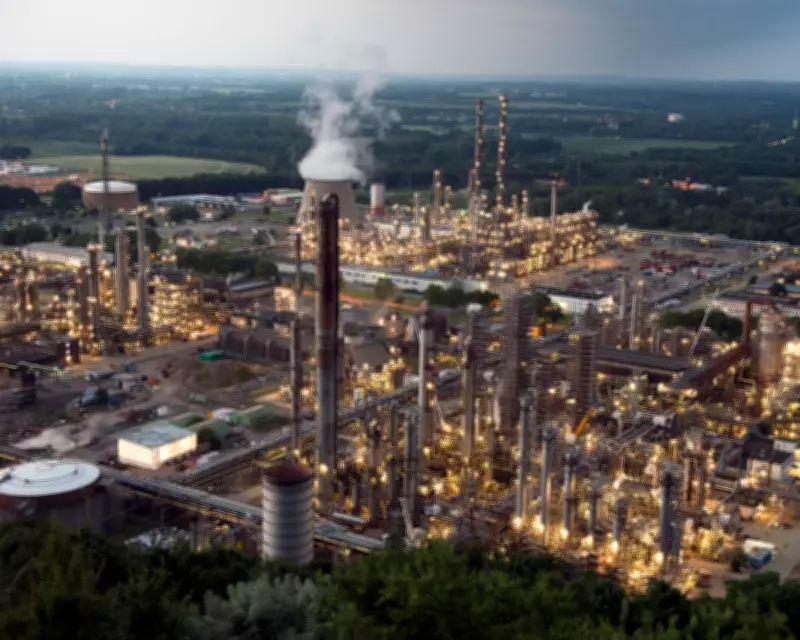
BP has finalised a significant agreement to divest its extensive German oil refinery located in Gelsenkirchen to the investment firm Klesch Group. This strategic move forms a crucial component of the British energy giant's broader initiative to offload assets valued at $20 billion, equivalent to approximately £15 billion, as part of an ambitious cost-reduction plan.
Financial and Operational Implications
The precise financial terms of the transaction remain undisclosed. However, BP has confirmed that the sale will yield substantial savings, reducing underlying operating expenditure by about $1 billion at the complex. This facility processes an impressive 12 million tonnes of crude oil annually, primarily converting it into fuel for automobiles and aircraft.
As a direct result of this divestment, BP has revised its cost-cutting objectives upward. The company now aims to achieve savings between $6.5 billion and $7.5 billion by the year 2027. This revised target represents nearly one-third of its cost baseline from 2023. Additionally, the sale accelerates BP's divestment programme, which has now surpassed $11 billion toward its $20 billion goal set for the same timeframe.

Strategic Restructuring and Leadership Changes
This asset sale is part of a comprehensive restructuring effort undertaken by BP following a leadership overhaul. The company's previous attempt to transition into a green energy business proved unsuccessful, leading to a dampened market valuation and prompting a renewed focus on streamlining operations.
In a parallel development, BP is planning a full return to London by relocating its global headquarters to a new development on the city's South Bank. Currently, leadership operates from the official global HQ on St James's Square in central London, while many technical teams are based in Sunbury, Surrey. The move, scheduled for completion in early 2028, will position BP at the 17,800 square metre Timber Square office scheme, just a mile from the global headquarters of its European rival, Shell.
The company is also undergoing a leadership transition with the appointment of Meg O'Neill as the new chief executive, set to join from Australia's Woodside Energy in April. O'Neill's appointment marks a historic moment as the first external hire to assume the top role and the first woman to lead a major listed oil company. Her surprise selection follows the appointment of Albert Manifold as board chair, replacing Helge Lund, who oversaw the failed green energy agenda.
Challenges and Future Outlook
BP's decision to reduce spending on fossil fuels in favour of investments in offshore windfarms has been cited as a factor in its struggles to keep pace with competitors like Shell, particularly during the energy crisis triggered by Russia's invasion of Ukraine in 2022. As the third chief executive in under five years, O'Neill is expected to face pressure from disgruntled shareholders, including activist hedge fund Elliott Management, to improve financial performance, alongside calls from environmental groups to address climate contributions.
O'Neill's compensation package includes at least £11.7 million for this year, more than double the £5.3 million earned by her predecessor, Murray Auchincloss, reflecting BP's commitment to attracting top talent.
Regarding the refinery sale, BP has assured that all 1,800 employees at the Gelsenkirchen complex, along with those in supporting logistics and sales roles, will transfer to Klesch upon deal completion in the second half of this year, ensuring continuity for the workforce.