Major Fire at Australian Oil Refinery Threatens Petrol Supplies Amid Global Tensions
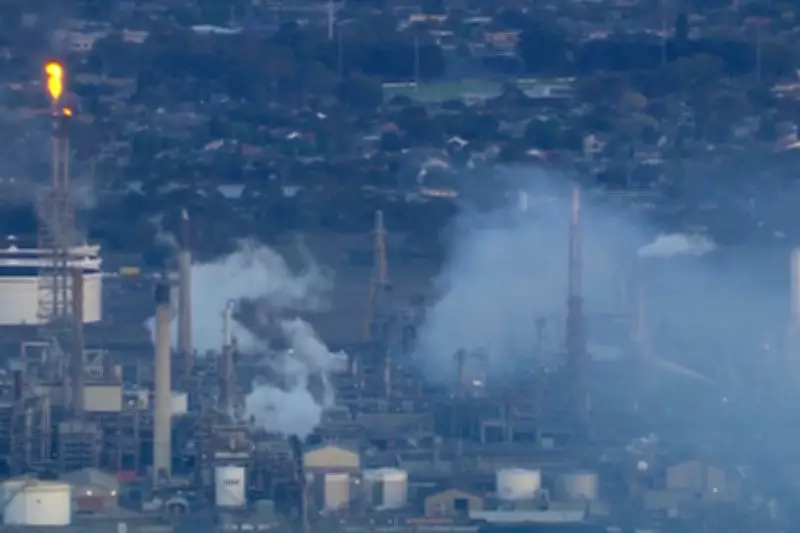
A significant fire at one of Australia's only two remaining oil refineries burned for 13 hours on Wednesday night, posing a serious threat to petrol supplies in a nation already grappling with the economic fallout from the US-Iran conflict. The blaze erupted at Viva Energy's Corio facility in Geelong, approximately 75 kilometres southwest of Melbourne, following multiple emergency calls reporting explosions and visible flames.
Fire Details and Immediate Impact
Fire Rescue Victoria confirmed the fire was contained to the Mogas section, where motor gasoline is produced, covering an area of roughly 30 by 30 metres. Deputy commissioner Michelle Cowling indicated the cause appeared to be equipment failure, likely due to a leak or valve malfunction. Fortunately, no injuries were reported.
The Corio refinery is a critical infrastructure asset, supplying around half of Victoria's fuel and 10 per cent of Australia's total consumption. It processes approximately 120,000 barrels of oil daily. Viva Energy chief executive Scott Wyatt stated that petrol production had been affected and would not resume until safety conditions were assured.

Broader Implications for Fuel Security
Federal energy minister Chris Bowen noted that diesel and jet fuel production were continuing at reduced levels as a precautionary measure. However, he warned that petrol production "may be impacted for some time" and described the timing as "not great" given existing concerns about fuel security. Prime Minister Anthony Albanese is reportedly making progress on sourcing additional supplies from overseas to mitigate shortages.
Professor Ian Rae, an expert on chemicals in the environment from the University of Melbourne, explained that the fire's location in the Mogas section suggests disruption to processes where hydrocarbons are chemically modified for higher octane ratings. This specific impact on petrol production underscores the refinery's vital role in the national energy landscape.
Expert Warnings on Energy Resilience
Experts have raised alarms about the added pressure on an already strained system. Professor Hussein Dia of Swinburne University of Technology emphasised that "any disruption to domestic refining capacity adds pressure to an already tight and globally exposed fuel supply." He clarified that while immediate fuel shortages are unlikely, the event narrows the buffer available to absorb such shocks.
Professor Dia highlighted diesel as the most critical fuel to protect, given its essential role in freight, agriculture, and supply chains. In situations like this, maintaining diesel supply would typically be prioritised to ensure economic stability.
Economic and Inflationary Concerns
Professor Sajid Anwar from the University of the Sunshine Coast pointed out that this fire, coupled with the cancellation of six oil tankers scheduled for April delivery to Australia, represents a "critical stress test for Australia's energy resilience." He warned that the combined shock could keep interest rates higher for longer, with Treasury modelling suggesting sustained energy costs might push headline inflation towards five per cent by mid-year.
The Reserve Bank of Australia recently raised its cash rate to 4.10 per cent, partly in response to rising energy costs, indicating the broader economic ramifications of such disruptions.
Community and Environmental Response
Residents near the refinery were advised to shelter indoors during the blaze, with a watch-and-act alert issued in the early hours of Thursday morning before being downgraded by 5.30 am. Authorities reported that hazardous materials teams detected no contaminants in air or water testing following the incident.
Guy Coulson, director of the Air Quality Collective, compared the pollutants from the fire to standing near a busy road, noting that "for the hopefully short duration of this fire, it shouldn't be particularly harmful for healthy people." However, he advised vulnerable groups, including the elderly, young children, pregnant women, and those with respiratory or cardiovascular conditions, to take extra precautions.

Political and Structural Commentary
Victorian premier Jacinta Allan stated it was "too soon" to know the full impact of the blaze, while the state's energy minister Lily D'Ambrosio assured there would be "no immediate impact on fuel supply," adding that petrol is the easiest fuel type to source from global or domestic markets. Geelong's mayor Stretch Kontelj described the fire as "unprecedented" in scale, reflecting the severity of the incident.
The Corio facility, built in the 1950s, is one of only two oil refineries remaining in Australia, alongside Ampol's refinery in Brisbane. Over recent decades, Australia has significantly reduced its domestic refining capacity, increasing dependence on imported refined fuels from Singapore, South Korea, and Malaysia.
Professor Dia highlighted a structural issue, noting that "Australia has significantly reduced its refining capacity over recent decades, increasing reliance on long international supply chains. Events like this show how limited redundancy exists when something goes wrong locally." Despite Viva Energy's claim last month of not being reliant on Middle East fuel, analysts point out that Asian refiners source around 90 per cent of their crude oil from the Persian Gulf, meaning disruptions indirectly affect Australia's supply chain.