

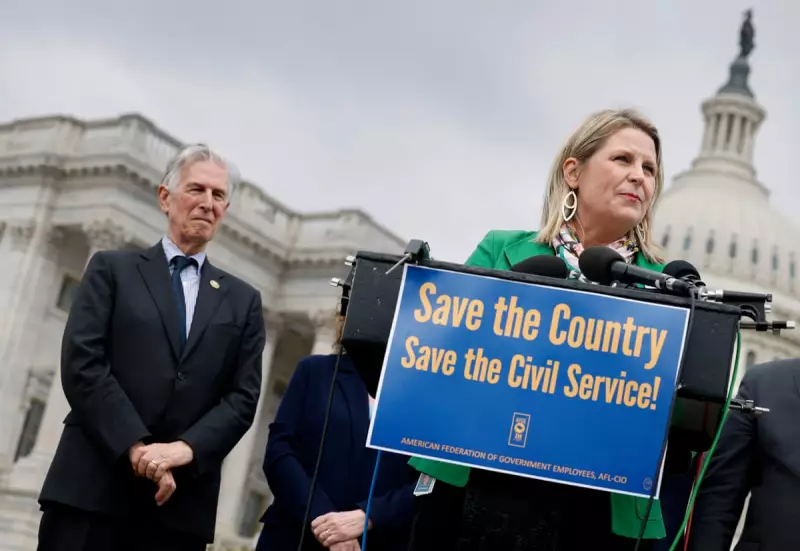
Former US President Donald Trump has ignited a political firestorm with a contentious address to the AFL-CIO federation of labour unions, where he claimed organised labour faced potential 'extinction' without his leadership. The remarks, delivered on Wednesday, have drawn immediate and fierce condemnation from union leaders and Democratic politicians.
A Provocative Address to Organised Labour
Speaking at the AFL-CIO's national conference, Trump framed the upcoming 2024 presidential election as a pivotal moment for the survival of American unions. He asserted that his policies, particularly on energy and manufacturing, were the only viable path to protect union jobs. The former president directly told the audience, which included AFL-CIO President Liz Shuler, that their organisations would not survive another four years under the current Biden administration.
Trump's speech heavily focused on economic nationalism, criticising existing trade deals and promising to bolster domestic industries like steel and automotive manufacturing. He positioned himself as the true ally of the blue-collar worker, a demographic he has consistently courted. However, this message was undercut by his long-standing record, which many in the labour movement view as hostile to workers' rights and collective bargaining.

Immediate Backlash and Political Fallout
The reaction from union leadership was swift and unequivocal. AFL-CIO President Liz Shuler issued a scathing rebuke, stating Trump's claims were 'not just wrong, they are an insult to every union member.' She emphasised the federation's continued support for President Joe Biden, highlighting legislative wins like the infrastructure bill that she credited with creating union jobs.
Democratic figures seized on the comments, framing them as a revealing moment that exposed Trump's perceived animosity towards organised labour. Critics were quick to point to Trump's past appointments to the National Labor Relations Board (NLRB), which they argue favoured corporate interests, and his administration's policies on wage protections. The Biden campaign released a statement calling Trump's speech a 'desperate and dishonest' attempt to rewrite his own anti-union history.
Strategic Gambit in the 2024 Race
Political analysts view Trump's direct appeal to the AFL-CIO as a high-risk strategic move. It represents a clear attempt to erode a traditional Democratic stronghold by appealing to rank-and-file union members on issues of economic security and industrial revival. The effort seeks to drive a wedge between union leadership, which remains overwhelmingly Democratic, and their membership.
However, the aggressive 'extinction' rhetoric may have complicated this outreach. The speech has galvanised opposition and provided a powerful rallying point for Democrats and union organisers to mobilise against Trump's candidacy. The incident underscores the intense battle for the working-class vote that will be a central feature of the 2024 presidential campaign. As the election approaches, both sides are expected to amplify their messages on job creation, trade, and the future of American manufacturing, with unions positioned as a key symbolic and political battleground.






