

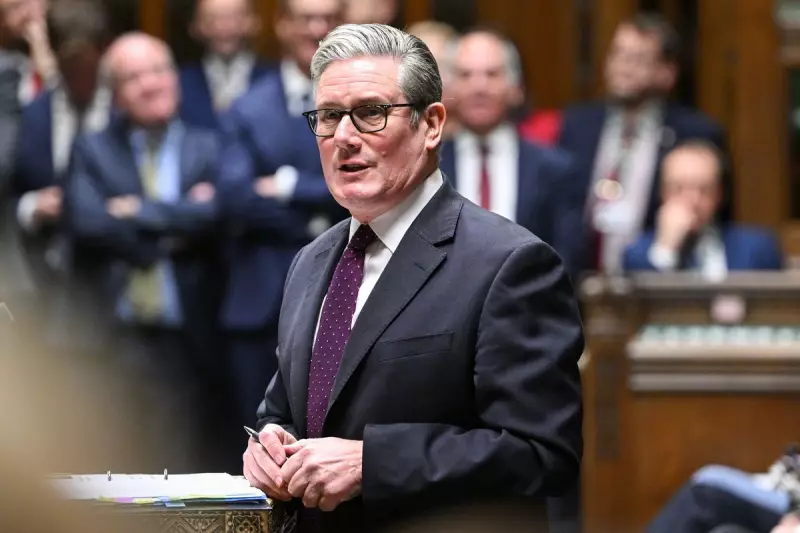
A think tank closely linked to Sir Keir Starmer's rise to power has called for the vast majority of Deputy Leader Angela Rayner's flagship workers' rights agenda to be abandoned, in a move that threatens to ignite a major Labour Party rift.
Think Tank Proposes Drastic Rollback
The influential group, Labour Together, which played a key role in Sir Keir's leadership campaign, has drafted an unpublished document arguing against core parts of the upcoming Employment Rights Bill. The paper, seen as a "provocation" for internal debate, advocates for scrapping around 80 per cent of the proposed reforms championed by Ms Rayner.
Its authors claim the sweeping legislation, which is scheduled to become law in January, risks "sapping dynamism" from the UK economy. This stance creates an immediate and glaring contradiction with Sir Keir Starmer's own recent public statements, in which he has praised the very same reforms as a significant upgrade for workers across the country.

Internal Tensions and Leadership Speculation
The release of this provocative policy paper follows reports that Labour Together has been canvassing party members about potential future leadership challenges to Sir Keir Starmer. Names reportedly discussed include Angela Rayner herself, alongside other prominent figures within the party.
While Labour Together has stated it fully supports the existing Employment Rights Act and described its new document merely as a discussion starter, the proposals are politically explosive. They pit the think tank's vision against the agenda of the Deputy Leader, highlighting a significant ideological fault line within Labour's top ranks.
Contradiction at the Heart of Government
The situation presents a serious challenge for Sir Keir Starmer, who now finds himself caught between his deputy's landmark policy and the views of an organisation that helped him secure the party leadership. The Prime Minister's accidental recent reference to Angela Rayner as "prime minister" has only added to the narrative of a complex and potentially strained dynamic at the top of government.
With the Employment Rights Bill due to be enacted in January 2026, the government faces a critical choice: proceed with Angela Rayner's comprehensive package or heed the think tank's call for a drastic scaling back. The outcome will signal the true balance of power and policy direction within the Labour Party.






