As formal support structures face increasing strain, a powerful, neighbour-led movement is filling the gap across communities in the United Kingdom. Known as mutual aid, this practice is seeing a significant surge in interest as people contend with high living costs, reductions in government programmes, and broader political uncertainty.
The Personal Touch of Community Care
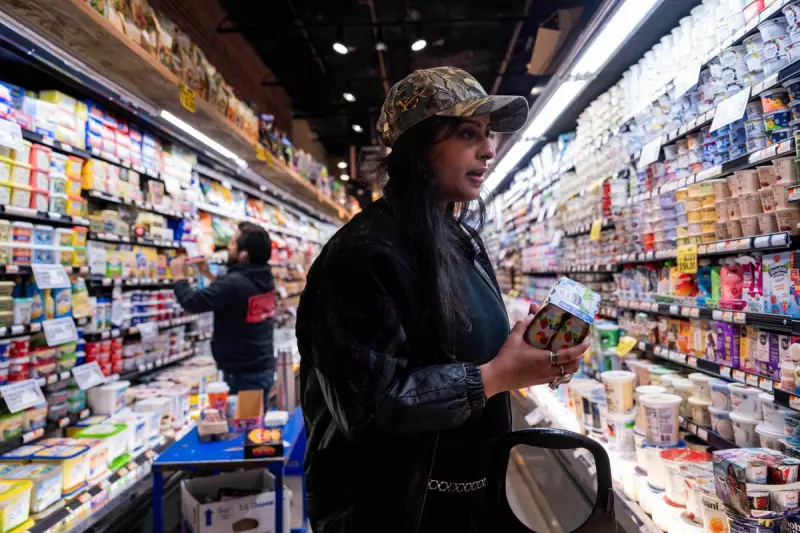
The ethos is simple yet profound: "Times are tough. We take care of us." This sentiment, echoed by individuals like Kashish Ali, encapsulates the spirit driving this growth. Ali, a 32-year-old first-generation Pakistani immigrant, has for years fundraised among her friends and family to buy groceries for community fridges, first in Atlanta and now in New York.
She described raising an astonishing $700 in just three to four hours after posting on Instagram. What began as volunteering has become a deeply ingrained habit, a direct line of connection to those around her. "When I start putting granola bars, fruit or yogurt into a fridge, people immediately come around to look, chat and grab something to eat," Ali explained.

For many donors, the appeal is the tangible, immediate impact. Ali noted that contributing to a large, traditional charity can sometimes feel abstract, whereas mutual aid offers "almost instant gratification." Her experience highlights a broader trend: a growing desire for hands-on, visible community support.
Solidarity, Not Charity: A Distinct Approach
Mutual aid organisers stress that their model operates on fundamentally different principles than traditional non-profits. A core tenet is "solidarity not charity." The approach is designed to be barrier-free; there is no requirement to show ID or prove income or residency. Crucially, the distinction between those giving help and those receiving it is often intentionally blurred, with organisers frequently being recipients themselves.
This low-barrier, non-hierarchical structure is a key differentiator. Interest in establishing such networks often spikes during crises, as seen during the COVID-19 pandemic and amidst ongoing economic pressures. Aaron Fernando, an organiser for Shareable, reported that a "Mutual Aid 101" webinar they launched earlier this year attracted around 1,100 attendees, a massive increase from the typical 70.
"It just is and continues to be a disempowering and scary time for a lot of populations," Fernando said, noting that this environment pushes people to seek new ways to secure resources and keep their communities safe.
Building Resilient Local Networks
In Brooklyn, Yoly Nuñez and the Collective Focus Resource Hub have been organising food distributions and exchanges of clothes and household items since the pandemic's outbreak. Their speciality is finding free resources, having established arrangements with stores like Trader Joe’s and Wegmans to rescue food destined for waste.
"We thought, we need to organise and see how we could help each other," Nuñez said. "And that’s literally the whole thought process behind it is like, we’re scared and we need to huddle in and help each other." She now frequently fields requests from people wanting to start their own mutual aid projects, which she actively encourages to build broader community strength.
Even groups that incorporate as non-profits for practical reasons, like renting a space, strive to maintain a collective spirit. Georgina Edmonds, a staff member at Collective Focus who has lived in her neighbourhood for over 30 years, said the group empowers members to shape their work. She herself is planning a project to grow medicinal herbs in a nearby community garden.
Fernando likened these community-built systems to "rickety scaffolding" that gets reinforced when times get hard. "They can catch people if communities have them," he observed. This growth of mutual aid presents an alternative model of community care, one built on direct connection and shared responsibility, marking a significant shift in how people choose to support one another in challenging times.