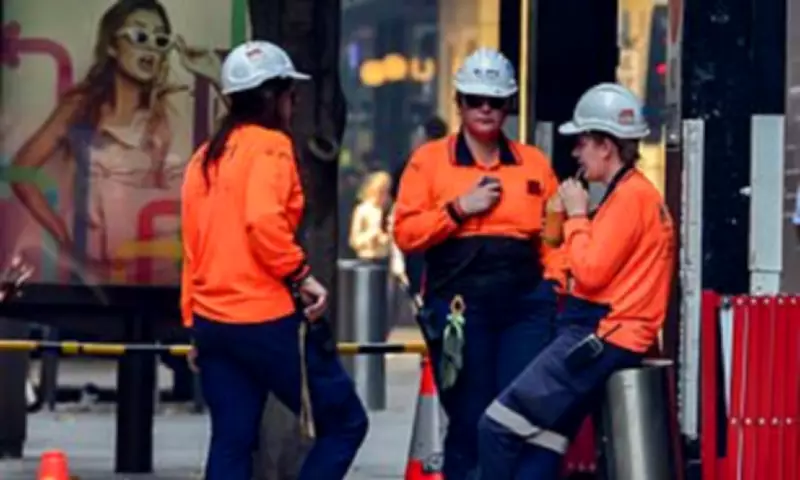
Record Heatwaves Spark Urgent Calls for National Worker Protection Laws
The recent spate of record-breaking heatwaves across Australia has ignited urgent calls for stronger national legislation to protect workers from the escalating dangers of a warming climate. Unions and safety advocates warn that current workplace health and safety laws are failing to keep pace with the increasing frequency and intensity of extreme heat events.
A Tragic Case Highlights the Danger
The human cost of this regulatory gap was tragically illustrated by the death of Glenn Newport in 2013. Nicknamed 'Grievous' after a robust Star Wars character, the fit and muscular 38-year-old suffered a fatal heart attack while working on a natural gas project near Roma in central Queensland. A coroner concluded his death was directly caused by exposure to extreme temperatures of 40°C combined with high humidity.
Unions Sound the Alarm on Climate Threat
Australia's peak union body, the Australian Council of Trade Unions (ACTU), is now leading the charge for new, robust national laws. ACTU president Michele O'Neil stated unequivocally that the law has not caught up with the reality of climate change. 'What we've heard from workers is that our health and safety laws are not keeping up with the increasing number of extreme heat days and how long heatwaves are lasting,' she said.

This call to action follows a prolonged heatwave last week that affected much of southeastern Australia, with dozens of locations recording temperatures nudging 50°C across four states. Ms O'Neil cited alarming statistics, noting that nearly 1,000 Australians have died each year from extreme heat in the last decade, with the number rising annually.
Projections Paint a Grim Future
The urgency is underscored by stark projections from the 2025 National Climate Risk Assessment. It forecasts that heat-related deaths could quintuple with 3°C of global heating, accompanied by a quadrupling of extreme heatwave days each year. The economic impact is also severe, with a projected $135 billion drag on productivity by 2063, including the loss of over 700,000 workdays annually. Industries such as agriculture, construction, mining, and manufacturing are expected to be hardest hit.
Workers on the Frontline
Workers are already experiencing dangerous conditions. Ms O'Neil highlighted cases of airport staff exposed to temperatures reaching 60°C. Mohammed Atik, a ground handler at Melbourne Airport for 18 years, described the compounded heat from concrete, tarmac, walls, and aircraft engines. 'You can imagine the heat emitting off that engine while they're unloading the aircraft from the back is absolutely enormous,' he told AAP, explaining he had pleaded with management about the extreme danger during recent 45°C+ days.
A Universal Right to Protection
The push for reform advocates for universal protection. Ms O'Neil argued that while specific temperature and humidity thresholds could be negotiated for different industries, all workers deserve safeguards. 'A worker's a worker, whether you're a sportsperson on a field or on a court, or you're the people doing the refereeing, or the ball people,' she stated. This principle was demonstrated when play was abandoned at the Australian Open in January after organisers invoked the tournament's extreme heat policy.
Momentum for Legislative Change
The campaign is gaining momentum. In January, Jared Abbott, chief executive of the Construction, Forestry and Maritime Employees Union (CFMEU) in Queensland, urged the state government to introduce new health and safety laws to prevent tragedies like Glenn Newport's. The coroner in Mr Newport's case also recommended the creation of an industry-specific code of practice. The collective message is clear: as climate change intensifies, Australia's workplace safety framework must evolve rapidly to prevent further loss of life.