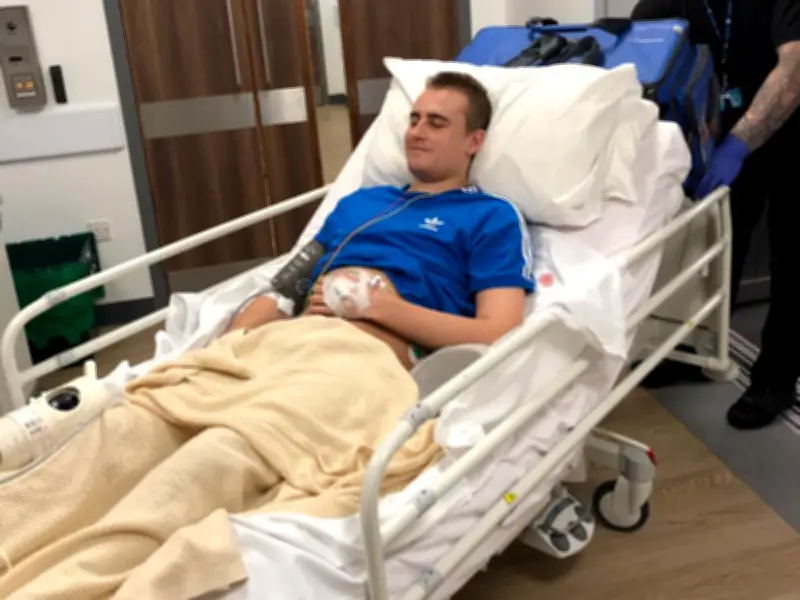
Thomas Hunt was 18 and about to start medical school when he felt something was really wrong. Just weeks before beginning his studies, he received a shock diagnosis of acute leukaemia after months of unexplained symptoms. Now 26, the Manchester medic is in remission, has completed two marathons, and says surviving the disease has made him a better doctor.
A gap year spent in hospital
Thomas had planned a gap year before starting medical school. Instead, he spent it attending hospital appointments. He had slowly become more tired after finishing his A levels and noticed swollen lymph nodes in his armpit and neck. After a holiday where he became very ill with a chest and throat infection, he flew home early and saw his GP. Antibiotics did not help, and blood tests showed pancytopenia—his bone marrow was not working. He was sent to hospital for further tests and diagnosed with acute leukaemia just two days later, in September 2018.
Thomas began chemotherapy within days of his diagnosis. He underwent four rounds with different drugs over nine months, followed by two and a half years of oral chemotherapy. He went into remission in nine months but required longer maintenance treatment due to the nature of leukaemia.
Mental and physical challenges
While treatment was successful, Thomas fought fatigue, nausea, brain fog, and health anxiety. He said: “It was physically hard for first nine months but once this passed it was easier. I got back into running and going to the gym. But the mental impact became greater. I went to a therapist for the health anxiety I was suffering from.”
Despite everything, he never gave up his ambition to become a doctor. He said: “What kept me going was my family being amazing and friends always being there for me. And also the goal to get to medical school the following year and start my studies, as well as getting into fitness, which I have all achieved.”
A unique perspective in patient care
Thomas completed medical school in June 2024 and has worked as a doctor for almost two years. He believes his own battle with leukaemia shaped how he cares for cancer patients. He said: “I feel like I’ve got a unique perspective and that comes across in my patient care. I know how to communicate really well with patients, whether that be providing explanations, or giving good or bad news. I tend to get good feedback that I listen and address problems.”
Being both a patient and a medical student gave him a perspective many peers lacked. He said: “I spent years as a patient and I had been on chemotherapy treatment while studying. Not only did I have to contend with the mental fatigue of university, but constant worries about my health made things harder, as well as fatigue from the medication side effects.”
Marathons and fundraising
Since beating cancer, Thomas has thrown himself into fitness and completed two marathons, raising £8,500 for charity. He said: “Finishing the first marathon was emotional. From barely being able to walk up a flight of stairs to doing that was crazy. The second one felt better, though. I trained harder for it and got my reward with a faster time. I loved every minute and want to do more events like this.”
Thomas said the experience transformed his outlook: “I aim to inspire other people going through hard times, whether similar to me or not. I take my recovery very seriously, but I also love to go out with my mates to the pub and just enjoy the little things. It’s also made me stop worrying too. I used to overthink a lot and now I rarely do this. It’s definitely chilled me out.”
Thomas remains in remission and had a check-up a few weeks ago with no concerns. He added: “Becoming a doctor just felt like what I was meant to do. I studied for years and powered through a lot to get to where I am.”