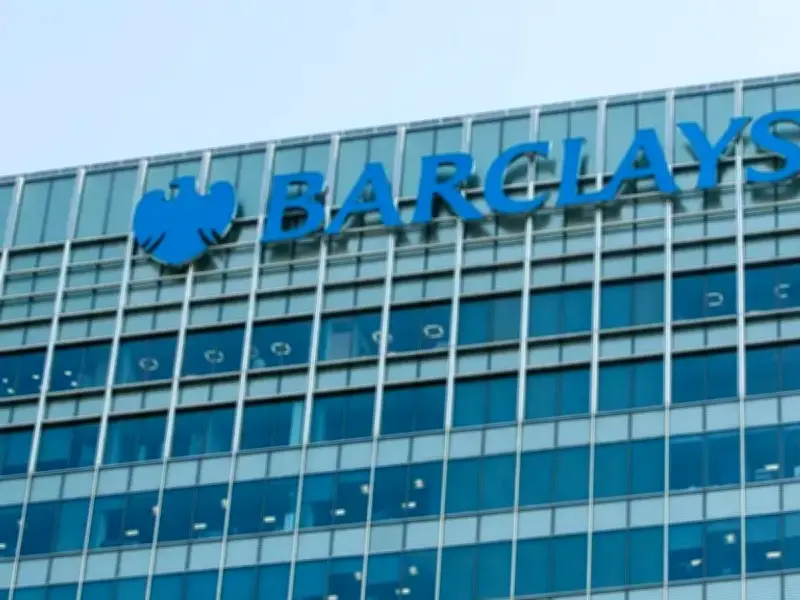
Barclays has announced it expects to have cut around 5,000 staff by the end of 2026, a move driven by its adoption of artificial intelligence (AI) to improve efficiency. The banking group said this represents about 5% of its total workforce, which stood at approximately 93,000 employees globally at the end of 2025.
Job reductions and AI-driven efficiency
Some 1,000 of the job cuts were made during the first half of 2026, with the remainder spread across the second half of the year. The majority of the reductions relate to operational and functional roles across the bank.
Group chief executive CS Venkatakrishnan, known within the bank as Venkat, said this was “a result of the investments which we’ve made into technology over a number of years and which we continue to make”. The adoption of AI has made some work processes more efficient, meaning the bank can employ fewer roles such as developers.
Technology investments and cost savings
Venkat explained that the tech investment involved “modernising our platforms and harmonising our systems and having simpler and better processes”. He added: “That is driving the bulk of the efficiency gains that you’ve seen so far.”
“AI has an important role to play and may have a more important role to play in the future,” he said. “I’ve often said that it is the icing on the cake – it’s not the cake – because you need to do the infrastructure build to get the benefits of AI. Where the infrastructure is modern, we’ve been applying it here.”
Barclays is nearing the end of a three-year strategy to boost performance, which has involved major cost-cutting and ramping up technology capabilities. In the third quarter, the company made around £200m worth of “structural cost actions”, part of about £600m made during the year, roughly double what it had expected earlier in the year. The bulk of the cost cutting came from the UK retail bank, but a proportion was also in its investment bank. Barclays said it has a further roughly £300m worth of savings planned for the final three months of the year.
Financial results and tax speculation
The banking group reported a pre-tax profit of £2.3bn for the three months to the end of September, which was 12% higher than the same period a year ago. Income from its UK retail and corporate banks increased, as well as from its wealth management arm and investment bank.
The results come less than a week before Chancellor John Healey delivers his autumn Budget statement, with speculation that he is considering increasing taxes on banks to raise revenues for the Treasury. Asked about the speculation, Venkat said he had made his position on bank taxes “very clear”, having previously spoken out about the UK banking sector having a higher tax burden than other countries.
“We are already a bank which makes a lot of our money outside the UK so this is not a question of a financial hit to us – it’s bearable,” he said. “It’s a question of proportion and it’s a question of market signalling. But I deeply respect the responsibilities that the Chancellor bares and he has our full support and backing.”